Venezuela Policy Shift Ignites Global Oil Market Speculation
The recent shift in Venezuela’s political landscape, marked by the removal of President Nicolás Maduro, has sent ripples through global oil markets, sparking a renewed “gold rush” among major commodity traders. For investors monitoring the intricate balance of supply and demand, this development presents a complex mosaic of opportunity and long-term challenges. While the immediate impact on global crude flows remains marginal, the prospect of unlocking Venezuela’s immense reserves, the world’s largest, is a topic dominating discussions across boardrooms and trading floors. The U.S. government’s expressed interest in stabilizing the country and facilitating crude exports suggests a potential path for a significant recalibration of energy geopolitics, albeit one fraught with logistical and financial hurdles.
Investor Focus: Weighing Supply Potential Against Current Market Realities
Analyzing our proprietary reader intent data, a clear theme emerges this week: investors are intensely focused on crude price direction, with common queries like “is WTI going up or down?” and “what do you predict the price of oil per barrel will be by end of 2026?” The Venezuelan situation directly feeds into these concerns. As of today, Brent Crude trades at $90.45, experiencing a slight uptick of 0.02% within a daily range of $93.87 to $95.69. WTI Crude is at $87.32, down 0.11%, while Gasoline sits at $3.05, up 0.33%. This current stability, however, follows a notable downturn; our 14-day Brent trend data reveals a significant drop from $118.35 on March 31st to $94.86 on April 20th, a decline of nearly 20%. This broader market weakness provides a crucial backdrop: any future Venezuelan supply would enter a market that has recently shown susceptibility to downward pressure.
Major trading houses, including Trafigura Group, are already engaging with the U.S. government to understand the framework for re-entering the Venezuelan market. These discussions underscore the industry’s eagerness to capitalize on a potential policy shift. The U.S. government’s stated desire for Venezuelan oil to flow, alongside the provision of refined products to prevent civil unrest, signals a pragmatic approach. However, the market understands that even with the political will, the path to significant production increases is a long one, meaning immediate price impacts from this development are unlikely to be sustained. Investors should view these developments as long-term supply catalysts rather than short-term market movers, particularly given the recent softening in crude prices.
The Long Road Ahead: Rebuilding Venezuela’s Oil Infrastructure
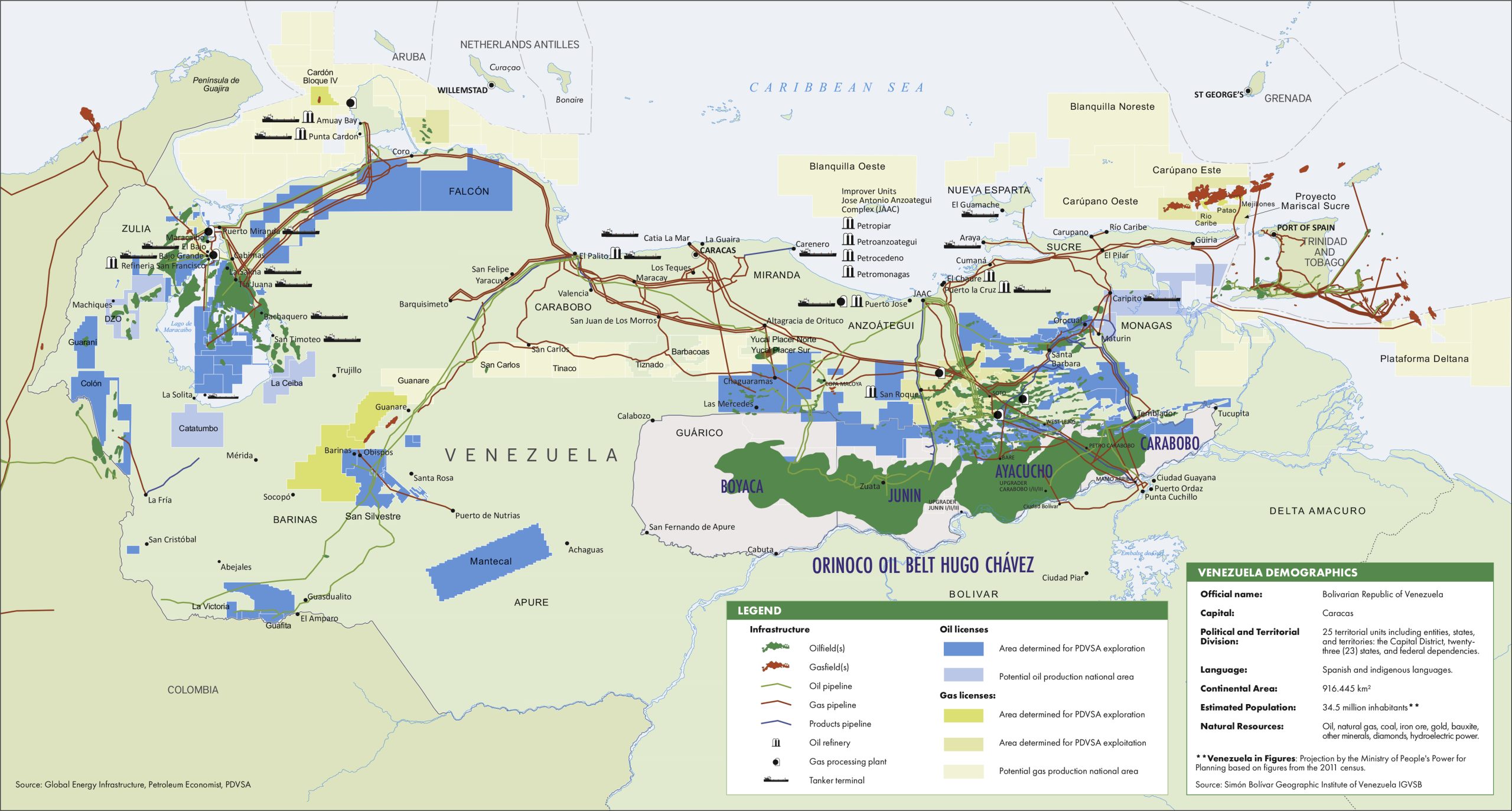
While the enthusiasm for Venezuela’s oil potential is palpable, particularly given its status as an OPEC member with the world’s largest proven reserves, the practicalities of revival present formidable challenges. Decades of underinvestment, compounded by stringent trade sanctions and economic isolation, have left the country’s oil infrastructure in a severely dilapidated state. Industry experts suggest that returning to its historical production levels of 3 million barrels per day (MMbpd) will not be a swift process. Estimates indicate it could take years and require hundreds of billions of dollars in capital expenditure to repair and modernize facilities, from wells and pipelines to refineries and export terminals.
Traders like Trafigura have made it clear they require a “proper legal framework” before committing significant resources. This reflects the deep-seated need for regulatory clarity, investment protection, and a stable operating environment that has been absent for years. The “gold rush” narrative, therefore, must be tempered by the understanding that substantial capital and expertise will only flow once there is a robust, predictable legal and political structure in place. For investors, this means the risk-reward profile, while potentially high, is also heavily weighted by the long-term commitment required and the inherent political volatility that could still arise.
Navigating the Calendar: Future Catalysts for Venezuelan Supply
Looking ahead, the next few weeks are packed with key energy events that, while not directly tied to Venezuela, will shape the broader market context into which any future Venezuelan supply could eventually flow. For instance, the upcoming OPEC+ Joint Ministerial Monitoring Committee (JMMC) Meeting on April 21st will be closely watched for any signals regarding production policy. While Venezuela’s current output is too low to significantly impact OPEC+ decisions, a clear path to its resurgence could influence longer-term strategic thinking within the alliance.
Furthermore, regular data releases such as the EIA Weekly Petroleum Status Reports on April 22nd and April 29th, the Baker Hughes Rig Counts on April 24th and May 1st, and the EIA Short-Term Energy Outlook on May 2nd will provide critical insights into U.S. production, inventories, and demand. These reports will help investors gauge the global supply-demand balance, which is crucial for assessing the impact of any new barrels from Venezuela. While the immediate impact of Venezuela’s political shift on these reports is negligible, their cumulative effect will inform the landscape for future investment decisions. Investors should monitor these events not just for their direct market signals, but also for how they might indirectly influence the perceived urgency or necessity of accelerating Venezuelan oil production in the coming years.