

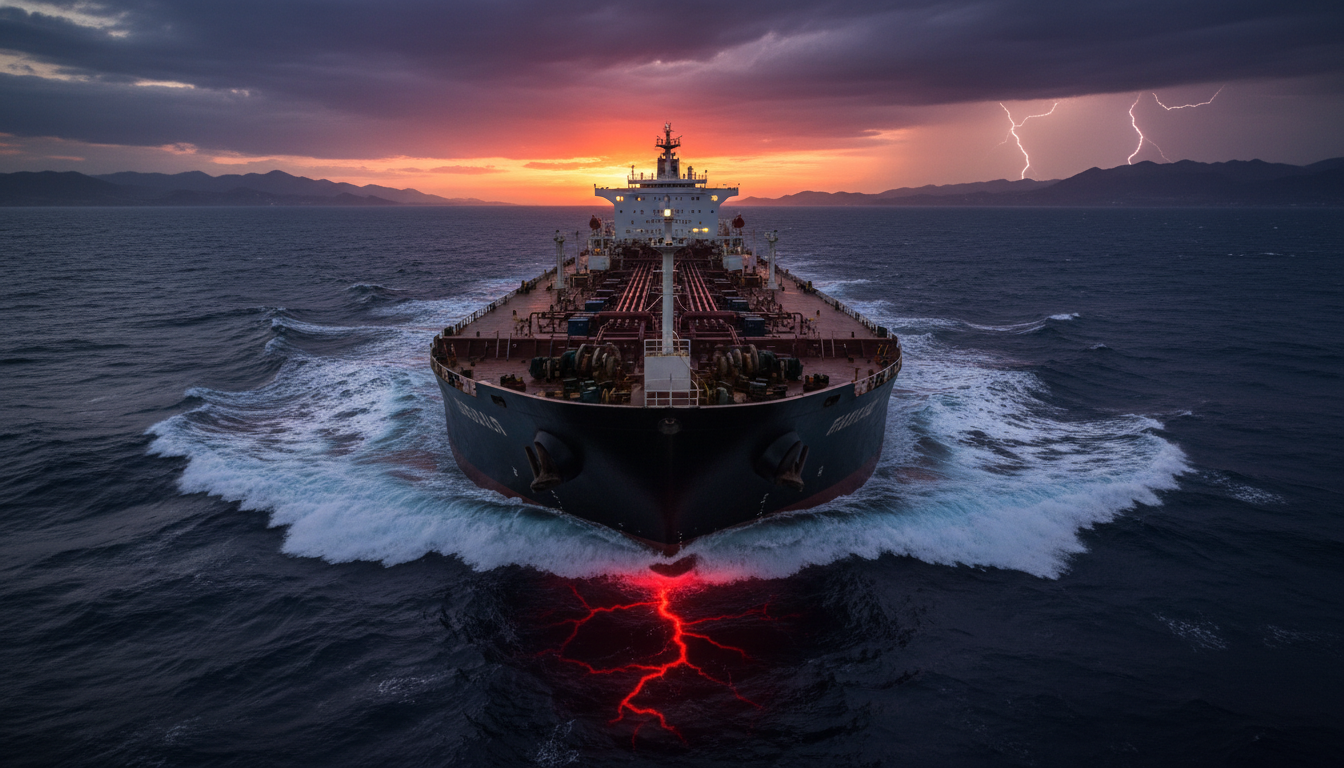
Navigating the Dual Chokepoint Crisis: Red Sea Escalation Threatens Global Oil & Gas Markets
Global financial markets brace for a potential second economic shock, even as they contend with the persistent disruption in the Strait of Hormuz. The ongoing constraints in this vital waterway have already significantly impacted oil prices and rerouted critical energy flows. However, a new and potentially more volatile risk is rapidly emerging: the possible entry of Yemen’s Iran-aligned Houthi rebels into a broader campaign against shipping in the Red Sea. Should this scenario unfold, the world could simultaneously face disruptions at two of its most critical maritime chokepoints, amplifying economic fallout far beyond current market pricing models.
Fragile Stability in Crude Markets Underpins Growing Geopolitical Risk
Recent sessions have seen crude oil prices display only modest fluctuations, reflecting a delicate equilibrium between investor optimism and underlying fear. Reports suggesting a willingness from US President Donald Trump to de-escalate military actions against Iran, without necessarily securing the immediate reopening of the Strait of Hormuz, have provided some temporary relief, dampening outright panic. Yet, the stark reality remains that physical oil flows through Hormuz are still severely constrained. This creates a critical disconnect: markets appear to react to the potential for de-escalation, but the fundamental supply situation has not normalized. Analysts widely agree that any substantial price correction hinges on the full restoration of traffic through Hormuz, an outcome far from guaranteed.
Against this uneasy backdrop, a second point of potential disruption is now commanding increasing attention from energy investors and strategists.
Houthi Rebels Emerge as a Critical Strategic Lever for Iran
Intelligence indicates that Iran is actively encouraging the Houthi movement to prepare for a renewed and expanded campaign targeting shipping in the Red Sea. European officials suggest this push is part of Iran’s broader strategy to enhance its regional leverage beyond the Persian Gulf. The Houthis have already demonstrated their capacity and willingness to escalate tensions. Their unprecedented missile launches toward Israel on Saturday, marking their symbolic entry into the ongoing regional conflict, serve as a stark warning. Critically, they have publicly threatened to target vessels transiting the Bab el-Mandeb strait, a narrow and strategically vital maritime chokepoint connecting the Red Sea to the Gulf of Aden.
This is not an abstract threat. Between 2023 and 2025, Houthi forces launched attacks against over 100 ships, compelling major shipping companies to reroute vessels around the southern tip of Africa. Those earlier disruptions inflated costs, extended transit times, and triggered spikes in insurance premiums. The stakes are now considerably higher, given the prevailing global energy landscape.
Dual Chokepoint Jeopardy: Hormuz and Bab el-Mandeb Under Threat
The global energy infrastructure inherently possesses a vulnerability stemming from its reliance on a limited number of maritime chokepoints. The Strait of Hormuz and the Bab el-Mandeb stand out as two of the most indispensable. With Hormuz already effectively constrained, the Red Sea has ascended to a crucial alternative route, particularly for Saudi Arabian crude oil exports. Saudi Arabia has substantially increased shipments through its east-west pipeline, directing volumes to the Red Sea port of Yanbu, with a noticeable surge in recent weeks.
However, the efficacy of this workaround hinges entirely on safe passage through the Bab el-Mandeb. Should the Houthis move to disrupt this corridor, the ramifications would be profound. Approximately 15% of global maritime trade traverses this narrow waterway. Blocking it would not only impact oil shipments but would also cripple container shipping routes between Asia and Europe, intensifying an already strained global supply chain. Any sustained Houthi campaign against shipping in the southern Red Sea and near the Bab el-Mandeb strait would fundamentally upend global energy markets. The critical takeaway for investors is that the Red Sea is no longer a secondary theater; it has become central to maintaining global trade flows in the absence of full functionality in Hormuz.
Navigating a Measured but Dangerous Escalation Path
Despite the escalating risks, the Houthis have yet to fully commit to widespread maritime attacks. Internal divisions within the group appear to be influencing their tactical approach. Reports suggest disagreements exist regarding the aggression level of their actions, which may explain their delayed direct involvement in the conflict. US and Saudi officials reportedly believe the Houthis are currently seeking to avoid immediate escalation targeting American and Saudi assets. The group continues to recover from sustained US military strikes in 2025, and Yemen’s economic situation remains dire.
Nevertheless, the trajectory of risk remains clear. Experts warn that the longer the broader regional conflict involving the US and Israel against Iran persists, the higher the probability that the Houthis will ultimately target the Red Sea. This creates a dangerous ticking clock dynamic, where a prolonged conflict significantly increases the likelihood of a second, systemic shock to global trade.
Economic Fallout: The Return of War Premiums and Supply Chain Strain
Even without direct attacks, the mere threat of Houthi action is already influencing commercial shipping behavior. Major shipping firms are actively reassessing routes, with some beginning to bypass the Bab el-Mandeb altogether. This carries immediate and significant economic consequences. During previous Houthi attacks amid earlier regional conflicts, rerouting vessels around the Cape of Good Hope added up to two weeks to typical shipping times. This translated directly into higher fuel costs, tighter vessel availability, and significantly increased freight rates.
Insurance markets reacted swiftly, with war risk premiums surging and adding substantial costs to each voyage. These dynamics are highly likely to re-emerge, but within a global supply environment far more constrained than in 2023 or 2024. At that time, ample oil inventories and more flexible alternative routes offered a cushion. Today, with the Strait of Hormuz already disrupted, the entire system operates with significantly less resilience and spare capacity.
India’s Acute Vulnerability to a Red Sea Shock
For India, the risks associated with a Red Sea disruption are particularly acute. A substantial portion of India’s trade with Europe flows through the Red Sea and the Suez Canal. Any sustained disruption at the Bab el-Mandeb would compel Indian exporters and importers to reroute shipments around Africa, inevitably leading to increased transit times and higher costs. On the energy front, the impact could be even more pronounced. India heavily relies on crude oil imports, including significant volumes from the Middle East. With Hormuz already constrained, alternative routes via the Red Sea have become increasingly vital. A disruption there would further tighten supply, pushing up the landed costs of crude for the nation.
Higher oil prices would directly fuel domestic inflation, widen India’s current account deficit, and exert further downward pressure on the already sliding rupee. Key sectors such as refining, aviation, and logistics would face immediate and severe cost shocks, while overall export competitiveness could suffer due to elevated freight rates. In essence, India faces a multi-pronged assault: escalating import costs, fractured export routes, and additional upward pressure on oil prices.
Iran’s Strategic Bargaining Chip
From Iran’s geopolitical perspective, the Houthi threat represents not merely a military instrument but also a potent negotiating asset. The ability to disrupt critical shipping lanes serves as another valuable bargaining chip in any potential negotiations with the United States. This highlights a broader shift in the regional conflict towards leveraging economic disruption. Even if the Houthis do not immediately launch large-scale attacks, the sheer possibility of such action fundamentally alters market psychology. Traders, insurers, and shipping companies are now forced to price in the complex risk of a simultaneous dual chokepoint disruption.
Currently, global oil markets appear largely focused on the possibility of de-escalation in the Gulf. However, this is a rapidly evolving and unpredictable situation. The paramount new risk lies in how the broader regional conflict expands while it continues. A prolonged state of hostilities significantly increases the probability of Houthi intervention, whether driven by direct Iranian pressure or their own strategic calculus. Should this materialize, the world could confront a rare and perilous scenario: simultaneous disruption in both the Strait of Hormuz and the Bab el-Mandeb. Such a development would not merely push oil prices higher; it would send profound ripple effects cascading through global trade, supply chains, and inflation, impacting economies worldwide.
