The global oil market is once again navigating a treacherous geopolitical landscape, with recent events in the Middle East sending shockwaves through supply chains and pushing crude prices dramatically higher. While initial reports highlighted a surge above the $100 per barrel mark following critical disruptions, our proprietary market data reveals a complex picture of ongoing recalibration. Investors are now grappling with the dual realities of significant supply threats and a market attempting to digest the long-term implications, all while monitoring the potential for resolution.
Geopolitical Volatility Triggers Unprecedented Supply Disruptions
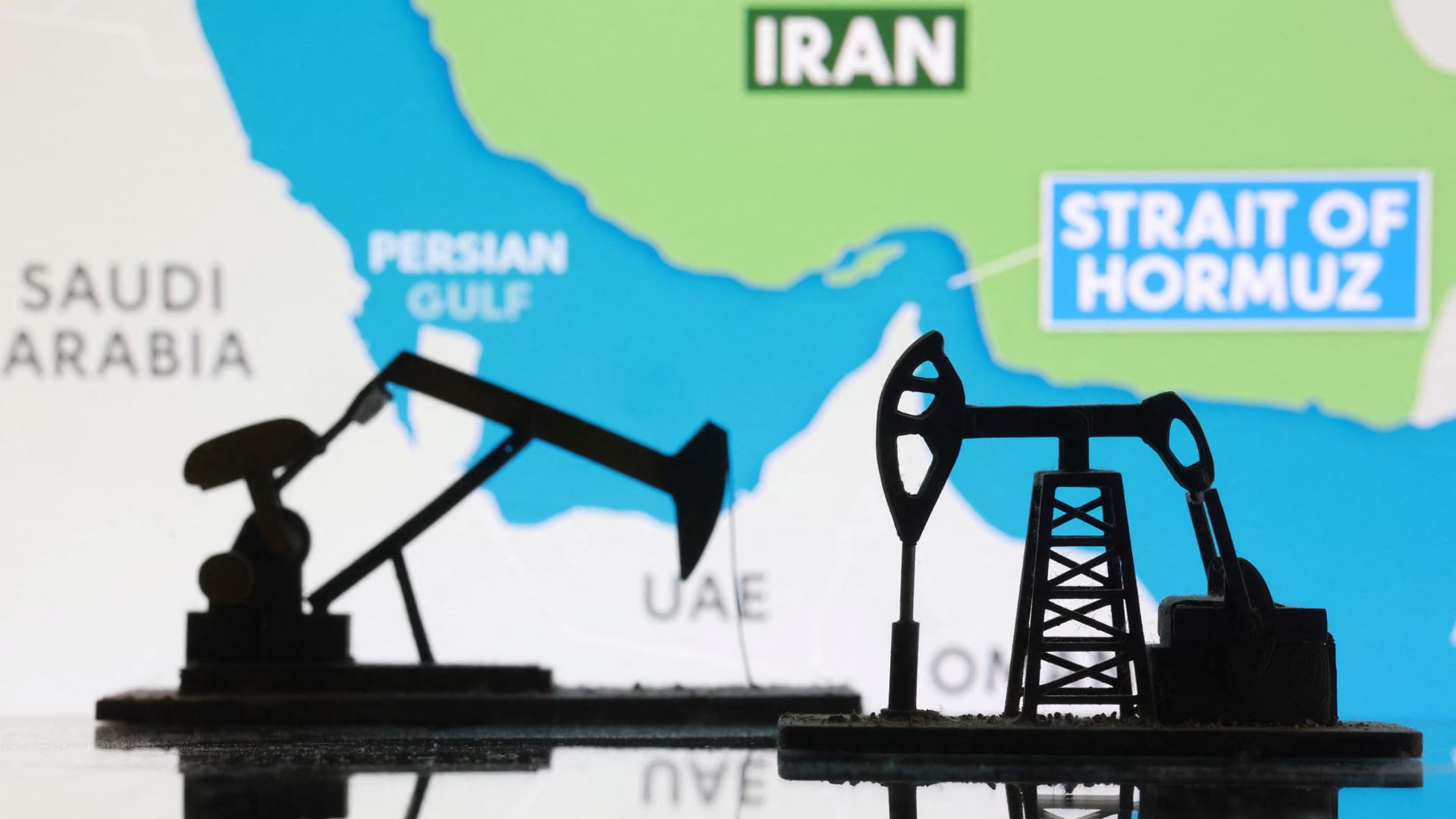
The recent closure of the critical Strait of Hormuz, a vital maritime choke point through which approximately 20% of the world’s oil consumption is exported, has fundamentally altered the global energy supply dynamic. Amidst escalating conflict involving Iran, tanker traffic through the narrow waterway has become untenable due to fears of attacks, prompting an immediate and severe impact on producer operations. Kuwait, a significant OPEC member, responded by enacting precautionary cuts to its oil and refinery output, citing direct threats to safe passage. While the precise volume of Kuwait’s reductions remains undisclosed, the message of extreme caution resonated across the market.
More critically, Iraq, the second-largest OPEC producer, has experienced a profound collapse in production from its three main southern oilfields. Output has plummeted by 70%, now standing at a mere 1.3 million barrels per day, a stark decline from the 4.3 million bpd produced prior to the conflict. Adding to the supply squeeze, the United Arab Emirates, OPEC’s third-largest producer, has announced it is carefully managing offshore production levels to address storage requirements. This unprecedented situation arises not from a lack of desire to produce, but from a critical shortage of storage capacity as barrels pile up with no safe transit route. The overarching geopolitical tension, including the reported succession of Ayatollah Khamenei’s son, Mojtaba, as Iran’s new supreme leader, suggests a protracted period of uncertainty. Energy Secretary Chris Wright, however, offered a glimmer of hope, indicating that a more regular resumption of ship traffic through the Strait could be “a few weeks, not months” away, contingent on the U.S. neutralizing Iran’s ability to threaten tankers.
Current Market Snapshot: Recalibration After the Surge
While the initial reaction to these disruptions saw crude oil prices surge dramatically, even pushing West Texas Intermediate to its biggest weekly gain since 1983, our live proprietary data indicates a market currently undergoing a significant recalibration. As of today, Brent Crude trades at $92.78 per barrel, reflecting a daily dip of 0.49% and moving within a range of $92.57 to $94.21. West Texas Intermediate (WTI) is similarly trading at $89.4 per barrel, down 0.3% from its opening, with a daily range between $88.76 and $90.71. These figures stand in notable contrast to the initial climb well above $100 per barrel following the immediate news of the Strait’s closure and production cuts.
Our 14-day Brent trend data further illuminates this market adjustment, showing a discernible decline from $101.16 on April 1st to $94.09 on April 21st. This represents a $7.07, or 7%, pullback over just three weeks, suggesting that while the geopolitical risk premium remains embedded, the market has begun to factor in the potential for a resolution, as hinted by Secretary Wright, or perhaps the limitations of demand at elevated price points. Investors are closely monitoring whether this recent correction is a temporary breather before another leg up, or if it signals a more sustained easing of supply fears.
Navigating Forward: Upcoming Catalysts and Inventory Dynamics
In this volatile environment, forward-looking analysis tied to upcoming energy events becomes paramount for investors. Over the next two weeks, several key data releases will offer critical insights into market fundamentals and potential price trajectories. Investors are keenly awaiting the EIA Weekly Petroleum Status Report, scheduled for April 22nd and again on April 29th. These reports provide essential data on U.S. crude oil, gasoline, and distillate inventories, alongside refinery utilization rates, which will be crucial indicators of domestic demand strength and the effectiveness of current supply adjustments.
Complementing these, the API Weekly Crude Inventory reports on April 28th and May 5th will offer an early glimpse into U.S. stock changes, often setting the tone for the official EIA releases. Beyond inventories, the Baker Hughes Rig Count, due on April 24th and May 1st, will shed light on North American drilling activity, offering a forward signal on potential future supply. Finally, the EIA Short-Term Energy Outlook on May 2nd will provide updated projections for supply, demand, and prices, offering a comprehensive look at the agency’s expectations for the coming months. Each of these events carries the potential to introduce significant volatility, as traders react to any data that confirms or contradicts prevailing market narratives regarding supply constraints and demand resilience.
Investor Sentiment: WTI’s Trajectory and Long-Term Outlook
Our proprietary reader intent data reveals clear investor concerns this week, with a dominant theme revolving around WTI’s immediate trajectory and the broader oil price outlook for the remainder of 2026. A primary question emerging from our community is whether West Texas Intermediate is poised for further gains or corrections following its recent volatility. This reflects the uncertainty created by the rapid price swings and the ongoing geopolitical tensions. While the immediate supply disruptions have been undeniable, the market’s current pullback suggests a nuanced view, potentially influenced by the “few weeks” timeline for Strait of Hormuz resumption, or perhaps an expectation of demand destruction at higher price points.
Beyond the short-term, investors are also keenly focused on predicting the price of oil per barrel by the end of 2026. This longer-term perspective necessitates evaluating a complex interplay of factors: the duration and intensity of the Middle East conflict, the potential for a global economic slowdown impacting demand, the strategic responses from major consuming nations, and the pace of energy transition efforts. Should the Strait of Hormuz remain significantly disrupted beyond Secretary Wright’s “few weeks” estimate, the current geopolitical risk premium could deepen, leading to sustained higher prices. Conversely, a swift resolution, coupled with robust inventory builds in other regions, could alleviate pressure. For investors, monitoring these evolving dynamics, particularly the balance between geopolitical headlines and underlying market fundamentals, will be key to positioning effectively through the year and beyond.