

Oil Market Surges on Renewed Trade Deal Optimism: Investor Implications
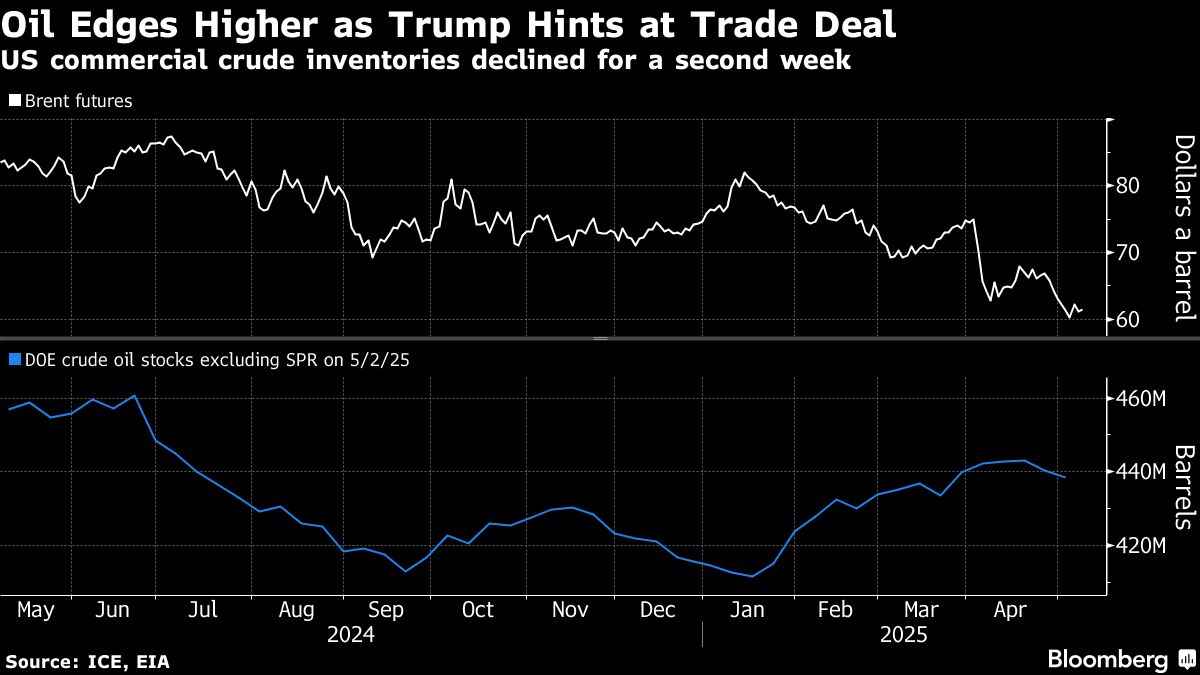
The global crude oil market experienced a pronounced upward momentum this week, as key benchmarks Brent and West Texas Intermediate (WTI) registered notable gains. This positive shift in investor sentiment stemmed from an emerging wave of optimism surrounding potential breakthroughs in international trade negotiations. Brent crude futures, a critical indicator for global oil prices, advanced robustly, pushing firmly towards the $62 per barrel level, effectively recovering from a 1.7% dip observed in the preceding trading session. Similarly, WTI crude futures, representing the North American benchmark, also climbed, approaching the $59 per barrel threshold, signaling a broader resurgence in energy commodity demand expectations.
This significant market uplift was directly catalyzed by an announcement from President Donald Trump, who indicated a forthcoming reveal of a new trade deal scheduled for Thursday. While the specific details of this agreement remained undisclosed, market analysts and informed sources widely anticipate this pact to involve the United Kingdom. Should such a development be confirmed, it stands to infuse a much-needed dose of confidence into the global economic outlook. For energy investors, this directly translates into improved forecasts for global energy consumption, thereby positively influencing the trajectory of crude oil prices and the profitability of upstream operations.
Navigating Global Trade Dynamics and Geopolitical Undercurrents
The timing of this potential US-UK trade agreement holds particular significance, preceding crucial, high-stakes trade discussions between US and Chinese officials slated for later this week. Market participants are keenly observing these upcoming negotiations, as the protracted US-China trade dispute has functioned as a primary impediment to global economic growth projections. This, in turn, has consistently weighed on estimates for worldwide oil consumption. Despite the pressure to de-escalate, President Trump has maintained a resolute stance, reiterating his unwillingness to prematurely reduce tariffs on Chinese goods in an effort to expedite negotiations. This firm position underscores the persistent geopolitical risks that continue to shape the commodity markets, demanding a vigilant approach from energy investors assessing their portfolios.
The broader context for crude oil’s recent performance has largely been characterized by a bearish undertone. Lingering concerns over the potential economic fallout from widespread tariffs, which threaten to stifle international trade flows and global industrial output, have consistently cast a shadow over demand prospects. Adding to this supply-side pressure, decisions by the OPEC+ alliance to boost crude output have contributed to an environment of ample supply. These combined factors have fostered a cautious, and often downward, bias in the crude market for several months. Consequently, the current surge in response to renewed trade deal hopes represents a significant, albeit potentially temporary, counter-trend movement, warranting careful analysis by those focused on long-term energy investments.
US Shale Production Adjustments and Inventory Implications
On the domestic front, the impact of recent price slides has already begun to manifest across the American energy landscape. US shale producers, particularly those operating in the highly prolific Permian Basin, have initiated a strategic re-evaluation, resulting in a scaling back of capital expenditure. This shift reflects a more conservative, financially disciplined approach to drilling and production activities in the face of lower commodity prices. For investors tracking the dynamic US energy sector, this development signals a potential slowdown in the rapid growth that has characterized US shale output in recent years, a trend that could have profound implications for future global supply-demand balances.
This reduction in upstream investment by Permian operators suggests that the once-relentless expansion of US crude production may be moderating. Such a slowdown could provide crucial support for oil prices by tempering the influx of new supply. As E&P companies prioritize free cash flow and shareholder returns over aggressive growth, the market may see a tightening of the supply-demand equilibrium. This strategic pivot by leading US shale players could lead to a future tightening of supply from what has been the world’s most significant source of incremental crude. Investors should monitor this trend closely, as it directly influences crude inventory levels and provides a critical lens for assessing future supply stability and potential price upside.
The implications of reduced capital expenditure extend beyond mere production volumes. It signals a maturation of the US shale industry, where efficiency and profitability are increasingly prioritized over sheer output. For energy sector investors, this means a potential shift in investment opportunities, favoring companies with strong balance sheets and robust operational efficiencies capable of weathering price volatility. While the immediate market reaction to trade optimism is positive, the underlying structural adjustments within US shale underscore a complex interplay of global macroeconomic factors and domestic production realities that will continue to shape the oil market’s trajectory.
As the week progresses, market participants will undoubtedly scrutinize every detail emerging from trade negotiations, seeking confirmation of positive developments that could sustain the current bullish sentiment. However, the inherent volatility of geopolitical discussions and the fundamental dynamics of global supply and demand mean that investors must remain agile, prepared for potential shifts in market direction. The current surge, while encouraging, serves as a reminder of the energy market’s sensitivity to both macro headlines and micro-level production adjustments, demanding a comprehensive and nuanced investment strategy.
