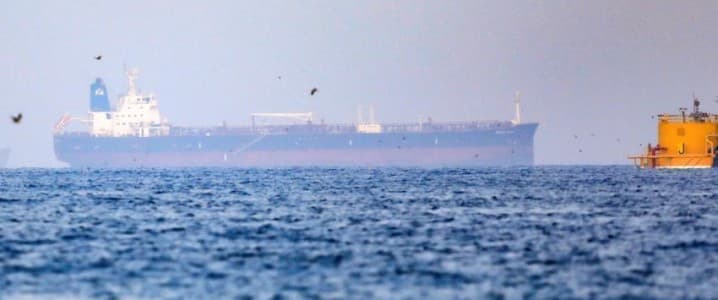
The global oil and gas market is navigating a complex web of geopolitical pressures and supply chain intricacies, with recent developments in China’s port operations adding another layer to the investment landscape. Terminal operators in Shandong province, specifically within the Huangdao Port area, have announced new restrictions on vessel entry, targeting older tankers, those with fraudulent identification, or problematic safety records. While ostensibly aimed at enhancing maritime safety and environmental compliance, this move is widely interpreted as a response to mounting international pressure to curb the so-called “shadow fleet” – vessels often implicated in transporting sanctioned crude, primarily from Iran.
China’s Port Directives: A Targeted Crackdown or Strategic Signal?
Effective November 1, operators including Qingdao Haiye Oil Terminal Co, Qingdao Shihua Crude Oil Terminal Co, Qingdao Gangxin Oil Products Co, and Qingdao Lixing Logistics Co will prohibit tankers aged 31 years or more, vessels using fake International Maritime Organization (IMO) identification numbers, and those with invalid or expired certifications from docking at Huangdao Port. Tankers with a history of accidents or pollution within the preceding three years will also be denied entry. This action follows the U.S. Treasury’s recent sanctions against other Chinese crude oil terminals and storage operators in the broader Qingdao area, including Dongjiakou Port, highlighting a concerted effort to disrupt Iranian oil exports.
For investors, the critical question isn’t just the existence of these rules, but their true impact. While Huangdao is a significant gateway for Iranian crude into China, which accounts for over 90% of Iran’s oil exports, analysis suggests Huangdao’s direct role in handling the shadow fleet is relatively minor compared to other ports in the Qingdao vicinity. This implies the immediate, direct disruption to Iranian crude flows might be limited. Instead, this could be interpreted as a precautionary and symbolic step by Chinese authorities, balancing environmental concerns with an acknowledgment of rising U.S. sanctions pressure without explicitly naming geopolitical motives. The broader implication is the precedent set; will these stringent rules propagate to other key Chinese oil import hubs, potentially tightening the screws on the shadow fleet more broadly?
Navigating Volatility: Market Reactions Amidst Geopolitical Tensions
The current market snapshot reflects a heightened sense of volatility, with crude prices experiencing significant shifts. As of today, Brent Crude trades at $90.38 per barrel, a notable decline of 9.07% within the day, fluctuating between $86.08 and $98.97. Similarly, WTI Crude stands at $82.59, down 9.41% today, moving within a range of $78.97 and $90.34. This sharp daily downturn follows a broader trend, with Brent having decreased by 18.5% over the past 14 days, from $112.78 on March 30 to $91.87 on April 17.
While the Chinese port directives, if fully enforced and expanded, could introduce a future supply-side risk by potentially constraining Iranian crude flows, the current steep price declines are likely driven by a confluence of broader macroeconomic concerns, including global demand outlooks and interest rate expectations, rather than solely this specific port news. However, the added layer of uncertainty regarding China’s future import stability and its willingness to enforce international shipping standards against the shadow fleet contributes to an already complex risk premium calculation for crude. Investors are closely monitoring how these subtle geopolitical maneuvers in major consuming nations like China might influence global supply balances and price stability in the medium to long term.
Forward Implications: The Calendar of Crude and Geopolitics
The effective date of November 1 for these new port restrictions provides a window for both the shadow fleet to adapt and for market participants to assess their true impact. However, the energy calendar is packed with events that could intersect with this evolving situation. Investors should closely watch the upcoming OPEC+ meetings, with the Joint Ministerial Monitoring Committee (JMMC) convening on April 18 and the Full Ministerial Meeting on April 19. Any discussions within OPEC+ regarding global demand stability, especially in light of potential future disruptions to Iranian crude accessing its primary market, could influence production quotas and market sentiment. If significant Iranian volumes were genuinely constrained by broader Chinese enforcement, it could tighten global supply, potentially prompting OPEC+ to consider adjustments to maintain market balance.
Furthermore, the regular release of inventory data, such as the API Weekly Crude Inventory (April 21, April 28) and the EIA Weekly Petroleum Status Report (April 22, April 29), will offer insights into current supply-demand dynamics. While these reports won’t immediately reflect the November 1 changes, they will be crucial barometers for assessing the overall health of the market and any build-up of global crude stocks that might precede or react to such supply chain pressures. The Baker Hughes Rig Count (April 24, May 1) will also provide a pulse on North American production intentions, which could become increasingly relevant if geopolitical risks escalate and global supply diversification becomes a higher priority.
Investor Focus: Decoding China’s Stance and Future Oil Prices
Our proprietary reader intent data reveals a keen focus among investors on the future trajectory of crude prices and the stability of global supply. Questions like “What do you predict the price of oil per barrel will be by end of 2026?” underscore the long-term uncertainty. China’s actions regarding the shadow fleet, even if initially minor, contribute significantly to this outlook. If Beijing were to broaden these restrictions beyond Huangdao Port, or if the initial move signals a more aggressive stance against sanctioned oil, it could substantially reduce the volume of Iranian crude reaching the market. Given China purchases over 90% of Iran’s oil exports, such a development would effectively remove a significant chunk of supply, potentially driving crude prices higher into 2026, assuming demand remains robust and other producers don’t fill the gap.
Another frequently asked question, “What are OPEC+ current production quotas?”, is directly relevant. Should Iranian crude flows be meaningfully curtailed by broader Chinese enforcement, the pressure on OPEC+ to either increase production to offset the lost supply or maintain current quotas to capitalize on tighter market conditions would intensify. Investors should monitor whether China’s policy evolves beyond a “precautionary step” into a full-fledged crackdown, as this would be a major catalyst. The delicate balance China must strike between satisfying its immense energy demand, navigating U.S. sanctions pressure, and adhering to environmental mandates will be a defining factor for global oil markets in the coming quarters.


