

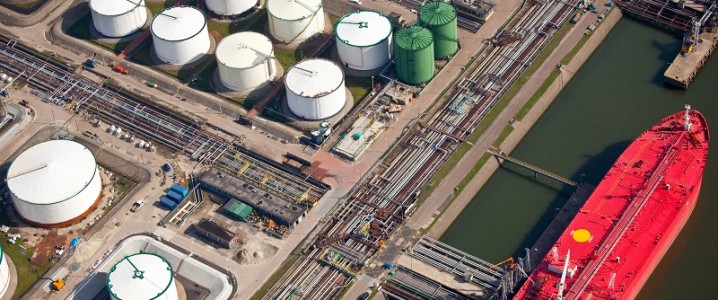
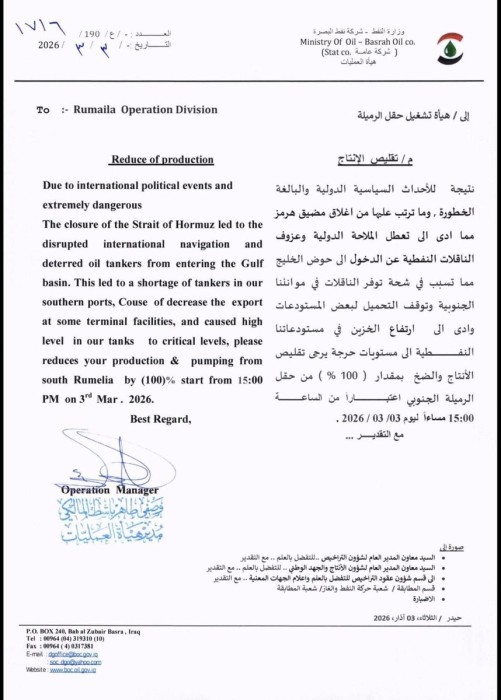
Iraq has begun curtailing oil production at key southern fields, including Rumaila, while West Qurna 2 is also shutting in roughly 460,000 barrels per day, according to Iraqi oil officials. The cuts follow escalating regional tensions that have effectively stalled tanker traffic through the Strait of Hormuz.
Iraqi authorities said disrupted navigation and a shortage of available tankers have pushed storage tanks in southern export terminals toward critical levels, forcing production reductions.
Related: Trump’s Secret Weapon in the Rare Earth War
Separately, a drone attack targeted the UAE port of Fujairah, the country’s largest oil export hub outside the Strait of Hormuz. The incident adds to mounting security risks for Gulf energy infrastructure, though there have been no confirmed reports of catastrophic structural damage at the port.
Thick black smoke pours Tuesday from the Port of Fujairah in the United Arab Emirates, located on the Gulf of Oman as one of the UAE’s only oil terminals south of the Strait of Hormuz, following a drone attack this morning on oil storage tanks and other infrastructure at the port… pic.twitter.com/WaU87tJsNA
— OSINTdefender (@sentdefender) March 3, 2026
The Strait of Hormuz handles roughly one fifth of global oil flows. Any sustained disruption materially tightens the seaborne crude market, particularly for Middle Eastern barrels bound for Asia.
Oil prices have risen sharply as traders price in the growing geopolitical risk premium and the potential for broader supply interruptions across the Gulf. At 09:30 EST on Tuesday morning, Brent crude futures jumped to 7.99% to $83.95, while WTI futures jumped 8.75% to $77.46 per barrel.
By Julianne Geiger for Oilprice.com
More Top Reads From Oilprice.com
