

Unlock the Editor’s Digest for free
Roula Khalaf, Editor of the FT, selects her favourite stories in this weekly newsletter.
Oil prices are expected to jump between 5 and 15 per cent when the market reopens on Sunday evening in New York, as traders weigh the short-term impact of a near halt to energy flows from the Middle East.
While Opec+, the Saudi Arabia-led group of major oil producers, agreed to increase its production by 206,000 barrels a day from April, analysts warned that the extra oil would have little impact on the market if there continued to be disruption to supplies from the ongoing conflict in Iran.
Activity in the Strait of Hormuz, the narrow chokepoint at the mouth of the Gulf through which a fifth of the world’s oil and gas flows, slowed to a near stop on Sunday as Iran continued to fire missiles at neighbouring countries.

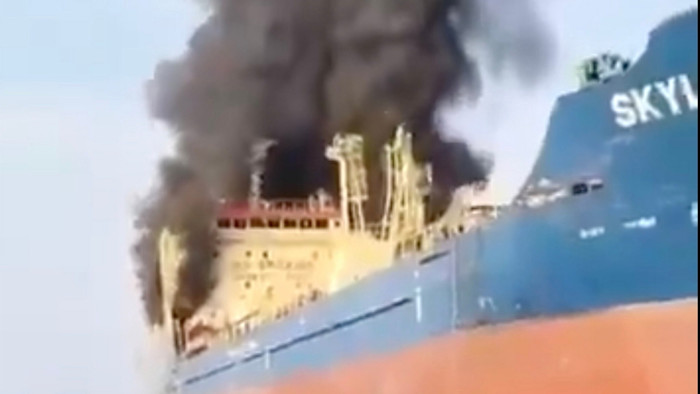
Two ships were reportedly hit near the mouth of the Strait, one of which was identified as a member of Iran’s shadow fleet, while the other was carrying nearly 500,000 barrels of gasoline from Europe to Saudi Arabia, according to data from the ship-tracking platform Kpler.
Maritime security advisers said they were telling clients on Sunday to avoid the Strait for at least the next 24 hours, given the uncertainty in the region. “It’s a bit of a wait-and-see game for now,” said Jakob Larsen, head of maritime security at Bimco, the world’s largest international shipping association.
Insurers have warned that premiums will rise sharply for any vessels that wish to transit the Strait, and some war-risk insurers may not provide any cover at all for ships linked to the US and Israel.
“Some might feel that actually this is just too dangerous,” said Marcus Baker, a broker at Marsh, adding that prices would rise for any ships sailing into the Gulf. On Sunday, dozens of ships were clustered around the entrance and exit to the Strait as they waited for tensions to ease.
Analysts said the move by Opec+ to provide more oil would not be enough to calm the market, with predictions ranging from a $5 to $10 jump in prices. Benchmark Brent crude closed at just under $73 a barrel on Friday, having already risen more than 20 per cent since the start of the year, partly in anticipation of an attack on Iran.
“If oil cannot move through Hormuz, an extra 206,000 barrels per day does very little to ease the market,” said Jorge León, an analyst at Rystad Energy. “This move is unlikely to calm markets. Prices will respond to developments in the Gulf and the status of shipping flows, not to a relatively small increase in output.”
Tamas Varga, an analyst at PVM Energy, said traders would remain anxious about Iran’s attacks on nearby oil producers such as the UAE and Saudi Arabia as well as about the status of the Strait. “An initial jump of $5 a barrel would not come as a surprise,” he said.
Recommended

While China in particular had stockpiled ample supplies of crude, even a short-term halt to shipping from the Gulf would see oil refineries, which cannot easily pause production, try to secure supplies from elsewhere, said analysts at Energy Aspects.
This could drive up prices and any speculators who had taken short positions ahead of the weekend’s attacks were likely to try to quickly close out the positions, they wrote in a briefing to clients.
“There are no recent precedents for this situation, so it is hard to gauge how large the dislocation in prices might be,” they wrote. “We expect the current phase of the conflict to last, at a minimum, for several days, meaning the risk premium will persist.”
