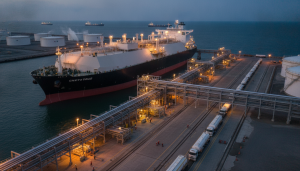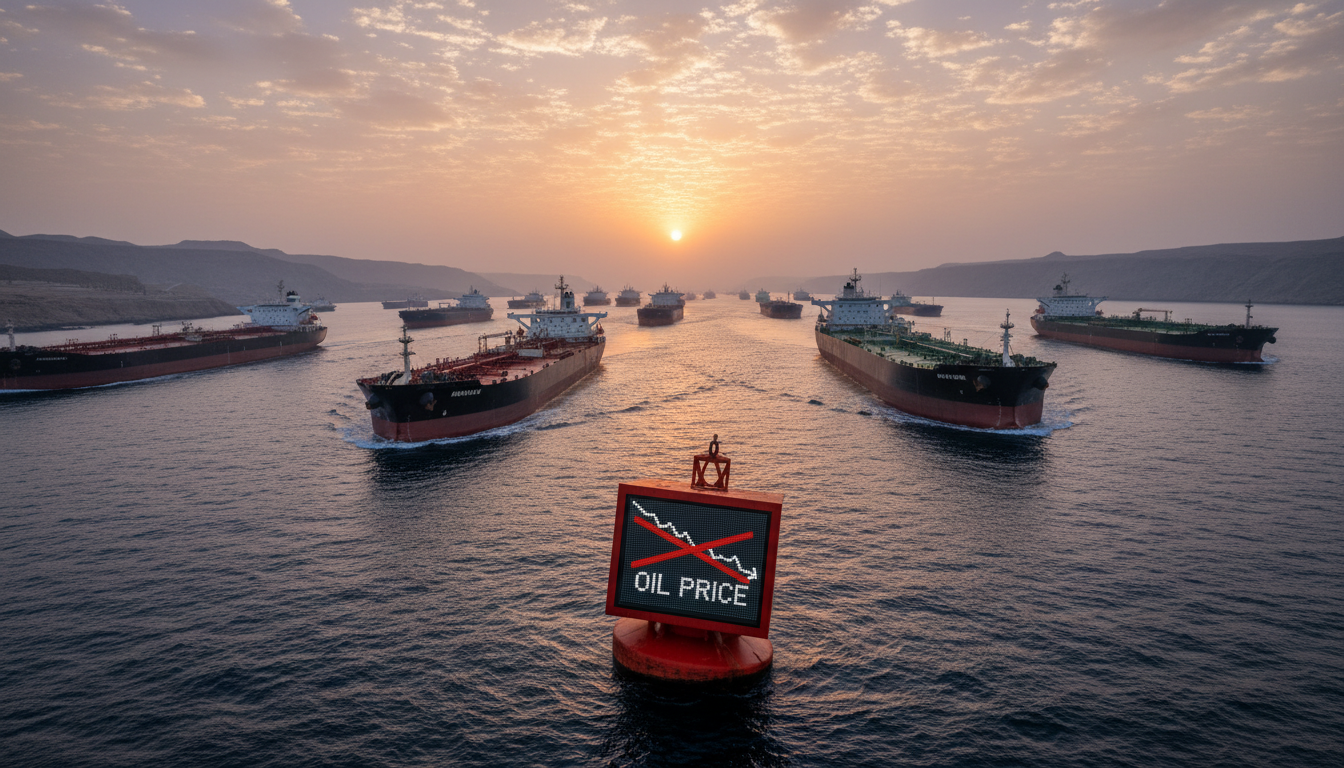
The global oil market continues its navigation through treacherous waters, with crude prices exhibiting persistent volatility following more than forty tumultuous days sparked by the ongoing Iranian conflict. A substantial “geopolitical risk premium” remains embedded in current valuations, a direct consequence of perceived threats to supply security. Astute investors are closely monitoring unfolding diplomatic overtures, particularly the critical Islamabad talks spearheaded by Vice President JD Vance. Should these discussions effectively pave the way for a full and unhindered restoration of tanker traffic through the Strait of Hormuz, this embedded risk premium could dissipate with notable speed, leading to a significant downward correction in oil prices. This analysis delves into the market’s current state, the contrasting sentiment across asset classes, and strategic considerations for investors looking to position themselves amidst this uncertainty.
The Evolving Geopolitical Risk Premium and Crude Valuations
For weeks, the global oil market has priced in a significant geopolitical risk premium, reflecting anxieties over supply disruptions, particularly from the critical Strait of Hormuz. While the source article noted prices holding firm near $100 per barrel, our proprietary data reveals a more dynamic picture. Brent crude, which commanded $112.78 on March 30th, subsequently experienced a sharp decline, bottoming out at $90.38 on April 17th – a substantial drop of nearly 20% in just over two weeks. As of today, April 20th, Brent crude trades at $95.83, experiencing a daily rise of 6.03% within a range of $92.77-$97.81. Similarly, WTI crude currently stands at $87.94, up 6.48% on the day, moving between $85.45 and $89.60. These figures, while showing a daily rebound, underscore the recent broader downward trajectory from peak tensions. The market is clearly reacting to both the immediate news flow and the perceived likelihood of de-escalation. The Strait of Hormuz, through which a significant portion of the world’s seaborne crude oil passes daily, remains the focal point; any perceived threat to this vital chokepoint immediately inflates the risk premium, while signs of normalization tend to depress it.
Divergent Market Sentiment: Equities vs. Energy Commodities
A striking divergence in sentiment persists across financial markets, providing a critical lens for energy investors. While the broader equity market, exemplified by the S&P 500, has staged a notable recovery from its March correction and now sits a mere 2% shy of all-time highs, the oil market exhibits a distinctly more cautious, if not outright pessimistic, stance regarding a swift and comprehensive resolution to the Iranian situation. This stark contrast in outlook is almost entirely predicated on the status of tanker traffic through the Strait of Hormuz. The equity market appears to be pricing in a “half-glass full” scenario, anticipating a diplomatic breakthrough that would alleviate geopolitical tensions. Conversely, the oil market, despite the recent price declines from peak levels, still carries a significant risk premium, reflecting deeper skepticism about the durability of any peace initiatives and the ongoing potential for supply chain disruptions. This dichotomy highlights the unique sensitivities of energy commodities to geopolitical events, especially when compared to broader economic sentiment.
The Diplomatic Horizon and Upcoming Supply Signals
The spotlight is firmly on diplomatic efforts, particularly the Islamabad talks spearheaded by Vice President JD Vance. A successful outcome, leading to the full and unhindered reopening of the Strait of Hormuz, is widely anticipated to usher in a rapid dissipation of the geopolitical risk premium. Our analysis suggests that WTI oil futures could quickly retreat into the $80s, with potential to even dip into the $70s in the short term, from its current level of $87.94. This scenario underscores the immediate and profound impact that geopolitical de-escalation can have on energy commodities. Looking ahead, the market will be closely watching a series of upcoming events that could either reinforce or challenge this outlook. The OPEC+ Joint Ministerial Monitoring Committee (JMMC) Meeting on April 20th and the full OPEC+ Ministerial Meeting on April 25th are particularly crucial. Should the Strait of Hormuz de-escalate, OPEC+ will face increased pressure to adjust production quotas, potentially offsetting any perceived supply deficit. Furthermore, the weekly API and EIA inventory reports on April 21st, 22nd, 28th, and 29th, alongside the Baker Hughes Rig Count on April 24th and May 1st, will offer vital insights into U.S. supply dynamics, further influencing price action in a post-de-escalation environment.
Navigating Volatility: Investor Sentiment and Strategic Positioning
The current environment, marked by significant geopolitical uncertainty and potential for rapid price swings, has investors actively seeking clarity on market direction. Our reader intent data shows a clear focus on the immediate future, with many asking about the short-term trajectory of WTI and broader oil prices. This mirrors the general market anxiety: “is WTI going up or down?” is the core question. For investors who believe in the potential for a near-term diplomatic breakthrough and a subsequent oil price correction, a well-structured options trade offers a way to capitalize on this anticipated downside while managing risk. The U.S. Oil Fund (USO), an exchange-traded fund that tracks the price of West Texas Intermediate (WTI) light sweet crude oil futures contracts, serves as an accessible vehicle for expressing such a view. A strategic approach could involve deploying a bearish put spread on USO, which allows investors to profit from a decline in WTI prices while defining their maximum risk. This strategy aligns with the “half-glass full” perspective, anticipating that the geopolitical risk premium, while still present, is poised for erosion, presenting a compelling opportunity for those prepared to act on the potential unwinding of current elevated prices.