

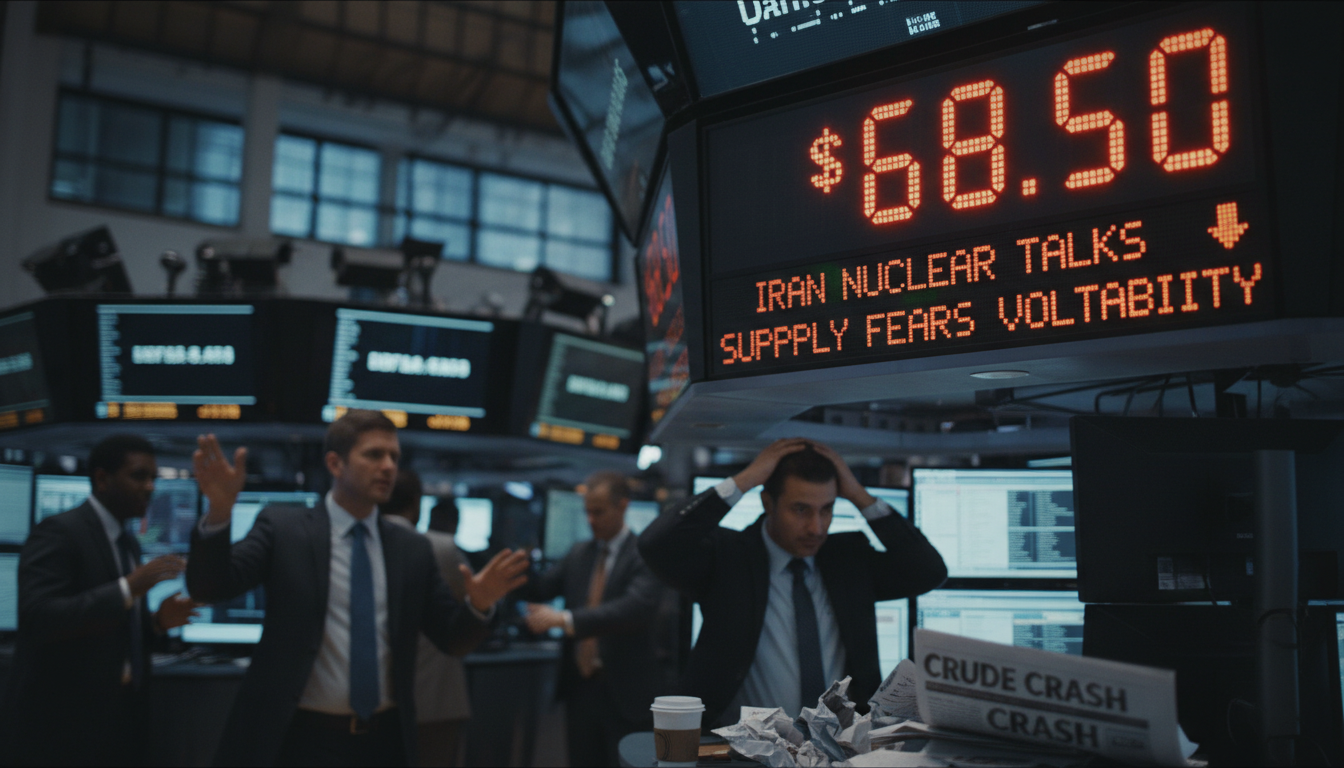
Global crude benchmarks experienced downward pressure this week as market participants grappled with a convoluted geopolitical landscape surrounding diplomatic efforts aimed at de-escalating tensions with Iran. This intricate situation, characterized by conflicting signals from Washington and Tehran, created an environment of heightened uncertainty, causing the global benchmark Brent crude to settle near the $102 per barrel mark.
The prospect of a diplomatic breakthrough, however tenuous, appears to have partially eroded the geopolitical risk premium that has buoyed oil prices throughout the current month. The protracted conflict has significantly disrupted global energy shipping lanes, maintaining a floor under prices. Yet, as traders attempt to interpret the nuanced messaging, many have retreated to the sidelines, contributing to a notable decline in market liquidity. Some investors viewed the recent price dip as a timely exit opportunity, having previously accumulated substantial long positions since the start of the month. Despite this, the market remains acutely sensitive to every new development, with futures contracts exhibiting wide price swings as analysts meticulously dissect each statement concerning the potential reopening of the strategically vital Strait of Hormuz.
Geopolitical Tug-of-War: Diplomacy Meets Deterrence
The White House has consistently affirmed its engagement in ongoing peace discussions with Iran, even as Tehran publicly rebuffed US overtures and outlined a fresh set of conditions for a cessation of hostilities. This diplomatic dance creates a complex scenario for energy investors. Scott Shelton, an energy expert at TP ICAP Group Plc, observed, “The market is pricing in a higher probability of a ceasefire, but the extreme volatility also makes me wonder if a scarcity of short positions left to cover is amplifying these moves.”
Several frameworks for a potential peace agreement surfaced midweek. Iranian state media indicated that an unnamed senior security official presented five key demands to the US and Israel. These conditions reportedly include financial reparations for damages sustained and explicit recognition of Iran’s authority over the crucial Strait of Hormuz waterway. Simultaneously, the US administration reportedly formulated its own 15-point peace proposal, which Pakistan subsequently conveyed to the Islamic Republic. This highlights the Trump administration’s urgent desire to resolve a conflict initiated in conjunction with Israel almost a month prior.
Adding layers of complexity to the conflict’s trajectory, the White House also authorized the deployment of approximately 2,000 soldiers from the 82nd Airborne Division to the region. This troop movement follows the earlier dispatch of two Marine Expeditionary Units, with additional military aircraft and naval vessels continuing to arrive. White House Press Secretary Karoline Leavitt stated on Wednesday that should Iran “fail to accept the reality of the current moment,” President Trump “is prepared to unleash hell.” This hawkish rhetoric, however, was somewhat tempered by Leavitt’s assertion that the US had engaged in productive talks with Iran over the preceding three days, with reports from CNN suggesting Vice President JD Vance might travel to Pakistan this weekend for further discussions.
The Hormuz Bottleneck: A Constant Threat to Global Supply
Ryan McKay, a senior commodity strategist at TD Securities, aptly summarized the prevailing sentiment: “The discrepancy between stated intentions and actual military actions is unsettlingly reminiscent of pre-war negotiations, even as a substantial military presence is being established in the region, fueling market skepticism.” McKay further cautioned, “Unless any agreement leads to an immediate restoration of oil flows, a sharp upward movement in benchmark prices is virtually inevitable.” At the core of this geopolitical maelstrom lies Tehran’s assertive posture over the Strait of Hormuz, a critical maritime chokepoint. Iran’s actions to assert control over this waterway have significantly constrained the movement of crude oil and natural gas from key Persian Gulf producers to international markets, igniting widespread concerns about an impending energy supply crunch.
The volatility continued to impact regional benchmarks. The Oman crude benchmark, a key indicator in the Middle East, shed a significant 17% to settle near $130 per barrel on Wednesday. Similar declines were observed in Murban crude from the United Arab Emirates. It is worth noting that both these contracts tend to be relatively illiquid as they approach their end-of-month expiry, a factor that could be exacerbating these pronounced price swings. The US administration’s public position on the conflict has undergone rapid shifts in recent days, contributing to market confusion. Over the weekend, President Trump dramatically escalated the rhetoric with a threat to bomb Iran’s power plants if the Strait of Hormuz was not fully reopened within 48 hours. However, the president subsequently softened this deadline, extending the window for negotiations to five days.
Iran, for its part, communicated its stance on maritime passage in a letter circulated to members of the International Maritime Organization on Tuesday. The communication stated that foreign vessels are permitted to traverse the Strait of Hormuz provided they are not supporting acts of aggression against the nation and adhere to regulations established by Tehran.
Crude Price Action and Market Implications
Despite the recent downward adjustments, oil markets remain poised for a substantial monthly gain, reflecting the tumultuous trading environment spurred by the ongoing conflict. Investors are closely monitoring the broader ramifications of the war for global energy stability.
For May delivery, West Texas Intermediate (WTI) crude experienced a decline of 2.2%, settling at $90.32 per barrel in New York. Concurrently, Brent crude for May settlement also decreased by 2.2%, closing at $102.22 per barrel.
Broader Energy Market Repercussions
The ripple effects of this geopolitical tension are already manifesting in critical downstream markets. Chevron Corp. has issued a stark warning that California faces an impending energy crisis, indicating that the company might cease its refining operations in the state unless officials roll back existing regulations. California’s vulnerability is particularly pronounced given that it imports approximately 20% of its refined fuels from Asia, and diesel prices there have reached an alarming record high, exceeding $7 per gallon. This situation highlights the fragile nature of regional energy security when global supply chains are under duress.
Far across the Pacific, Australia is also contending with significant fuel supply disruptions. Energy Minister Chris Bowen informed parliament on Tuesday that hundreds of service stations across the nation have reported fuel shortfalls. Specifically, at least 600 retail sites have run out of at least one type of fuel, with the most severe shortages concentrated in the country’s two most populous states, New South Wales and Victoria. These localized crises underscore the far-reaching impact of Middle Eastern instability on global energy markets and the urgent need for robust supply chain resilience.
