India’s Energy Horizon: Unpacking the OIL-ONGC Exploration Alliance
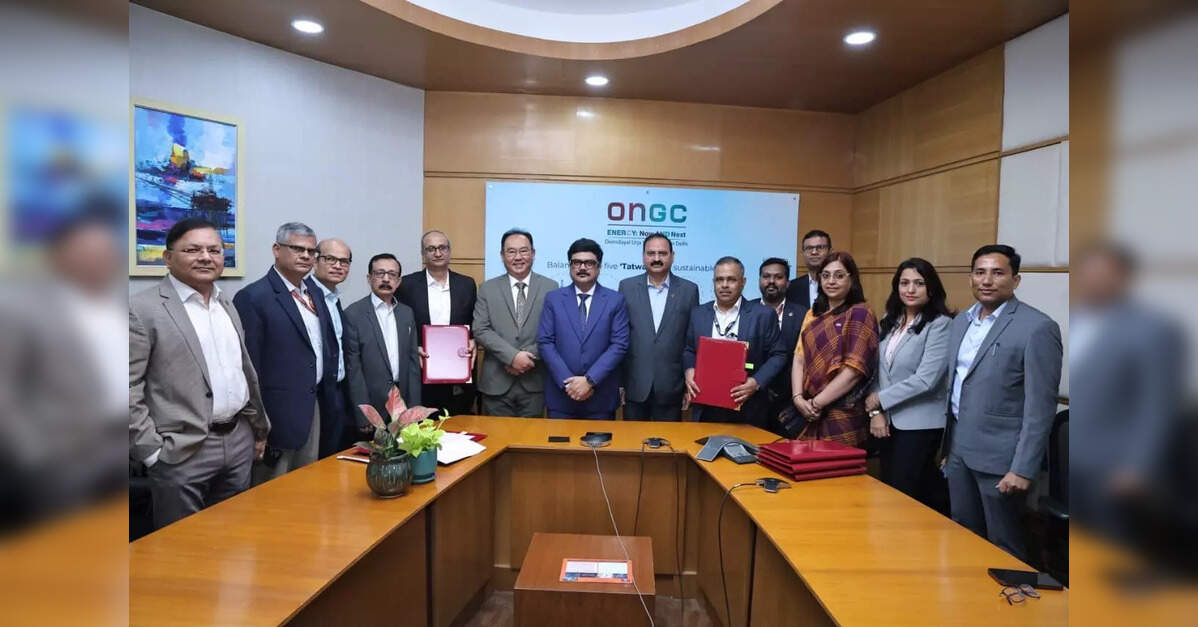
India’s pursuit of energy independence gained significant momentum with Oil India Ltd (OIL) and Oil & Natural Gas Corporation Ltd (ONGC) formalizing a joint operating agreement (JOA) for three strategic exploration blocks. Signed on August 12, 2025, this collaboration targets an expansive area of approximately 10,965 square kilometers, awarded under the Open Acreage Licensing Policy (OALP) Bid Round-IX. This isn’t merely a procedural signing; it represents a powerful synergy between two national energy giants, poised to tackle some of the most challenging, yet potentially rewarding, exploration terrains. For investors eyeing the Indian upstream sector, this alliance signals a renewed commitment to domestic hydrocarbon discovery, offering long-term growth prospects despite the inherent volatility of global energy markets.
Strategic Imperative in a Dynamic Global Market
The timing of this significant domestic exploration push is particularly noteworthy. As of today, Brent Crude trades at $99.24 per barrel, reflecting a robust 4.54% gain within the day, after a recent period of correction. The past 14 days saw Brent decline by $13.43, or 12.4%, from $108.01 on March 26 to $94.58 on April 15. This volatility underscores the critical need for nations like India to bolster their energy security through indigenous production. The OIL-ONGC joint venture directly addresses this imperative, aiming to unlock new hydrocarbon reserves that can cushion India from external price shocks and geopolitical instability. The blocks in question – MN-UDWHP-2023/1 in the ultra-deep waters of the Mahanadi Basin, and CB-ONHP-2022/2 and AS-ONHP-2022/2 in the Assam Shelf Basin (including a challenging area in Meghalaya) – represent high-potential, high-risk exploration plays. Success in these frontier areas would not only de-risk India’s energy future but also create substantial long-term value for investors in these national oil companies, positioning them as key players in a more self-reliant energy landscape.
Unlocking Challenging Frontiers: Deepwater and Frontier Basins
The exploration blocks under this JOA are strategically diverse, presenting a mix of technical complexity and vast potential. The Mahanadi Basin’s MN-UDWHP-2023/1 block stands out, situated in ultra-deep waters beyond the 2,500-meter isobath. Ultra-deepwater exploration demands significant capital investment, advanced technology, and a high tolerance for risk, but historically, it has also yielded some of the world’s largest hydrocarbon discoveries. Success here could transform India’s deepwater exploration profile. Concurrently, the AS-ONHP-2022/2 block in Meghalaya, within the Assam Shelf Basin, is specifically highlighted as one of the “most challenging exploration terrains.” This onshore frontier basin could open entirely new hydrocarbon opportunities, extending India’s proven reserve base into previously underexplored regions. This dual focus on both deepwater and challenging onshore plays demonstrates a comprehensive, long-term strategy by OIL and ONGC to leverage their combined expertise and resources in areas where significant reserves are believed to exist, but have remained elusive due to geological complexity or technological barriers.
Investor Focus: Long-Term Value in Exploration Amidst Market Signals
Investors are consistently seeking clarity on future price trajectories, with common questions revolving around a “base-case Brent price forecast for next quarter” and the “consensus 2026 Brent forecast.” While short-term forecasts remain subject to geopolitical shifts and supply-demand dynamics, this exploration JV between OIL and ONGC underscores a long-term investment horizon. Developing ultra-deepwater or challenging onshore blocks is a multi-year endeavor, often requiring a decade or more from discovery to first oil. Therefore, for investors evaluating OIL and ONGC, the immediate Brent price fluctuations, while important for quarterly earnings, are less critical than the long-term outlook for global energy demand and India’s growing appetite for hydrocarbons. This JV positions both companies for future growth, regardless of minor near-term market corrections. Successful exploration here would significantly enhance their reserve replacement ratios and provide a foundational asset base that can generate returns for decades, appealing to investors with a strategic, patient capital approach focused on sustainable value creation in the energy sector.
Navigating the Macro Environment: Upcoming Catalysts for E&P
While the OIL-ONGC JV focuses on long-term domestic resource development, the broader energy market will continue to be shaped by a series of upcoming events, which investors should monitor closely. This Friday, April 17, the latest Baker Hughes Rig Count will provide an updated snapshot of drilling activity, indicating trends in global and regional exploration and production spending. Crucially, the OPEC+ Joint Ministerial Monitoring Committee (JMMC) is scheduled to meet on Saturday, April 18, followed by the full OPEC+ Ministerial Meeting on Monday, April 20. The outcomes of these meetings will dictate global crude supply policies, directly influencing market sentiment and price stability. Additionally, the API Weekly Crude Inventory report on April 21 and the EIA Weekly Petroleum Status Report on April 22 will offer critical insights into U.S. inventory levels and demand. Further Baker Hughes data on April 24, and subsequent API and EIA reports on April 28 and April 29, will continue to shape the near-term trading environment. While these events primarily impact short-to-medium-term prices, they collectively form the backdrop against which long-term exploration ventures like the OIL-ONGC JV are assessed, influencing capital allocation decisions and investor confidence in the broader E&P sector.


