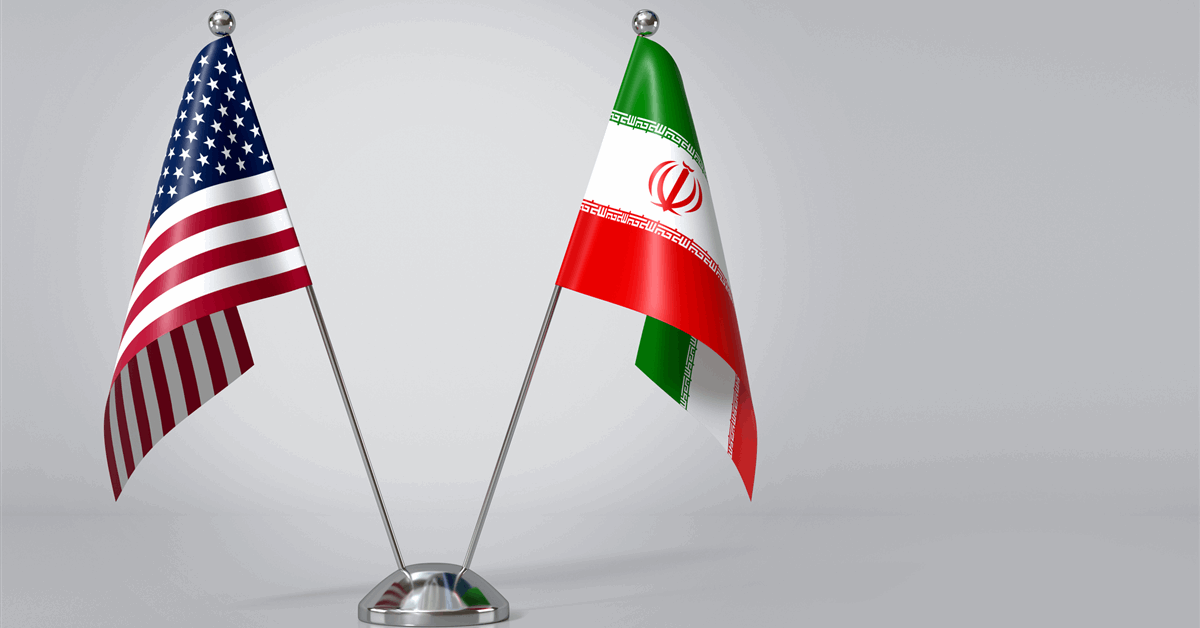
The global oil market is experiencing a tentative moment of relief, as the prospect of renewed diplomatic engagement between the United States and Iran takes center stage. Following a tense 12-day period of conflict that threatened to destabilize a critical energy-producing region, the announcement by President Donald Trump that the US will hold talks with Iran next week signals a pivot from military confrontation back to the negotiating table. This shift has already manifested in market dynamics, with crude prices shedding some of their recent war-premium gains. For energy investors, understanding the contours of these nascent discussions and their potential ramifications for global supply and demand is paramount, as the path forward remains fraught with both opportunity and significant risk.
Geopolitical Easing and Immediate Market Response
The cessation of hostilities between Israel and Iran, culminating in a fragile ceasefire, provided immediate respite for an oil market on edge. Prices had surged during the conflict, driven by fears of widespread regional escalation and supply disruptions. However, as missiles fell silent, the market quickly recalibrated. Brent crude, which had traded above $102 per barrel as recently as March 25, plunged significantly over the subsequent weeks, settling around $93.22 by April 14, representing an approximate 8.8% decline. This sharp correction underscored the market’s sensitivity to geopolitical risk premiums. As of today, Brent Crude is trading at $95.19, reflecting a modest gain of 0.42% within a daily range of $91 to $96.89, while WTI Crude stands at $91.74, up 0.5% after fluctuating between $86.96 and $93.30. Gasoline prices have also seen a slight uptick, currently at $3, a 1.01% increase within a $2.93 to $3.03 range. This slight recovery today suggests that while the immediate conflict premium has largely dissipated, underlying supply concerns and the inherent uncertainty of diplomatic breakthroughs are still influencing trading patterns. President Trump’s assertion that the conflict is “effectively over” temporarily soothed nerves, though his caveat that it “could maybe start soon” ensures investors remain vigilant.
The Stakes of Diplomacy: Sanctions, Supply, and Nuclear Ambitions
The upcoming US-Iran talks carry profound implications for global oil markets, hinging on the potential for sanctions relief and the return of Iranian crude to international markets. Previous negotiations, led by US envoy Steve Witkoff through five rounds, aimed to curb Iran’s nuclear activities in exchange for easing economic restrictions. A central sticking point in these discussions has consistently been Iran’s uranium enrichment program. Tehran insists on its right to continue enrichment, even at the low levels required for civilian power generation, a stance directly opposed by the US, which seeks a complete halt. President Trump’s recent comments, casting doubt on the necessity of a diplomatic agreement and reiterating that US strikes had “obliterated” key Iranian nuclear facilities at Natanz, Isfahan, and Fordow, introduce a layer of complexity. This perspective directly contradicts earlier intelligence assessments suggesting only a temporary setback to Iran’s program. Despite these assertions, Iran has signaled its readiness to resume talks, emphasizing that “the logic of war has failed – return to the logic of diplomacy.” Should these talks progress towards a comprehensive peace agreement, as envoy Witkoff expressed hope for, even a partial lifting of sanctions could unleash a significant volume of Iranian crude into a market already grappling with supply-demand balances. This prospect, however, remains contingent on overcoming deep-seated disagreements and the inherent skepticism surrounding the durability of any potential accord.
Navigating the Supply Horizon: OPEC+ and Iranian Resurgence
As investors look ahead, the potential return of Iranian oil supply intertwines critically with the upcoming decisions from major producers. The next 14 days are packed with key energy events that will shape the near-term supply outlook. The Baker Hughes Rig Count, scheduled for April 17 and April 24, will offer insights into North American production trends. More significantly for global supply, OPEC+ is set to hold its Joint Ministerial Monitoring Committee (JMMC) meeting on April 18, followed by a full Ministerial Meeting on April 20. These gatherings will be crucial for assessing the group’s production strategy in light of evolving market conditions. Should US-Iran talks show tangible progress, the prospect of increased Iranian exports could complicate OPEC+’s efforts to manage global supply and support prices. The additional barrels, even if phased in gradually, would add to the global crude surplus, potentially putting downward pressure on prices. Weekly crude inventory reports from the API (April 21, April 28) and the EIA (April 22, April 29) will provide immediate snapshots of market balances, but the overarching narrative for the coming months will be dictated by the interplay of OPEC+ policy and the pace of any Iranian market re-entry. Investors must closely monitor these events, as they will provide critical signals on the world’s future oil supply trajectory.
Investor Outlook: Pricing in Uncertainty
In this volatile environment, investors are actively seeking to build a robust base-case Brent price forecast for the next quarter and beyond, grappling with a complex array of geopolitical and fundamental factors. A primary concern for many remains the consensus 2026 Brent forecast, which now must integrate the unpredictable trajectory of US-Iran diplomacy. The signals from Tehran regarding a readiness for talks, coupled with Witkoff’s optimism, suggest a window for de-escalation that could unlock Iranian supply. However, President Trump’s contrasting skepticism regarding the necessity of a deal and his stark warning that conflict “could maybe start soon” inject a high degree of uncertainty. Investors are thus weighing scenarios ranging from a swift, albeit partial, return of Iranian barrels, to a protracted diplomatic stalemate, or even a re-escalation of tensions. The market’s current modest recovery, reflected in today’s Brent price of $95.19, points to a cautious optimism, yet the range-bound trading implies underlying apprehension. Our platform indicates a strong investor interest in understanding how these geopolitical shifts translate into concrete price projections. Analyzing the interplay between potential Iranian production, OPEC+ output decisions, and global demand dynamics, particularly from key regions like China, will be essential for making informed investment decisions in the coming months.


