Geopolitical Tensions Mount as Iran Challenges Maritime Security in Critical Oil Chokepoint
The Strait of Hormuz, a conduit for a significant portion of the world’s seaborne crude, has once again become a flashpoint for escalating geopolitical tensions. Recent actions by Iranian forces, including the targeting of commercial vessels and a direct challenge to international maritime blockades with its own oil supertankers, underscore Tehran’s assertive posture amidst stalled diplomatic efforts and persistent US pressure. These developments carry substantial implications for global energy markets and investor sentiment.
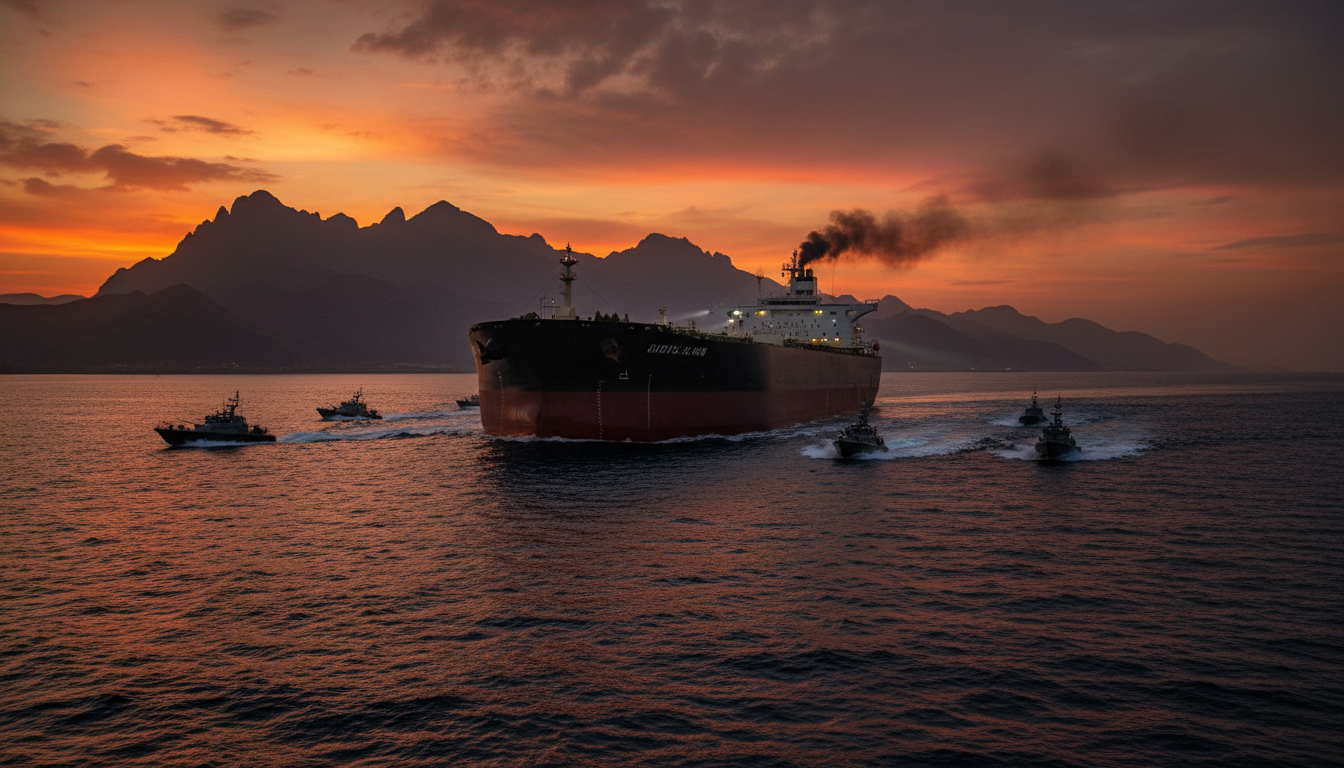
On Wednesday, reports emerged of Iranian gunboats engaging commercial shipping within the strategic waterway. The UK Maritime Trade Operations (UKMTO), a crucial liaison providing security alerts to the shipping industry, confirmed that both a cargo ship and a container ship experienced fire in the area. Subsequently, Iranian state television announced that the Islamic Revolutionary Guard Corps (IRGC) had seized two vessels, identified as the MSC Francesca and the Epaminondas, escorting them to shore for inspection. The Wall Street Journal further indicated a third vessel, the Euphoria, also came under attack. Technomar Shipping Inc., managers of the Epaminondas, confirmed damage to the vessel’s bridge from gunfire by a manned gunboat, with crew safety paramount.
These incidents highlight the persistent and terrifying threat posed by Iran’s deployment of smaller naval assets against commercial traffic. The container ship, according to UKMTO, suffered heavy bridge damage after being attacked at approximately 2:55 a.m. London time, while the cargo ship, though undamaged, was brought to a halt roughly three hours later after also being fired upon. The direct targeting of merchant vessels in such a critical energy artery introduces significant risk premiums for shipping and insurance, directly impacting the economics of crude oil transportation.
Iran’s Supertanker Maneuvers Test US Blockade Effectiveness
Beyond the direct attacks, Iran has explicitly challenged the US-imposed blockade on its shipping. Analytics firm Vortexa reported the movement of two Iran-flagged Very Large Crude Carriers (VLCCs), the Hero II and the Hedy, into the Arabian Sea on April 20. These supertankers collectively possess the capacity to transport up to 4 million barrels of crude oil, signaling a deliberate attempt to circumvent US sanctions and maintain export flows.
The deployment of these massive vessels into an area where the United States has actively sought to intercept Iranian shipping represents a critical test of enforcement. Another Iranian VLCC, the Diona, was observed turning back after entering the Arabian Sea from Hormuz, as noted by TankerTrackers.com co-founder Samir Madani, suggesting the complex and often fluid nature of these cat-and-mouse operations. The US previously shifted its strategy from encouraging Iranian barrels to flow (to temper spiraling oil prices) to imposing a comprehensive blockade on April 13, targeting all Iranian shipping. While US President Donald Trump has lauded the blockade as a “tremendous success,” the successful departure of laden tankers like the Hero II and Hedy complicates this narrative and underscores the difficulties in enforcing such measures against a determined regime.
The Geopolitical Chessboard: Sanctions, Supply, and Market Implications
The broader context for these actions is a protracted conflict now in its eighth week. Iran had previously closed the Strait of Hormuz in late February following reported attacks by the US and Israel. The current US blockade has involved the seizure of an Iran-linked cargo vessel, the boarding of a sanctioned oil tanker east of Sri Lanka, and the turning back of at least 28 other vessels. The explicit US position to consider boarding and seizing sanctioned vessels “regardless of location” means that even supertankers venturing further afield may not be immune to interdiction.
Despite these intensified efforts, data from Vortexa indicates that Iranian exports have not been entirely halted. At least 34 Iran-linked tankers and gas carriers have reportedly traversed the Strait and navigated past the US blockade line since early last week. Of these, 19 were observed heading out of the Persian Gulf, with 17 carrying cargo. Ships had been given a deadline of late April 13 to depart Iranian ports. This ongoing flow, even if diminished, highlights Iran’s ability to adapt and continue its oil trade, primarily destined for China, though India also received two Iranian crude cargoes recently before a US waiver expired.
Navigating Covert Operations: Tracking Illicit Shipments
A key aspect of Iran’s strategy to evade sanctions involves tankers turning off their Automatic Identification System (AIS) transponders, making them difficult to track. Vortexa relies on satellite imagery to monitor these covert movements. The Hero II, for example, was last publicly tracked over a month ago sailing north in the Strait of Malacca, while the Hedy’s last broadcast location was off Khor Fakkan in the United Arab Emirates in late February. The ultimate destinations of these current oil shipments remain opaque, further complicating market analysis and enforcement efforts.
The ongoing conflict has had a profound impact on global crude oil availability, with top traders estimating that a staggering one billion barrels of oil supply have been eliminated from the market. While President Trump recently extended a ceasefire indefinitely, the US blockade remains firmly in place. Meanwhile, approximately 800 vessels are reported to be stuck in the Persian Gulf, with the International Maritime Organization (IMO) actively working on an evacuation plan, contingent upon a de-escalation of the war. For investors in oil and gas, these developments underscore persistent geopolitical risks, supply chain vulnerabilities, and the potential for significant volatility in crude oil prices as a direct consequence of the escalating maritime confrontation in the Strait of Hormuz.