The global oil market is currently navigating a complex landscape, where geopolitical tensions, particularly between the U.S. and Iran, are compelling key Gulf producers to take proactive measures. This environment has injected a palpable “Iran Premium” into crude prices, prompting strategic shifts in supply. Our proprietary data pipelines at OilMarketCap.com reveal how these macro forces, combined with nuanced production decisions from major players, are shaping investor sentiment and driving market dynamics.
Gulf Producers Proactively Adjust Supply Amid Escalating Tensions
Major Gulf producers are demonstrating a clear strategy of calibrated risk management, anticipating potential supply disruptions rather than reacting to them. The United Arab Emirates, for instance, is set to increase exports of its flagship Murban crude in April. ADNOC has reportedly extended additional barrels to partners in its onshore concession, which includes international giants like BP, TotalEnergies, CNPC, Inpex, Zhenhua Oil, and GS Energy, collectively entitled to a significant portion of the stream’s nearly 2 million barrels per day output. While the exact uplift remains undisclosed, this move signals a readiness to inject more crude into the market.
Concurrently, Saudi Arabia has significantly ramped up its production and exports. In the first 24 days of February, Saudi shipments surged to approximately 7.3 million barrels per day, marking the highest level since April 2023. This is part of a broader contingency to mitigate severe disruptions, especially if Strait of Hormuz traffic were threatened by military escalation. Riyadh maintains an impressive spare capacity of an additional 2.4 million barrels per day, further bolstered by its East-West pipeline, offering an alternative route to the Red Sea. These actions underscore a preference among Gulf producers for controlled market strength, aiming to allow the geopolitical premium to build without triggering a destabilizing price spike or an emergency release of strategic reserves.
The Geopolitical Premium Reflected in Current Market Data
The market is clearly pricing in elevated geopolitical risk. As of today, Brent crude trades at $93.81, showing a modest daily gain of 0.61%, with WTI crude not far behind at $90.27, up 0.67%. These figures reflect a substantial geopolitical premium, especially when considering the 14-day Brent trend, which saw prices decline from $118.35 on March 31st to $94.86 by April 20th. Despite this recent downward correction from higher peaks, the current trading levels remain robustly elevated, far surpassing what might be expected under purely fundamental demand-supply conditions without the specter of conflict.
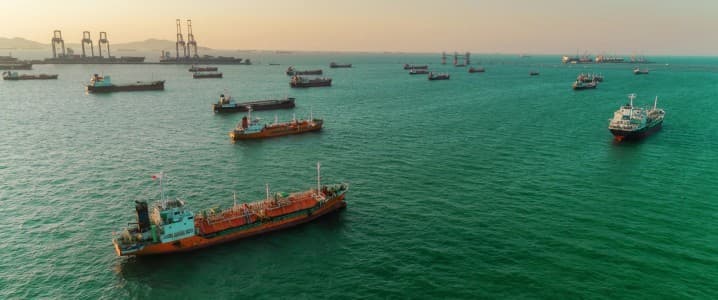
Further evidence of market anxiety is flashing red in the freight sector. VLCC rates for Middle East-to-Asia routes have soared past $200,000 per day, reaching a six-year high. This surge indicates that traders are aggressively front-loading cargoes and securing shipping capacity in anticipation of potential future disruptions. Saudi national carrier Bahri has been particularly active, chartering multiple supertankers to lock in liftings to Asia, signaling a clear intent to move significant volumes ahead of time. These freight market dynamics serve as a crucial leading indicator, confirming the market’s deep-seated concerns about future supply stability.
Upcoming Events to Watch: OPEC+ and Key Inventory Reports
Investors must closely monitor several upcoming calendar events that will significantly influence crude price trajectories. The OPEC+ Joint Ministerial Monitoring Committee (JMMC) Meeting on April 21st is paramount. The market widely anticipates that the group will consider a modest output increase of around 137,000 barrels per day for April, following earlier pauses in production hikes. This decision will be scrutinized for its balance between accommodating the current geopolitical premium and preventing an uncontrolled price surge that could stifle demand or provoke consumer nation backlash.
Beyond OPEC+, attention will turn to critical U.S. inventory data. The EIA Weekly Petroleum Status Report, scheduled for April 22nd and again on April 29th, will provide vital insights into U.S. crude and product inventories, refining activity, and demand. Similarly, the API Weekly Crude Inventory reports on April 28th and May 5th offer an early look at these trends. Given the increased export activity from the Gulf, any unexpected build or draw in U.S. stocks will be amplified by the prevailing geopolitical risk. Furthermore, the EIA’s Short-Term Energy Outlook on May 2nd will offer a broader forecast, potentially recalibrating market expectations for the coming months.
Addressing Investor Questions: Price Outlook and Market Drivers
Our reader intent data at OilMarketCap.com highlights investor anxiety surrounding oil price direction, with questions like “Is WTI going up or down?” and “What will the price of oil per barrel be by the end of 2026?” dominating queries. While precise predictions are challenging in such a volatile environment, our analysis suggests that the current geopolitical premium will remain a dominant factor in the near term. The balancing act by Gulf producers – increasing supply to calm markets without crushing prices – aims to manage this premium, preventing it from spiraling into triple-digit territory which could trigger demand destruction and political fallout.
The shifting global crude flows further complicate the picture. Saudi exports to India are on the rise, filling a void left by declining Russian exports to the subcontinent, which are under U.S. pressure. Conversely, China continues to absorb discounted Russian crude at record levels, diversifying its supply sources. These macro shifts underscore the complex interplay of geopolitics, sanctions, and economic incentives driving market behavior. For investors, understanding this intricate web of supply adjustments, geopolitical tensions, and demand reconfigurations is crucial for navigating the current market and formulating an informed outlook for crude prices through the remainder of 2026.


