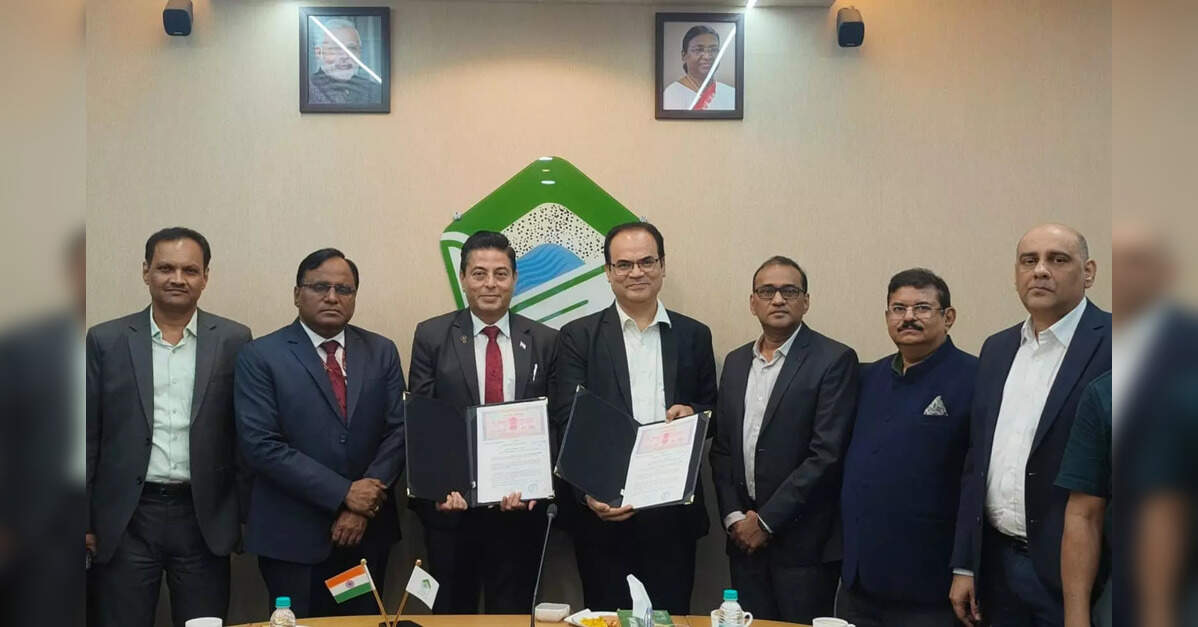
In a significant strategic pivot, Oil India Limited (OIL) has formalized a collaboration with IREL (India) Limited, signing a Memorandum of Understanding (MoU) on August 7, 2025, to embark on the development of critical minerals. This move signals a calculated diversification for the Maharatna PSU, extending its operational expertise beyond traditional hydrocarbon exploration, development, production, and transportation. For investors observing the evolving global energy landscape, this partnership represents a forward-looking strategy, aligning OIL with India’s ambitious National Critical Mineral Mission and positioning the company to capitalize on the burgeoning demand for materials vital to the energy transition and technological advancement.
Diversification as a Strategic Imperative in a Volatile Market
The decision by Oil India to venture into critical minerals underscores a broader industry trend where traditional oil and gas giants are seeking to de-risk their portfolios and secure future growth avenues amidst increasing energy transition pressures. While the immediate focus for many investors remains on the short-term dynamics of crude markets, the long-term trajectory of oil prices continues to be a central query. Our proprietary reader intent data reveals a consistent investor preoccupation with questions like “what do you predict the price of oil per barrel will be by end of 2026?” Such inquiries highlight the underlying uncertainty that prompts companies like OIL to explore new revenue streams.
As of today, April 18, 2026, Brent crude trades at $90.38, reflecting a notable decline of over 9% within the day’s trading range of $86.08 to $98.97. Similarly, WTI crude sits at $82.59, down over 9.4%. This immediate volatility follows a more pronounced trend, with Brent having shed $20.91, or 18.5%, from $112.78 on March 30, 2026. This stark reminder of price fluctuations in the hydrocarbon sector provides a compelling backdrop for OIL’s strategic shift. By leveraging its inherent strengths in large-scale project management and resource exploration, Oil India aims to tap into the more stable, yet rapidly growing, critical minerals market, which is less susceptible to the geopolitical and demand-side swings impacting fossil fuels.
Synergies and National Ambition: The OIL-IREL Partnership
The collaboration between Oil India and IREL is more than just a contractual agreement; it represents a synergy of complementary strengths under the umbrella of India’s national energy security agenda. Oil India, with its extensive experience in complex exploration and production operations across varied geological terrains, brings invaluable expertise in identifying, extracting, and processing natural resources. IREL (India) Limited, a Miniratna PSU under the Department of Atomic Energy, is a specialist in mining and processing mineral sands, including the critical area of rare earth element extraction and refining. This division of labor is crucial: OIL’s exploration and development prowess can identify new critical mineral deposits, while IREL’s processing capabilities can transform these raw materials into high-value components essential for modern technologies.
This partnership is directly aligned with the Indian government’s National Critical Mineral Mission, emphasizing the strategic importance of securing these resources for the nation’s technological advancement and energy independence. Critical minerals are indispensable for electric vehicles, renewable energy infrastructure, advanced electronics, and defense applications. By participating in this mission, Oil India not only diversifies its business model but also plays a pivotal role in strengthening India’s self-reliance in key industrial sectors, making the company a more resilient and strategically important entity in the long term.
Navigating Future Markets: Upcoming Events and Investor Focus
While Oil India sets its sights on future growth through critical minerals, the broader energy market continues to present immediate challenges and opportunities, keenly observed by investors. Our event calendar highlights several key events in the coming days that will undoubtedly influence short-term market sentiment. The OPEC+ Joint Ministerial Monitoring Committee (JMMC) and the full Ministerial Meeting are scheduled for this weekend, April 18-19, 2026. These meetings are crucial, as investors are actively seeking clarity on production quotas and market stabilization strategies. Questions such as “What are OPEC+ current production quotas?” frequently appear in our reader inquiries, underscoring the market’s dependence on these decisions.
Following these, the API and EIA Weekly Crude Inventory reports on April 21st, 22nd, 28th, and 29th, along with the Baker Hughes Rig Count on April 24th and May 1st, will provide vital insights into supply-demand dynamics in the near term. For Oil India, a company still heavily invested in hydrocarbons, these events directly impact its core business. However, the strategic move into critical minerals acts as a long-term hedge against potential adverse outcomes from these short-term market fluctuations, offering a degree of insulation and future-proofing. Investors are increasingly looking beyond immediate oil prices, seeking companies with robust diversification strategies that can thrive irrespective of the volatile crude market, positioning Oil India favorably in this evolving investment landscape.


