

Geopolitical tensions in the Gulf escalated dramatically this week, sending immediate ripples through global energy markets and triggering renewed investor concern over crude oil supply stability. A series of intensified military actions, including US and Israeli strikes against targets in Iran, Lebanon, and Yemen, were met with retaliatory attacks from Iran on sites in Iraq and Saudi Arabia, alongside a significant incident involving a Kuwaiti oil tanker off Dubai.
The strategic ambiguity emanating from Washington further complicates the investment landscape. US President Donald Trump has offered conflicting signals, alternating between threats of profound military escalation and the prospect of diplomatic resolution with Tehran. On Monday, Trump issued a stark warning, indicating that a failure to reach an agreement could lead to US forces “obliterating” Iran’s vital oil infrastructure, including its primary Kharg Island export terminal, as well as power systems and potentially water desalination plants. Such declarations highlight the extreme volatility facing crude production and export capabilities in a critical global energy hub.
Oil Prices Surge Amid Heightened Volatility
Financial markets reacted predictably to the unfolding crisis. Crude benchmarks immediately reflected the heightened geopolitical risk on Tuesday, with Brent crude surging over 5% and West Texas Intermediate (WTI) gaining 0.7% by 15:30 GMT. This upward trajectory underscores the sensitivity of oil prices to any perceived threat to Middle East supply lines. The broader Asian equity markets, however, registered significant declines; Tokyo’s Nikkei index fell by 1.6%, the Shanghai Composite slipped 0.8%, and Mumbai’s BSE Sensex dropped 2.2%. In contrast, Hong Kong’s Hang Seng index managed a marginal increase of 0.15%, possibly due to localized factors or specific market hedges.
On the ground, the conflict manifested in severe incidents. Video footage verified by AFP showed two massive explosions rocking Iran’s central city of Isfahan on Tuesday. Iranian state media also reported damage to the Shia religious center of Grand Husseiniya in Zanjan, located in the northwest. Unverified claims from the Iranian government further stated that airstrikes targeted a facility producing cancer drugs and anesthetics, raising humanitarian concerns. The potential targeting of crucial desalination plants by any party remains a grave worry for the region’s inhabitants and its economic stability.
Critical Infrastructure Under Attack: The Hormuz Chokepoint
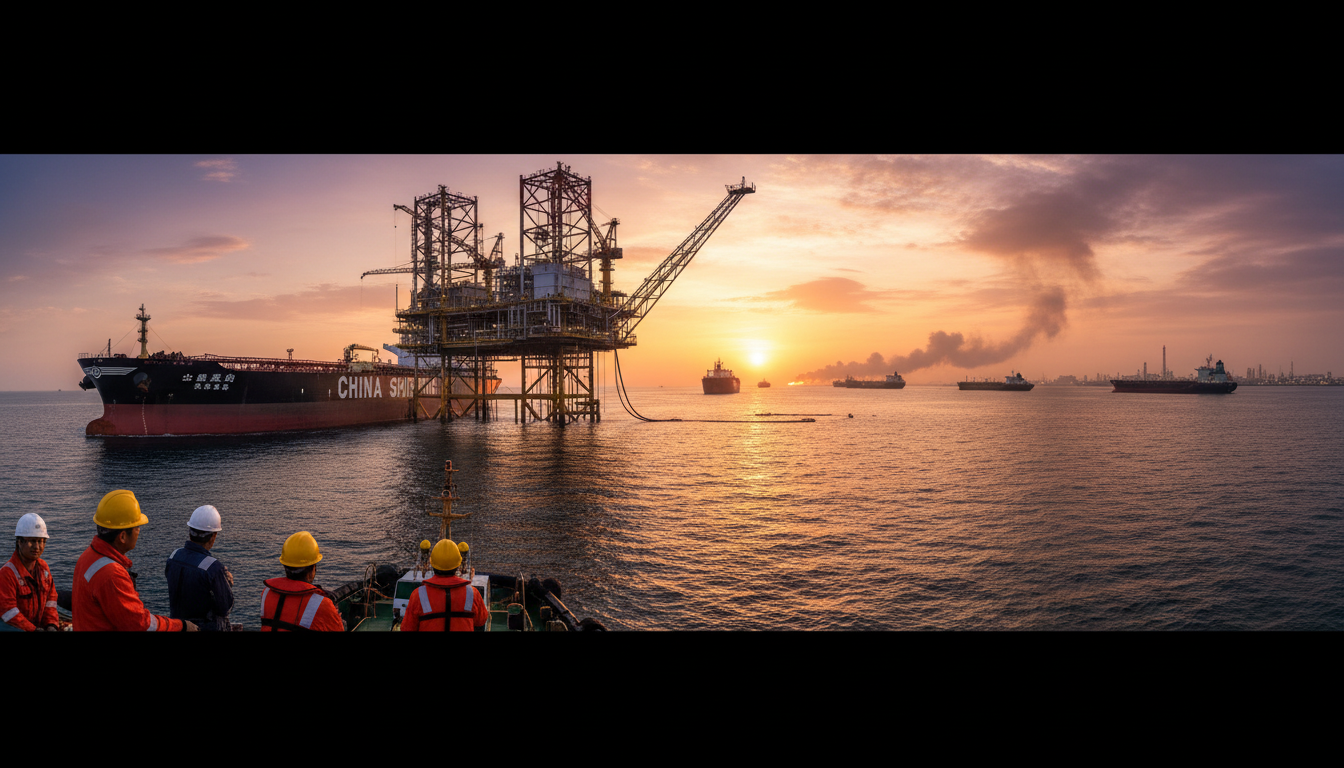
The Strait of Hormuz, a vital artery for global oil shipments, remains a flashpoint. Explosions were reported in Dubai and near northern Iraq’s Erbil airport, while Saudi air defenses intercepted a drone near Riyadh, injuring two individuals. Most critically for energy investors, a Kuwaiti state oil company confirmed one of its oil tankers caught fire off Dubai following a “direct and malicious Iranian attack.” While the crew remained unharmed and the blaze was extinguished, this incident starkly demonstrates Iran’s continued capacity to disrupt maritime trade and maintain its strategic leverage over the Strait of Hormuz, sending shockwaves through the global economy.
The repercussions are already impacting consumers worldwide. In the United States, fuel prices have climbed above $4 per gallon, reaching their highest level in nearly four years. Energy-dependent nations like Indonesia have responded by announcing fuel rationing and mandating civil servants to work from home one day a week to conserve energy, illustrating the broad economic vulnerability to Middle East oil supply disruptions. President Trump, in a social media post, criticized countries unwilling to assist the US in securing the crucial waterway. He asserted, “The USA won’t be there to help you anymore, just like you weren’t there for us,” adding that “Iran has been, essentially, decimated. The hard part is done. Go get your own oil!” These comments signal a potential shift in international maritime security strategies, placing greater onus on individual nations for their energy security.
China’s Strategic Navigation of the Strait of Hormuz
Amidst the escalating crisis, China has demonstrated its diplomatic and strategic maneuvering, securing passage for its vessels through the contested Strait of Hormuz. Iran, which has robust diplomatic ties with Beijing, has declared the Strait open to ships from “friendly countries.” An Iranian parliamentary committee has also voted to implement tolls on other vessels while imposing a complete ban on US and Israeli ships, underscoring a selective approach to maritime access.
Beijing formally expressed its “gratitude” for coordination that enabled three Chinese ships to transit the Strait this week. Data from MarineTraffic monitors confirmed two ultra-large container carriers belonging to state-owned shipping giant Cosco, the CSCL Indian Ocean and the CSCL Arctic Ocean, successfully exited the Gulf on Monday morning, bound for Port Klang in Malaysia. These vessels had reportedly aborted an earlier transit attempt on Friday. Additionally, the Hong Kong-flagged oil and chemical tanker Egret, according to maritime analytics firm Kpler, navigated the Strait from east to west on March 25. Chinese foreign ministry spokeswoman Mao Ning acknowledged the successful transits and expressed thanks for the assistance, though she refrained from explicitly naming Iran or other coordinating parties. This managed access for Chinese vessels highlights the complex geopolitical dynamics at play and Beijing’s efforts to safeguard its energy and trade interests.
Further signaling a desire for regional stability, China and Pakistan jointly called for immediate peace talks and committed to enhancing their cooperation regarding the situation in Iran. Following a visit by senior Pakistani officials to Beijing, the two nations outlined a joint initiative focused on “restoring peace and stability in the Gulf and Middle East region,” indicating a concerted effort by key Asian players to de-escalate the conflict.
Desalination Plants: A New Front in Economic Warfare
Beyond energy infrastructure, Trump’s threats specifically mentioned “completely obliterating” desalination plants, adding a critical humanitarian dimension to the conflict. An Iranian health ministry official reported to ISNA news agency on Tuesday that a strike had rendered a desalination plant on Qeshm Island, located within the Strait of Hormuz, “completely out of service,” although the exact timing of the incident was not disclosed. Iran has vowed proportional retaliation for any strikes on its infrastructure, threatening similar actions against US-allied Gulf neighbors.
The targeting of desalination facilities poses an enormous risk in this water-stressed region. Experts have warned that strikes on civilian infrastructure could constitute war crimes. The reliance on desalinated water is profound: it provides 70% of Saudi Arabia’s drinking water and an astonishing 90% of Kuwait’s. Any prolonged disruption to these vital facilities would not only trigger a humanitarian crisis but also severely destabilize the region, impacting long-term investment prospects and the overall economic outlook for Gulf states. Energy investors must now contend with the expanded scope of potential targets, recognizing that water security is inextricably linked to regional stability and, by extension, to the global oil supply chain.
