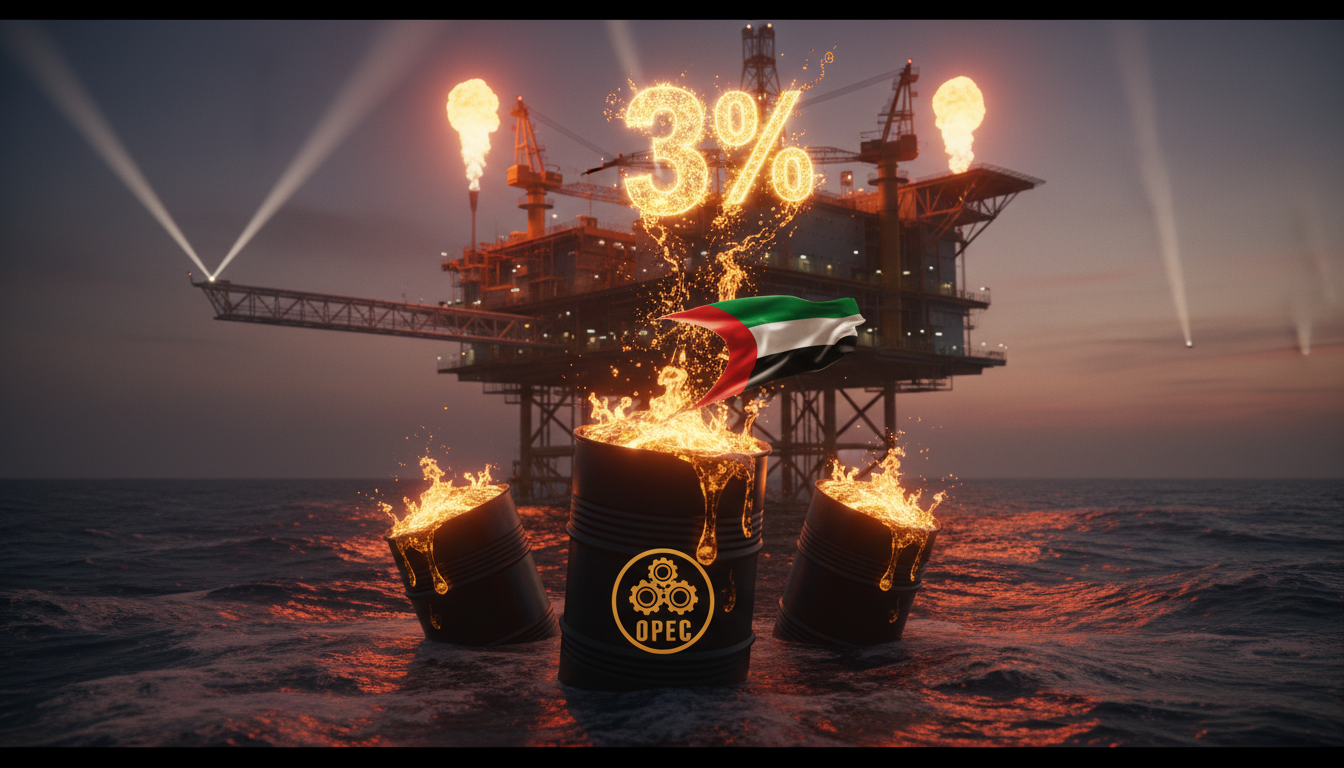
Geopolitical Flashpoints Fuel Crude Rally as OPEC Cohesion Faces New Scrutiny
The global crude market witnessed a significant uptick in West Texas Intermediate (WTI) futures as a confluence of critical geopolitical developments triggered investor concern. Traders aggressively bought into the market, reacting to two pivotal catalysts: a perceived lack of meaningful progress in U.S. – Iran nuclear negotiations and the seismic announcement regarding the United Arab Emirates’ (UAE) intention to withdraw from the Organization of the Petroleum Exporting Countries (OPEC).
UAE’s Strategic Shift: Reshaping Global Oil Dynamics
The United Arab Emirates, a prominent producer within the cartel, has reportedly signaled its departure from OPEC, a move poised to reshape the global oil landscape. UAE Energy Minister al-Mazrouei confirmed this strategic decision, stating it followed a “careful look at current and future policies related to level of production.” This declaration underscores the nation’s clear intent to pursue an independent energy policy, free from the production constraints and collective decision-making inherent in OPEC membership.
For years, the UAE has harbored ambitions to significantly expand its crude oil output capacity. However, these aspirations frequently clashed with OPEC and OPEC+ efforts to stabilize the market through coordinated production cuts and quotas. These collective actions, while aiming to balance supply and demand and support prices, invariably limited individual member countries’ ability to unilaterally gain market share. The UAE’s decision to exit now paves the way for it to ramp up production independently, a strategy that could introduce substantial new supply into the global market if executed forcefully. Investors are now keenly observing how this monumental shift will impact OPEC’s overall efficacy and its ability to exert influence without one of its key producers. The organization’s future cohesion and market management capabilities are now squarely in question.
This development also throws into sharp relief the intensifying geopolitical tensions within the broader Middle East. The ongoing regional conflict has evidently exacerbated underlying strains between traditional allies and rivals. Reports suggest a growing friction between Saudi Arabia, OPEC’s largest and most influential producer, and the UAE in recent years. The current regional instability appears to have served as the ultimate catalyst, breaking the delicate balance of their relationship and culminating in the UAE’s decisive move towards greater energy autonomy.
Stalled US-Iran Dialogue and the Strait of Hormuz Risk
Adding further fuel to the oil market’s risk premium are the persistent uncertainties surrounding U.S. – Iran relations. Former U.S. President Trump recently disclosed that Iran had expressed a desire for the U.S. to facilitate the opening of the Strait of Hormuz. This critical maritime chokepoint is fundamental for global oil transit, handling a substantial portion of the world’s seaborne crude. The statement, however, lacked specifics regarding who initiated contact or whether the U.S. administration intends to respond to such a proposal.
Market participants and oil traders remain deeply skeptical about the prospects of a near-term breakthrough or a comprehensive deal between the United States and Iran. Historical impasses and fundamental disagreements suggest that any significant diplomatic progress remains distant. This ongoing geopolitical deadlock in one of the world’s most vital oil-producing regions consistently contributes to an elevated risk premium embedded in crude prices. The perceived lack of a resolution ensures that supply security concerns from the Middle East continue to weigh heavily on investor sentiment, pushing oil prices higher as market participants hedge against potential disruptions.
Investor Outlook: Navigating Volatility in a Shifting Landscape
Investors in the energy sector must now navigate a complex and increasingly volatile landscape. The dual pressures of a potentially fragmenting OPEC and intractable geopolitical flashpoints in the Middle East create a strong bullish impetus for crude prices in the short to medium term. The UAE’s anticipated production ramp-up, post-OPEC, introduces a supply-side uncertainty that could eventually challenge market stability, yet the immediate reaction is one of heightened risk. The implications for OPEC’s long-term strategy, market share, and pricing power are profound, demanding close attention from institutional and retail investors alike.
Furthermore, the persistent antagonism between the U.S. and Iran, particularly concerning the Strait of Hormuz, maintains a significant threat to global oil flows. Any escalation or miscalculation in this region could have immediate and dramatic consequences for crude pricing. Energy investors should brace for continued market dynamism, meticulously monitoring diplomatic overtures, regional security developments, and OPEC’s evolving response to its new structural challenges. Prudent investment strategies will likely prioritize diversification and a keen awareness of the accelerating geopolitical currents shaping the future of global energy markets.


