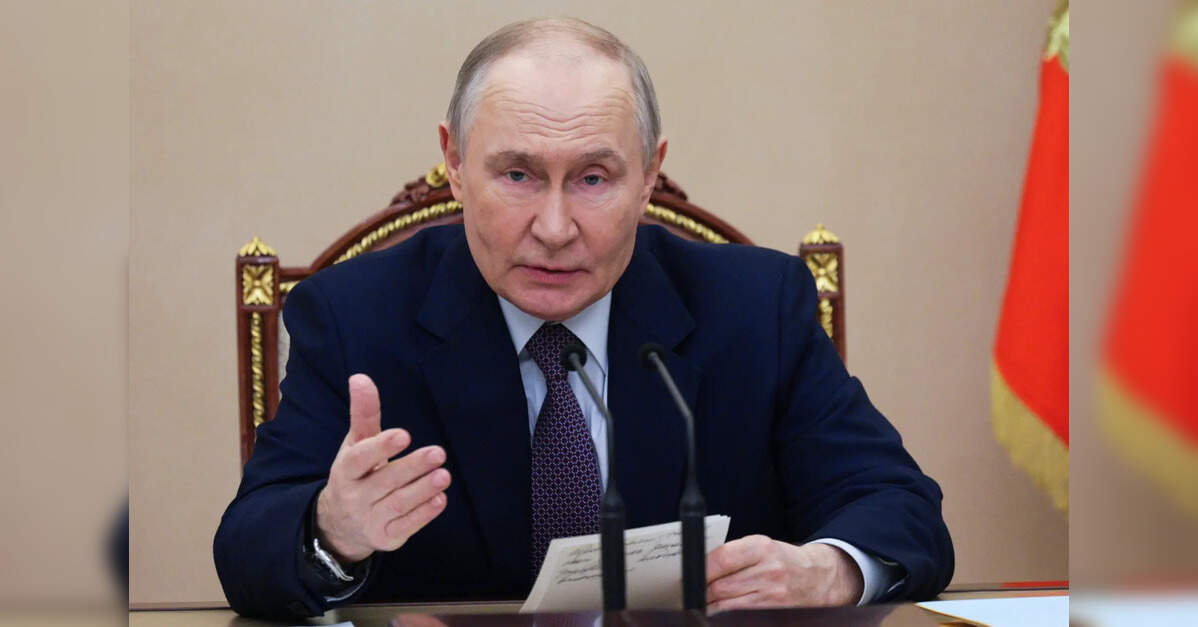
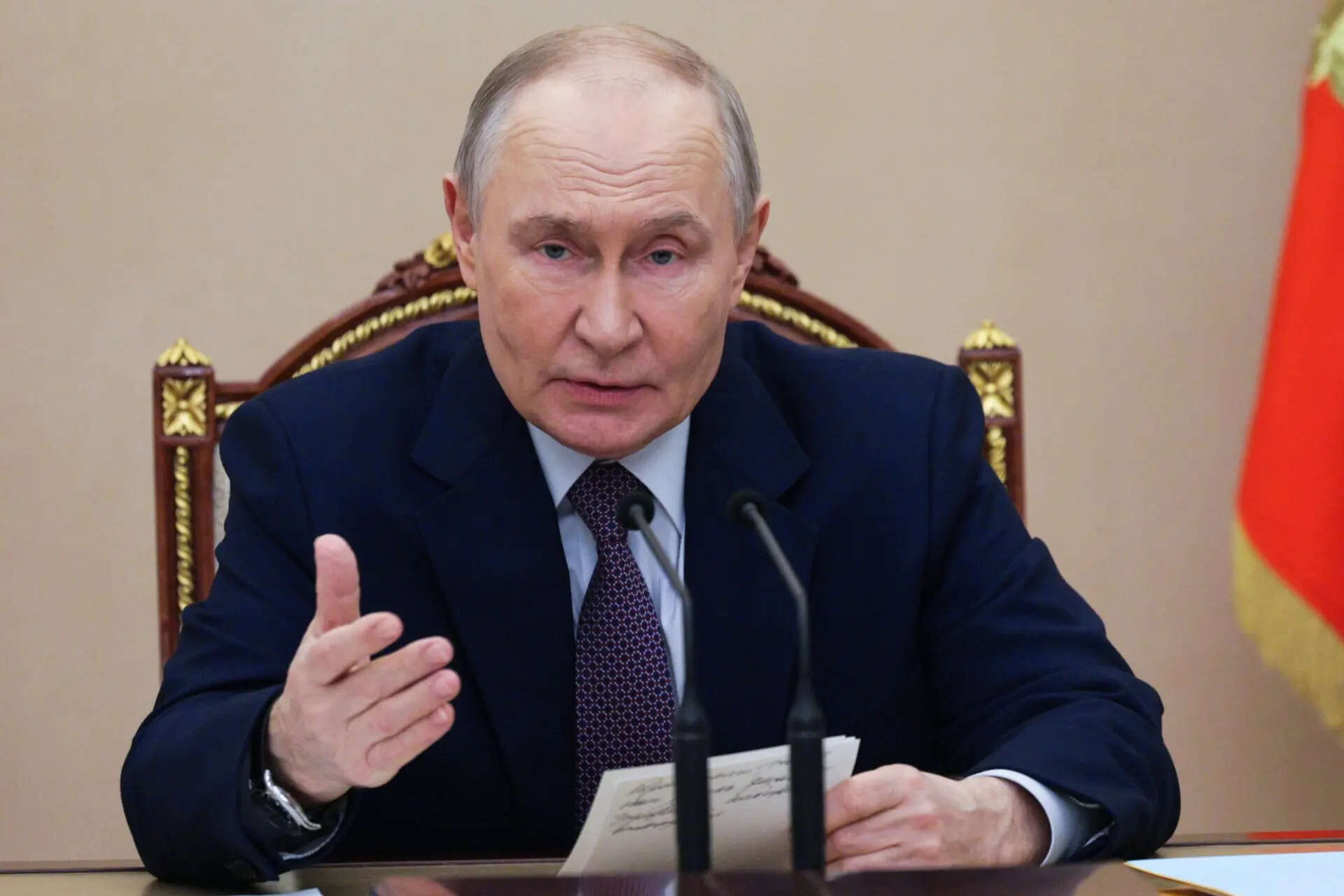
Moscow: Russian President Vladimir Putin warned Monday that oil flow through the Strait of Hormuz could halt completely within a month, as the US-Israeli war on Iran pushed crude prices past $100 a barrel for the first time since 2022.
Putin said Russia had long cautioned that destabilising the Middle East would trigger a global energy crisis and that moment, he declared, had now arrived.
Putin said that Russia the world’s second-largest oil exporter and holder of the biggest natural gas reserves – was ready to work again with European customers if they wanted to return to long-term cooperation.
Western powers, however, have spent the past four years sharply reducing their reliance on Russian oil and gas in response to Moscow’s war in Ukraine and subsequent EU and G7 sanctions.
The loss of the European market has deprived Russia of its most lucrative customers and forced it to sell oil and gas at steep discounts to Asia.
Speaking at a televised meeting with government officials and the heads of Russia’s leading oil and gas producers, Putin said that Russia had repeatedly warned that destabilising the Middle East could lead to an energy crisis with grave implications for the global economy – a turn of events he said had now materialised.
Oil prices exceeded $100 per barrel on Monday to reach peaks unseen since 2022 as the Strait of Hormuz, which accounts for roughly a fifth of global oil and liquefied natural gas flows, has been effectively closed due to the Iran war.
“Oil production dependent on the Strait of Hormuz risks halting completely within the next month. It has already begun to decline, and storage facilities in the region are filling with oil that cannot be transported…is extremely difficult to transport, or is extremely expensive to transport,” Putin said.
He said Russian companies should take advantage of the current situation in the Middle East, though he noted that the spike in prices was probably temporary. Oil and gas revenues make up around a quarter of total federal budget proceeds.
G7 nations said on Monday they were prepared to implement “necessary measures” in response to surging global oil prices, but stopped short of committing to release emergency reserves.
“We’re ready to work with Europeans too. But we need some signals from them that they’re ready and willing to work with us and will ensure this sustainability and stability,” Putin said.
Last week he instructed the government to consider switching remaining Russian oil and gas flows away from Europe, before the European Union starts enforcing its decision to completely ban Russian fossil fuels.
Before the Ukraine war, Europe was buying more than 40 per cent of its gas from Russia, but combined sales of pipeline gas and LNG from Russia accounted for only 13 per cent of total EU imports in 2025.
Yesterday, Trump said the US was “achieving major strides toward completing our military objective” and suggested the operation may be “pretty well complete.” He also said the war could end “soon,” noting that Iran’s “two levels of leadership are gone.”
Trump warned Iran would be hit “at a much, much harder level” if it did anything to stop the world’s oil supply, saying “I will not allow a terrorist regime to hold the world hostage.” He also said the US Navy would escort tankers through the strait and pledged to waive oil-related sanctions.
With inputs from Reuters