

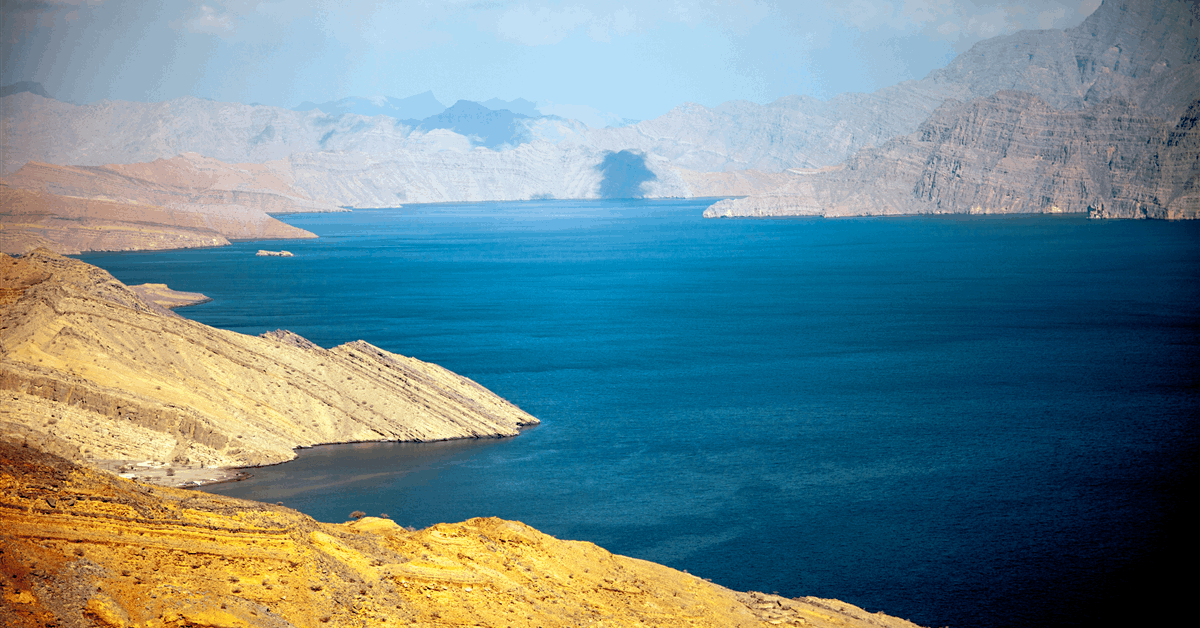
Higher oil and gas prices are certain as the closure of the Strait of Hormuz threatens to disrupt 15 percent of global oil supply and 20 percent of global LNG supply.
That’s what Wood Mackenzie said in a press note sent to Rigzone late Sunday, adding that oil prices could potentially exceed $100 per barrel if tanker flows are not quickly restored.
“Following U.S. and Israeli attacks on Iranian government, military, and nuclear facilities, Iran warned shipping away from the waterway and insurers withdrew coverage, effectively halting tanker traffic,” Wood Mackenzie highlighted in the note.
The company said the disruption creates a “dual supply shock”.
“Not only are current exports through the Strait halted, but OPEC+ additional volumes and ultimately most of OPEC’s spare capacity – typically a key lever for balancing the global oil market – are inaccessible while the waterway remains closed,” Wood Mackenzie warned.
Alan Gelder, SVP of Refining, Chemicals and Oil Markets at Wood Mackenzie highlighted in the press note that the key question now is “when do vessels re-establish export flows”.
“No doubt, tanker rates and insurance will increase dramatically, but these costs would only be a small part of the oil price impact associated with a curtailment of oil flows if they last for more than a few days,” he added.
Gelder warned that, given the uncertainty around events, it is plausible that it takes a few weeks for export flows to re-establish themselves in the most optimistic scenario.
“During that time, oil prices are heavily risked to the upside,” Gelder stated.
“The most recent comparison is during the early days of the Russia/Ukraine conflict, when the fear of loss of Russian supplies drove the oil price to over $125 per barrel,” he said.
Gelder went on to point out that “the nearest historical analogue” in Wood Mackenzie’s view is the Middle East oil embargo of the 1970s, “which increased oil prices by 300 percent to around $12 per barrel in 1974”.
“That is only $90 per barrel in 2026 terms. Eclipsing this in today’s market concerned about significant losses of supply seems very achievable,” he said.
“The global economy is now far less oil intensive than 50 years ago. The shock at the time of the oil embargo was the pace and scale of the price increase,” he added.
“Oil prices would need to reach well over $200 per barrel to exert a similar level of shock to today’s global economy,” Gelder noted.
Unprecedented Disruption
In a J.P. Morgan oil flash note sent to Rigzone late Sunday by Natasha Kaneva, the head of global commodities strategy at the company, analysts at J.P. Morgan, including Kaneva, said their base case “assumed that an unprecedented disruption [in the Strait of Hormuz] would remain improbable”.
“That assumption failed. On Sunday, March 1, vessel transit through the Strait of Hormuz slowed to a near standstill, marking the first near complete halt in its modern history,” the analysts highlighted.
“The episode forces a reassessment of geopolitical risk and the resilience of global energy trade,” they warned.
The analysts highlighted that the disruption followed a major joint military offensive by the U.S. and Israel against Iran.
“When markets reopen at 6pm on Sunday, we expect an immediate repricing of geopolitical risk rather than a measured response to fundamentals,” the J.P Morgan analysts projected in that note.
“Brent crude is likely to gap higher into the $80-85 per barrel range from Friday’s $73 close, pulling the entire forward curve upward,” they added.
“This move would reset the 12-month tail into the low-$70s and steepen backwardation to $10-15 per barrel from roughly $5 at Friday’s close, reflecting a rapid reassessment of near-term supply risk and duration,” they continued.
The analysts went on to state that, beyond the initial knee-jerk reaction, the trajectory of oil prices will ultimately depend on four variables.
These are “how many barrels are physically disrupted”, “how long the disruption lasts”, “in a prolonged disruption, whether credible replacement supply – including potential releases from strategic reserves – can be mobilized quickly enough to avoid a structural tightening of the global oil balance”, “and what comes next”, the note outlined.
In the note, the J.P. Morgan analysts said Iran has so far spared major oil infrastructure in the region, choosing instead to focus its retaliatory strikes on military and strategic targets. The analysts also stated in the note that, despite multiple threats, the Strait of Hormuz has not been formally closed.
“Even though traffic through the Strait of Hormuz has dropped to near zero, this is largely precautionary, after insurers warned that they would cancel policies and raise premiums, rather than the result of direct attacks on the waterway,” they added.
“To restart traffic, the U.S. Treasury could provide insurance or guarantees for ships transiting the strait – a step it has taken in past crises,” they continued.
The J.P. Morgan analysts estimated in the note that, if the conflict lasts more than three weeks, GCC oil producers would exhaust storage capacity and would be forced to shut in production.
“Under this scenario, Brent could trade in the $100-$120 range,” they warned.
“Given the timeline of these unknowns, we are not making changes to our existing price forecast at this stage,” they added.
$20 Jump
In a market update sent to Rigzone on Saturday by the Rystad Energy team, Rystad noted that the U.S. and Israel launched “direct and extensive military operations inside Iran, in what appears to be a campaign broader in scope and intensity than the previous 12-day confrontation”. The company added that ICE Brent crude oil prompt-month prices were expected to rise by $20 per barrel when trade opened on March 2.
In that update, Jorge Leon, senior vice president and head of geopolitical analysis, said Iran “has retaliated in a far more aggressive and expansive manner than in prior exchanges, targeting U.S. military bases in the region and even conducting attacks on its key Gulf allies”.
“This marks a structural widening of the conflict beyond contained or symbolic strikes.
The most immediate and tangible development affecting oil markets is the effective halt of traffic through the Strait of Hormuz, preventing 15 million barrels per day of crude oil from reaching markets,” he added.
“Alternative infrastructure in the Middle East can be used to bypass the Strait’s flows, but the net impact remains an effective loss of 8-10 million barrels per day of crude oil supply.
Elevated global benchmark prices and steep backwardation are expected to be sustained until the Strait is again passable,” he continued.
“This appears to be driven by heightened tensions and precautionary decisions by ship operators and insurers rather than a confirmed physical blockade by Iran. From a market perspective, however, the distinction is secondary. Whether the Strait is closed by force or rendered inaccessible by risk avoidance, the impact on flows is largely the same,” Leon went on to state.
Leon noted that nations with strategic petroleum reserves may take action and release volumes if the disruption of the Strait risks being extended.
“Unless de-escalation signals emerge swiftly, we expect a significant upward repricing of oil at the start of the week,” he warned.
Rystad highlighted that approximately 15 million barrels per day of crude oil transit the Strait of Hormuz, “representing close to 30 percent of global seaborne crude trade”.
“This makes it the most critical oil chokepoint in the world. Any sustained disruption, formal or de facto, would remove a substantial portion of globally traded crude from the market,” the company pointed out.
Rystad also warned in the update that options to bypass the Strait are limited.
“Saudi Arabia can redirect volumes via its East-West pipeline to the Red Sea, which has about five million barrels per day of capacity. The UAE can utilize the Abu Dhabi pipeline, with capacity of around 1.5 million barrels per day,” the company added.
Rystad projected in the update that, “if the Strait of Hormuz were to close, the most likely scenario is that it would be temporary, potentially lasting one to two weeks”.
“A prolonged closure would carry severe geopolitical consequences and likely provoke a rapid international response,” Rystad warned.
“That said, even a short-lived disruption would create a significant logistical backlog. Tanker congestion, rescheduling of cargoes, and port delays could take several additional weeks to normalize, meaning the market impact would likely persist well beyond the formal reopening of transit lanes,” it added.
“From a price perspective, we continue to believe that unless there are clear and credible signals of de-escalation over the weekend, oil markets will open sharply higher,” Rystad warned.
“In such a scenario, Brent could jump by around $20 per barrel on Monday as risk premiums are rapidly repriced,” it added.
“This move would reflect not only the probability of physical disruption but also the extreme uncertainty surrounding maritime flows, retaliation dynamics and political escalation,” it continued.
“Should the Strait remain effectively closed or energy infrastructure be confirmed as damaged, the upside risks to prices would increase further,” Rystad went on to state.
Rystad highlighted in its update that the conflict “has now entered a materially more dangerous phase”.
“For global oil markets, the effective status of the Strait, whether physically blocked or functionally avoided, is the dominant variable,” it pointed out.
UKMTO Update, Maersk and MSC Statements
In a statement posted on its website on Sunday, Dryad Global noted that, on March 1, UKMTO issued Update 002 to Advisory 003-26, “highlighting a highly volatile maritime security environment in the Arabian Gulf (also known as Persian Gulf), Gulf of Oman, North Arabian Sea, Bab al Mandab (BAM), and the Strait of Hormuz due to significant ongoing regional military activity”.
“This includes a substantial military presence contributing to elevated threats to commercial shipping, with risks of miscalculation or misidentification near military units, sensitive maritime facilities, and infrastructure,” Dryad warned.
“Mariners face potential for VHF hailing, directed communications from military units, and significant GNSS/electronic interference (including disruptions to AIS, positioning, navigation, and communications systems), which may be intermittent and unpredictable,” it added.
“Claims of closure or transit restrictions in the Strait of Hormuz continue to circulate via open source reporting and VHF, but no official closure has been communicated through recognized channels such as NAVAREA warnings or IMO broadcasts; such VHF indications do not constitute a legal suspension of transit passage under UNCLOS,” Dryad continued.
“Broader regional instability extends threats beyond the Strait of Hormuz, including elevated tensions in the Bab al Mandab,” it said.
“JMIC guidance urges continuous VHF Channel 16 watch, AIS transmission per policy, adherence to Traffic Separation Schemes and corridors, professional responses to hails, enhanced risk assessments (considering military activity and insurance), and immediate reporting of unusual activity, suspicious approaches, interference, or incidents to UKMTO or other centers,” Dryad stated.
In a statement posted on its website on Sunday, Maersk revealed that, “due to the deteriorating security situation in the Middle East region following the escalating military conflict”, the company had decided to “pause future Trans-Suez sailings through the Bab el-Mandeb Strait for the time being”.
“Until further, all sailings on the ME11 (Middle East-India to Mediterranean) and MECL (Middle East-India to East Coast U.S.) services will be rerouted around the Cape of Good Hope,” it added.
“The safety of our crews, vessels and customers’ cargo remains our key priority and we will continue to monitor the situation closely and take all needed actions. We remain committed to minimizing the impact on our customers’ supply chains and will continue to keep them updated on the situation,” it continued.
“Once the situation stabilizes and the security conditions again permit, we will continue to prioritize the Trans-Suez route for ME11 and MECL services as it is the fastest, most sustainable and most efficient way for us to serve our customers,” it said.
Maersk added that it was suspending all vessel crossings in the Strait of Hormuz until further notice.
“As a result, services calling ports in the Arabian Gulf may experience delays, rerouting, or schedule adjustments,” it warned.
In a statement posted on its website on Sunday, MSC said, “in response to the evolving security situation in the Middle East and the restrictions affecting maritime traffic in the Strait of Hormuz and Bab el-Mandeb, MSC Mediterranean Shipping Company confirms that the safety of its crews remains its highest priority”.
“As a precautionary measure, MSC has instructed all vessels currently operating in the Gulf region, as well as those en route to the area, to proceed to designated safe shelter areas until further notice,” it added.
“The Company continues to closely monitor developments and is working with relevant authorities to ensure the safety of its operations,” it continued.
“Customers will be informed as soon as further details become available regarding potential alternative ports where cargo may be discharged, should the situation require additional operational adjustments,” it went on to state.
To contact the author, email andreas.exarheas@rigzone.com
element
var scriptTag = document.createElement(‘script’);
scriptTag.src = url;
scriptTag.async = true;
scriptTag.onload = implementationCode;
scriptTag.onreadystatechange = implementationCode;
location.appendChild(scriptTag);
};
var div = document.getElementById(‘rigzonelogo’);
div.innerHTML += ” +
‘ ‘ +
‘ +
”;
var initJobSearch = function () {
////console.log(“call back”);
}
var addMetaPixel = function () {
if (-1 > -1 || -1 > -1) {
/*Meta Pixel Code*/
!function(f,b,e,v,n,t,s)
{if(f.fbq)return;n=f.fbq=function(){n.callMethod?
n.callMethod.apply(n,arguments):n.queue.push(arguments)};
if(!f._fbq)f._fbq=n;n.push=n;n.loaded=!0;n.version=’2.0′;
n.queue=[];t=b.createElement(e);t.async=!0;
t.src=v;s=b.getElementsByTagName(e)[0];
s.parentNode.insertBefore(t,s)}(window, document,’script’,
‘https://connect.facebook.net/en_US/fbevents.js’);
fbq(‘init’, ‘1517407191885185’);
fbq(‘track’, ‘PageView’);
/*End Meta Pixel Code*/
} else if (0 > -1 && 78 > -1)
{
/*Meta Pixel Code*/
!function(f,b,e,v,n,t,s)
{if(f.fbq)return;n=f.fbq=function(){n.callMethod?
n.callMethod.apply(n,arguments):n.queue.push(arguments)};
if(!f._fbq)f._fbq=n;n.push=n;n.loaded=!0;n.version=’2.0′;
n.queue=[];t=b.createElement(e);t.async=!0;
t.src=v;s=b.getElementsByTagName(e)[0];
s.parentNode.insertBefore(t,s)}(window, document,’script’,
‘https://connect.facebook.net/en_US/fbevents.js’);
fbq(‘init’, ‘1517407191885185’);
fbq(‘track’, ‘PageView’);
/*End Meta Pixel Code*/
}
}
// function gtmFunctionForLayout()
// {
//loadJS(“https://www.googletagmanager.com/gtag/js?id=G-K6ZDLWV6VX”, initJobSearch, document.body);
//}
// window.onload = (e => {
// setTimeout(
// function () {
// document.addEventListener(“DOMContentLoaded”, function () {
// // Select all anchor elements with class ‘ui-tabs-anchor’
// const anchors = document.querySelectorAll(‘a .ui-tabs-anchor’);
// // Loop through each anchor and remove the role attribute if it is set to “presentation”
// anchors.forEach(anchor => {
// if (anchor.getAttribute(‘role’) === ‘presentation’) {
// anchor.removeAttribute(‘role’);
// }
// });
// });
// }
// , 200);
//});
