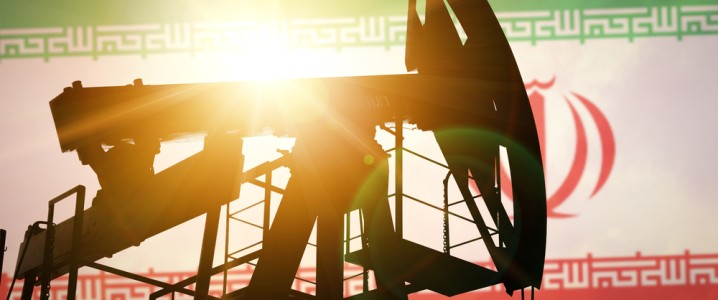
The global oil market has been on a rollercoaster ride, with geopolitical flashpoints in the Middle East once again demonstrating their potent influence on crude prices. Earlier this week, significant escalations in the conflict between Iran, the United States, and Israel, coupled with the appointment of Ayatollah Mojtaba Khamenei as Iran’s new supreme leader, sent shockwaves through energy markets, pushing crude benchmarks well above the $100 per barrel mark. This leadership transition, signaling continuity in Iran’s hardline stance, initially fueled fears of prolonged regional instability and severe supply disruptions. However, as our proprietary data pipelines reveal, the market’s initial, dramatic reaction has begun to temper, presenting a complex landscape for energy investors navigating volatility and fundamental shifts.
Geopolitical Premiums Evaporate: A Look at Today’s Market Reality
While the initial surge saw both WTI and Brent crude benchmarks jump by double-digit percentages, our live market snapshot tells a different story today. As of this morning, Brent Crude is trading at $92.78 per barrel, down 0.49% for the day, with its range between $92.57 and $94.21. Similarly, WTI Crude stands at $89.4 per barrel, reflecting a 0.3% decline, fluctuating between $88.76 and $90.71. These figures starkly contrast with the multi-year highs observed just days ago, indicating that much of the initial geopolitical premium has already been priced out or has failed to sustain itself. Our 14-day Brent trend analysis further corroborates this, showing a notable retreat from $101.16 on April 1st to $94.09 on April 21st, representing a 7% decline over the period. This rapid adjustment suggests that while the market initially reacted to the severe risk of disrupted oil flows, the actual, immediate impact on production from major Gulf producers has not yet materialized to the extent feared, or other bearish factors are exerting stronger influence.
Underlying Fundamentals and Supply Resilience
Despite the severe headlines detailing attacks on energy infrastructure near Tehran and Bahrain’s desalination plant, alongside military engagements across the region, the market’s subsequent pullback suggests a deeper look into underlying supply and demand dynamics is warranted. The continuity of hardline leadership in Iran, exemplified by Mojtaba Khamenei’s appointment, solidifies the geopolitical backdrop, yet the market’s inability to hold $100 points to a current, perhaps temporary, resilience in global supply or a weakening demand outlook. Investors are keenly watching whether the conflict will genuinely impact crude production or export routes from the broader Middle East, beyond localized incidents. The immediate supply concerns, while real, might be overshadowed by global inventory levels or the capacity of other producers to step in. This ongoing tension between perceived risk and actual supply disruption is a critical factor for price direction.
Forward-Looking Insights: Calendar Events and Investor Sentiment
The volatility has naturally led our investor base to ponder the crucial question: what’s next for crude prices? Many are asking about the short-term direction of WTI and what to predict for oil prices by the end of 2026. To gain clarity, market participants will be closely scrutinizing a series of upcoming data releases. Tomorrow, Wednesday, April 22nd, the EIA Weekly Petroleum Status Report will provide vital insights into U.S. crude inventories, refinery activity, and product demand, offering a critical pulse check on the world’s largest consumer. This will be followed by the Baker Hughes Rig Count on Friday, April 24th, which offers a forward-looking indicator of future production trends. The following week brings another API Weekly Crude Inventory report on April 28th and the EIA Weekly Petroleum Status Report on April 29th. Finally, the EIA Short-Term Energy Outlook on May 2nd will offer updated projections for global supply, demand, and prices through 2027, which will be instrumental for investors attempting to forecast the trajectory for the remainder of 2026. These scheduled events will either reinforce geopolitical anxieties with tightening supply data or soothe fears with signs of market rebalancing.
Investment Implications Amidst Volatility and Inflationary Pressures
The recent price action underscores the persistent risk of energy-driven inflation, especially for major oil-importing economies. While the initial fear of an inflation shock was profound, the subsequent price retreat offers a moment for reassessment. However, the underlying geopolitical instability remains a potent threat, meaning that rapid price spikes could re-emerge at any moment. For investors, this environment demands a nuanced approach. Diversification within energy portfolios, considering both upstream producers and midstream infrastructure players, could mitigate some of the direct commodity price exposure. Furthermore, the strengthening U.S. dollar, often a consequence of rising energy prices and flight-to-safety capital flows, presents additional layers of complexity for international investors. The interplay between sustained geopolitical risk, potential supply disruptions, and the broader macroeconomic environment will dictate whether the recent $100 breach was a temporary spike or a precursor to a new, higher baseline for crude prices in the medium term.


