Capitalizing on Carbon: Northern Lights Illuminates Investment Pathways in O&G Decarbonization
The global energy landscape is undergoing an unprecedented transformation, with environmental sustainability now a central driver of capital allocation. For the oil and gas industry, navigating this shift while preserving core operations presents both challenges and substantial new opportunities. Carbon Capture and Storage (CCS) has emerged as a critical technology, offering a viable route for hydrocarbon producers to meet ambitious emissions reduction targets and extend asset longevity. The Northern Lights Joint Venture (NLJV), a pioneering full-scale CCS initiative in Europe, provides a compelling blueprint for investors seeking to capitalize on the burgeoning carbon management market. Its demonstrable progress throughout 2024 highlights the crucial steps being taken to build essential infrastructure and cultivate the collaborative frameworks vital for scaling these complex solutions.
Constructing the Backbone of a New Carbon Economy
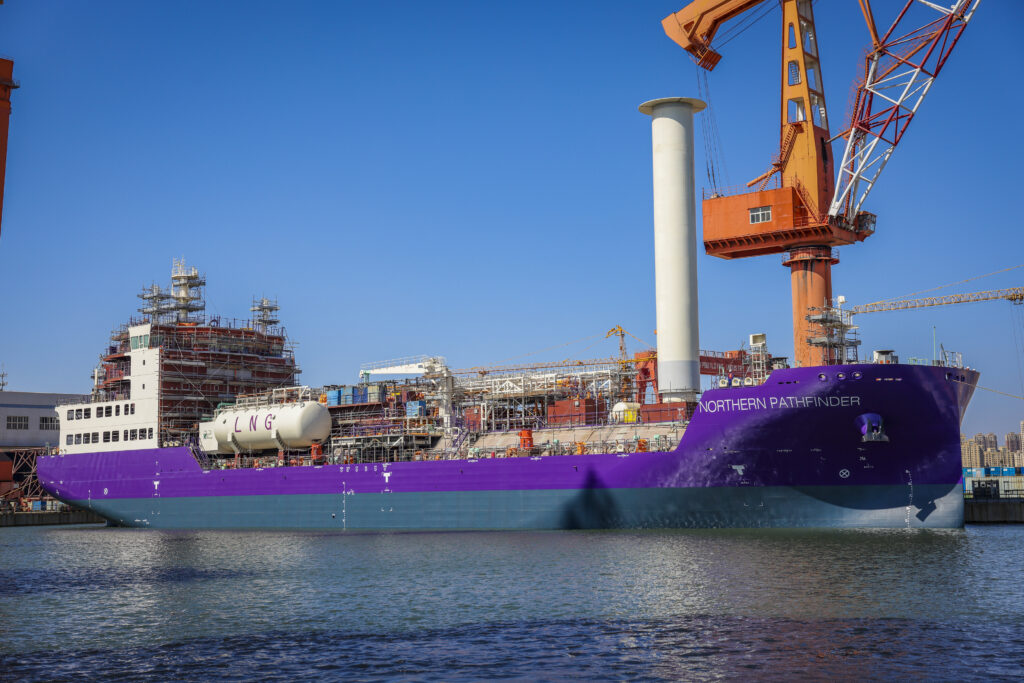
For discerning investors, the tangible development of physical assets serves as a robust indicator of project maturation and future earnings potential. In 2024, the Northern Lights project achieved a significant operational milestone with the successful delivery of two purpose-built CO2 transport vessels, christened the Northern Pioneer and the Northern Pathfinder. These highly specialized maritime assets are meticulously engineered for the secure and efficient marine transportation of liquefied carbon dioxide. They form an indispensable link within the integrated CCS value chain, designed to ferry captured CO2 from diverse industrial emitters across the European continent to a state-of-the-art receiving terminal located in Øygarden, Norway, where it will be prepared for permanent, safe geological sequestration.
The construction phase of these innovative vessels yielded invaluable engineering and logistical insights. Project teams proactively implemented design modifications to enhance flow capacity, a direct result of rigorous testing protocols. Furthermore, advanced simulations were extensively utilized to precisely model vessel behavior under a wide spectrum of operational conditions. These forward-thinking adjustments not only led to a more streamlined and efficient delivery process for the second vessel but also underscore the project’s unwavering commitment to continuous improvement and robust execution – characteristics highly prized by global capital allocators. The successful deployment of these specialized ships represents a substantial de-risking step for the entire project, signaling readiness for commercial operations.
Advancing Towards Commercial Operation and Market Validation
The Northern Lights project is firmly on track for the commencement of its commercial operations in 2025, a timeline that underscores its leadership in the European CCS landscape. Complementing the vessel deliveries, the first CO2 receiving terminal in Øygarden now stands operationally ready, poised to accept its initial shipments of captured carbon. A cornerstone of the project’s success lies in its proactive engagement and collaboration with diverse industrial partners across the continent.
This commercial momentum has been significantly bolstered by the signing of key agreements with major industrial players. Notably, Northern Lights has secured a landmark commercial agreement with Yara S.A., a global leader in ammonia production. This partnership will involve the transport and storage of captured CO2 from Yara’s ammonia plant in Sluiskil, Netherlands. Furthermore, a pivotal agreement has been reached with Ørsted A/S, a prominent green energy company, which will see Northern Lights managing CO2 captured from Ørsted’s biomass-fired power plants situated in Denmark. These definitive commercial agreements serve as powerful validation of the project’s fundamental business model and its strong commercial viability, demonstrating genuine market demand for large-scale carbon storage solutions.
The agreement with Ørsted is particularly significant, committing Northern Lights to store an impressive 400,000 tonnes of biogenic CO2 annually over a decade-long period, commencing in 2026. This substantial volume represents a significant portion of Northern Lights’ initial storage capacity, which is rated at 1.5 million tonnes per year. The rapid uptake of this capacity highlights the urgent need for such infrastructure and signals robust demand, providing a strong signal to potential investors about the project’s ability to secure long-term revenue streams. The project is strategically designed for future expansion, with the capacity to scale to 5-6 million tonnes per year, ensuring its ability to meet escalating market requirements.
Unlocking Massive Storage Potential through Geological Confirmation
A critical element underpinning any long-term carbon storage venture is the proven integrity and capacity of the geological reservoir. Northern Lights made significant strides in this regard with the successful drilling of an appraisal well, designated 31/5-5 S. This crucial exploration activity provided direct confirmation of the project’s vast storage potential beneath the seabed.
During the drilling process, extensive data was meticulously collected, including core samples and comprehensive well logging. This invaluable information definitively confirmed the optimal characteristics of the reservoir, assuring its suitability for the safe, secure, and long-term containment of captured CO2. The geological confirmation is not merely a technical achievement; it represents a major de-risking factor from an investment perspective, mitigating uncertainties regarding the project’s core storage capabilities. This verified subsurface data is absolutely essential for the planned expansion of the Northern Lights project’s capacity from its initial 1.5 million tonnes per year to an impressive 5-6 million tonnes per year. Such an expansion is crucial for accommodating future demand and attracting an even broader array of industrial partners eager to decarbonize their operations.
Strategic Alliances and Enabling Policy Frameworks
The inherent complexity and capital intensity of large-scale CCS projects necessitate robust strategic alliances and supportive regulatory environments. The Northern Lights Joint Venture benefits from the formidable backing of its founding partners: Equinor, Shell, and TotalEnergies. The involvement of these global energy majors provides not only deep technical expertise but also significant financial muscle and industry credibility, instilling confidence among the investment community.
Furthermore, the project forms an integral component of “Project Longship,” Norway’s ambitious full-scale CCS initiative, underscoring its national strategic importance. This national backing translates into substantial financial support from the Norwegian government, further stabilizing the project’s financial foundations. Beyond national borders, the project critically relies on cross-border collaboration and the evolution of supportive regulatory frameworks, exemplified by various EU funding mechanisms such as the Innovation Fund. The global policy landscape for CCS is rapidly maturing, with growing support manifesting in initiatives like the US 45Q tax credits and ongoing reforms within the EU Emissions Trading System (ETS). This confluence of strong political will, substantial public funding, and progressive regulatory development significantly enhances the project’s long-term stability and bolsters investor confidence in the nascent carbon management sector.
Investment Horizons for Oil and Gas in the Carbon Transition
The Northern Lights project vividly illustrates how Carbon Capture and Storage offers a transformative pathway for oil and gas companies. Beyond merely complying with evolving environmental regulations, CCS enables these entities to proactively decarbonize their existing operations, strategically extend the productive lifespans of their assets, and crucially, forge entirely new revenue streams within the burgeoning green economy. By embracing and deploying CCS technologies, the oil and gas sector positions itself not as a legacy industry, but as an indispensable solution provider in the global energy transition.
Investments directed towards CCS infrastructure, advanced technologies, and specialized services represent increasingly attractive opportunities for capital. Early movers, such as the Northern Lights consortium, are establishing vital market precedents, demonstrating operational viability and commercial potential. Key determinants for the sustained success of these ventures will be their inherent scalability, the ongoing development of clear and consistent regulatory frameworks, and the continuous drive towards cost reduction. The Northern Lights project stands as a powerful testament to the oil and gas industry’s capacity to lead and innovate in the critical domain of carbon management, offering a compelling investment thesis for those looking to participate in the future of energy.