The energy sector, a linchpin of global economies, consistently navigates a complex interplay of geopolitical shifts, market dynamics, and environmental challenges. Among these, the resilience of critical infrastructure against natural disasters and the effectiveness of recovery operations are paramount considerations for investors. Recent signals emanating from Washington regarding a fundamental re-evaluation of the Federal Emergency Management Agency’s (FEMA) operational mandate are poised to significantly alter the risk landscape for oil and gas companies, shifting greater responsibility onto states and local entities. This strategic pivot demands a fresh assessment from investors, as the speed and cost of recovery in vital energy-producing and consuming regions could see dramatic changes.
Decentralizing Disaster Response: New Risks for Energy Infrastructure
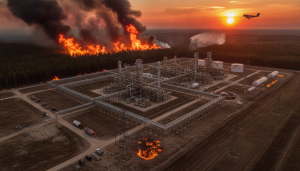
Homeland Security Secretary Markwayne Mullin’s recent remarks underscore a vision where states and local governments assume primary leadership in disaster response, repositioning FEMA as a supportive agency rather than a frontline responder. This proposed decentralization, articulated during his tour of western North Carolina following Hurricane Helene in September 2024, has profound implications for the oil and gas sector. Companies with significant assets in regions prone to extreme weather events – from Gulf Coast refineries susceptible to hurricanes to pipeline networks traversing flood zones – must now contend with potentially varied and localized recovery timelines. As our proprietary reader intent data reveals a heightened investor focus on regional asset exposure and long-term price trajectory, questions like “what do you predict the price of oil per barrel will be by end of 2026?” become intrinsically linked to the resilience of specific operational hubs. The effectiveness of a state’s disaster preparedness and funding mechanisms will directly influence how quickly damaged infrastructure, such as offshore platforms, onshore production facilities, or critical pipelines, can return to service, impacting supply chains and profitability.
Market Realities: Volatility Meets Evolving Operational Costs
The global energy market continues its dance with volatility, a factor exacerbated by any disruption to supply or demand. As of today, Brent Crude trades at $94.16, marking a +0.99% gain within a day range of $91.39 to $94.86. Similarly, WTI Crude stands at $90.28, up +0.68% after trading between $87.64 and $91.41. While these daily movements reflect broader geopolitical and supply-demand fundamentals, the overarching trend shows that Brent has declined by $7.07, or 7%, over the past 14 days, falling from $101.16 on April 1st to $94.09 on April 21st. This downward pressure highlights a market already sensitive to numerous factors. Introducing a new framework for disaster response, where states bear more immediate responsibility, means oil and gas companies could face increased financial burdens for infrastructure protection, recovery, and even potential surcharges at the state level. These costs, previously mitigated by a more robust federal frontline presence, will invariably factor into operational budgets and investor risk models, adding another layer of complexity to the question “is WTI going up or down?” in the context of regional operational stability.
Streamlining FEMA: A Pragmatic Shift with Ripple Effects
Secretary Mullin’s tenure, despite initial scrutiny given his lack of prior congressional homeland security committee experience, has seen swift administrative action aimed at streamlining FEMA. His decisive steps to clear a substantial backlog of home buyout requests and rescind a controversial rule mandating personal approval for contracts exceeding $100,000 signal a commitment to efficiency. While these moves are designed to improve FEMA’s internal agility, their broader impact on the energy sector is multifaceted. Faster bureaucratic processing within FEMA could theoretically expedite some federal support when it does materialize. However, the core message remains: states are expected to be “much more equipped” and take the lead. This means oil and gas investors must now critically evaluate the individual preparedness, financial solvency, and regulatory environments of states where their portfolio companies operate. A state with robust emergency management protocols and dedicated funding could see swifter recoveries, while a less prepared state might experience prolonged disruptions, creating a patchwork of operational risk across the nation.
Forward Outlook: The Next Storm and Key Data Points
The true test of this decentralized disaster response strategy will emerge with the next significant natural disaster. For oil and gas investors, this shift necessitates a proactive approach to monitoring not just weather patterns, but also the preparedness statements and budgetary allocations of state governments in key operating regions. Our proprietary calendar of upcoming energy events provides crucial checkpoints for assessing the market’s pulse and potential regional impacts. As we approach the EIA Weekly Petroleum Status Reports on April 29th and May 6th, and the Baker Hughes Rig Counts on May 1st, investors will be closely scrutinizing any data points that could indicate regional production disruptions or shifts in drilling activity influenced by these evolving disaster response paradigms. Furthermore, the EIA Short-Term Energy Outlook on May 2nd will offer a broader perspective on supply, demand, and price forecasts, where the potential for state-led recovery delays or efficiencies could be subtly reflected. Understanding how companies are integrating this new operational reality into their resilience planning, insurance strategies, and community engagement will be paramount for navigating the investment landscape in the coming years.