In a statement posted on its website last Thursday, industry body Offshore Energies UK (OEUK) noted that, “amid a prolonged bout of severe weather” in the UK North Sea, “some companies” were “removing non essential staff from their sites as supplies are running short”.
OEUK’s Health and Safety Manager, Graham Skinner, said in the statement, “we’re proud of the resilience of our workforce and we’re proud of the fact our industry keeps the lights on whatever happens”.
“Although we get this sort of weather every two or three years or so, it can be quite uncomfortable and there will be people in the workforce who are experiencing it for the first time,” he added.
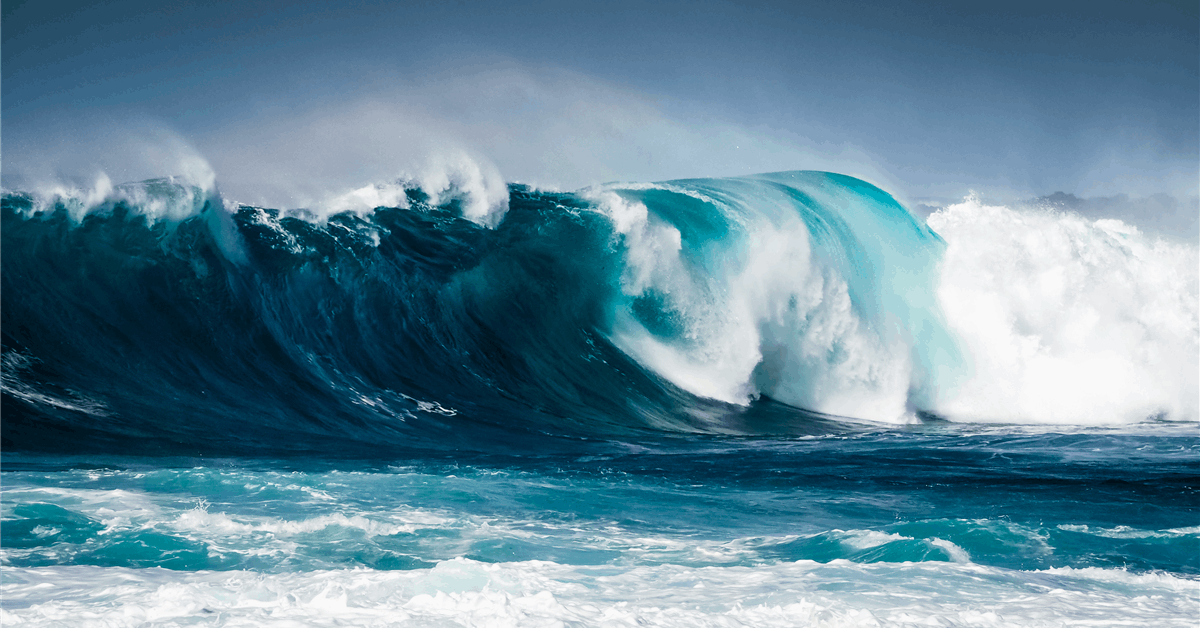
“The waves are up to six meters [19 feet], about the height of an average house, which isn’t that big by North Sea standards. The problem is that the stormy weather has gone on for so long, supply boats can’t deliver,” Skinner continued.
“That means fresh water and fresh food start to run short so it’s better to take non essential people off platform so there’s enough to go round the people who are left,” he went on to state.
A shipping forecast issued by the Met Office, and hosted on its website, on behalf of the Maritime and Coastguard Agency, at 11:30 UTC on February 9, for the period 12:00 UTC on February 9 to 12:00 UTC on February 10, stated that “there are warnings of gales in FitzRoy and Southeast Iceland”.
On the Met Office site, the sea state in FitzRoy is described as “rough or very rough, becoming very rough later” and the sea state in Southeast Iceland is described as “rough or very rough”.
The Met Office website is issuing UK weather warnings for Monday, Tuesday, and Wednesday at the time of writing.
In a statement posted on its site in December last year, OEUK highlighted that around 10,000 offshore oil and gas workers were spending the Christmas and New Year holiday “far out on the dark seas around Britain’s coasts, providing the energy to heat homes, cook turkeys, and power fairy lights”.
“As most people are eating, drinking, and open[ing presents]… with family and friends, this vast army of men and women will be making sure the heat and power is there to make it all happen, working on gas and oil installations that can be more than 200 miles from the UK mainland,” OEUK said in that statement.
The industry body noted in this statement that this workforce helps to supply the daily average of 265 million cubic meters of gas the UK needs on Christmas Day and each of the following days of the Christmas break “to cook our food, heat our homes, and run the 35 gas-fired power stations that remain the backbone of the UK’s electricity generating system”.
OEUK describes itself as the leading representative body for the UK offshore energy industry and a not for profit membership organization with a history stretching back five decades.
According to a key facts page hosted on OEUK’s website, oil and gas production supports over 200,000 jobs in the UK. Of these jobs, around 84,000 are in Scotland, the site outlines.
On its website, the Met Office describes itself as the national meteorological service for the UK.
“We provide critical weather services and world-leading climate science, helping everyone stay safe and thrive,” the organization states on its site.
To contact the author, email [email protected]
element
var scriptTag = document.createElement(‘script’);
scriptTag.src = url;
scriptTag.async = true;
scriptTag.onload = implementationCode;
scriptTag.onreadystatechange = implementationCode;
location.appendChild(scriptTag);
};
var div = document.getElementById(‘rigzonelogo’);
div.innerHTML += ” +
‘ ‘ +
‘ +
”;
var initJobSearch = function () {
//console.log(“call back”);
}
var addMetaPixel = function () {
if (-1 > -1 || -1 > -1) {
/*Meta Pixel Code*/
!function(f,b,e,v,n,t,s)
{if(f.fbq)return;n=f.fbq=function(){n.callMethod?
n.callMethod.apply(n,arguments):n.queue.push(arguments)};
if(!f._fbq)f._fbq=n;n.push=n;n.loaded=!0;n.version=’2.0′;
n.queue=[];t=b.createElement(e);t.async=!0;
t.src=v;s=b.getElementsByTagName(e)[0];
s.parentNode.insertBefore(t,s)}(window, document,’script’,
‘https://connect.facebook.net/en_US/fbevents.js’);
fbq(‘init’, ‘1517407191885185’);
fbq(‘track’, ‘PageView’);
/*End Meta Pixel Code*/
} else if (0 > -1 && 82 > -1)
{
/*Meta Pixel Code*/
!function(f,b,e,v,n,t,s)
{if(f.fbq)return;n=f.fbq=function(){n.callMethod?
n.callMethod.apply(n,arguments):n.queue.push(arguments)};
if(!f._fbq)f._fbq=n;n.push=n;n.loaded=!0;n.version=’2.0′;
n.queue=[];t=b.createElement(e);t.async=!0;
t.src=v;s=b.getElementsByTagName(e)[0];
s.parentNode.insertBefore(t,s)}(window, document,’script’,
‘https://connect.facebook.net/en_US/fbevents.js’);
fbq(‘init’, ‘1517407191885185’);
fbq(‘track’, ‘PageView’);
/*End Meta Pixel Code*/
}
}
// function gtmFunctionForLayout()
// {
//loadJS(“https://www.googletagmanager.com/gtag/js?id=G-K6ZDLWV6VX”, initJobSearch, document.body);
//}
// window.onload = (e => {
// setTimeout(
// function () {
// document.addEventListener(“DOMContentLoaded”, function () {
// // Select all anchor elements with class ‘ui-tabs-anchor’
// const anchors = document.querySelectorAll(‘a .ui-tabs-anchor’);
// // Loop through each anchor and remove the role attribute if it is set to “presentation”
// anchors.forEach(anchor => {
// if (anchor.getAttribute(‘role’) === ‘presentation’) {
// anchor.removeAttribute(‘role’);
// }
// });
// });
// }
// , 200);
//});