Brazil Offshore Consolidation: A Strategic Imperative for Deepwater Dominance
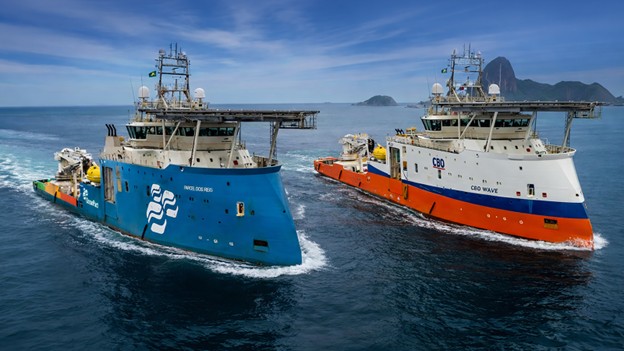
The proposed merger between OceanPact and CBO marks a pivotal moment for Brazil’s offshore oil and gas sector, signaling a clear drive towards consolidation and scale in a market ripe with opportunity. This transaction is set to create a formidable integrated offshore support and marine services platform, establishing a new benchmark for operational capacity and strategic positioning in one of the world’s most critical deepwater basins. For investors, this move warrants close attention, as it fundamentally alters the competitive landscape and enhances the long-term value proposition of offshore services in a resilient energy market.
The Investment Thesis: Scale, Synergies, and Brazil’s Unyielding Deepwater Appeal
The strategic rationale underpinning the OceanPact-CBO combination is compelling, directly addressing the demands of Brazil’s high-activity deepwater market. Upon completion, which remains subject to CADE and shareholder approvals, the merged entity will boast an impressive fleet of 73 vessels, generate annual revenues exceeding $778 million (R$4 billion), and command a robust backlog of approximately $2.7 billion (R$14 billion). This scale is not merely for show; it’s a critical enabler for efficiency and resilience. Brazil’s pre-salt region and ongoing mature basin redevelopment programs require extensive and technically demanding offshore support vessel (OSV) capacity. The combined entity’s enhanced operating capacity, achieved through fleet complementarity and improved vessel allocation, positions it perfectly to capitalize on this sustained activity. Executives have highlighted four key pillars: strengthened cash generation, an expanded asset base, significant operational and commercial synergies, and enhanced fleet capabilities. This integration promises to lower the average fleet age, diversify client exposure, and improve contract execution flexibility across Brazil’s diverse offshore basins, making the new platform a more attractive proposition for long-term contracts and complex subsea operations.
Navigating Volatility: Brazil Offshore Amidst Global Crude Dynamics
Understanding the investment landscape for this new offshore powerhouse requires a look at the broader energy market. As of today, Brent crude trades at $93.93, showing a +0.74% gain within a day range of $93.52-$94.21. WTI crude similarly stands at $90.35, up 0.76% within its daily range of $89.71-$90.7. This relatively stable intra-day movement, however, belies a significant shift over the past two weeks, where Brent has seen a sharp decline from $118.35 on March 31st to $94.86 on April 20th – a substantial 19.8% drop. While such volatility can unnerve some investors, Brazil’s deepwater projects often demonstrate greater insulation from short-term price swings due to their long-cycle nature, strategic importance, and robust economics. The existing backlog of $2.7 billion provides a significant revenue cushion, further mitigating direct exposure to daily price fluctuations. Moreover, the merger’s emphasis on operational efficiencies and strengthened cash generation directly addresses the need for resilience in a cyclical commodity market. By consolidating and optimizing assets, the new entity is better equipped to navigate periods of price pressure while continuing to support essential deepwater production and development activities.
Anticipating Future Catalysts: Upcoming Events and Offshore Outlook
For investors evaluating the long-term prospects of the combined OceanPact-CBO entity, a watchful eye on upcoming energy events is crucial, as they can shape the macro environment for offshore investments. The OPEC+ JMMC Meeting on April 21st is a near-term catalyst, with any pronouncements on supply policy potentially influencing crude price trajectories and, by extension, future investment appetite in major oil regions like Brazil. Throughout the next two weeks, the EIA Weekly Petroleum Status Reports (April 22nd, April 29th) and API Weekly Crude Inventory data (April 28th, May 5th) will offer critical insights into U.S. demand health and inventory levels. Sustained inventory draws would signal robust demand, providing a supportive backdrop for oil prices and reinforcing the economics of deepwater projects. Furthermore, the Baker Hughes Rig Count reports (April 24th, May 1st), while primarily U.S.-focused, serve as a broader indicator of drilling activity and industry confidence. A key forward-looking event is the EIA Short-Term Energy Outlook on May 2nd, which will provide updated forecasts for crude prices, production, and consumption. These projections will offer a vital framework for assessing the long-term viability and growth potential of the Brazilian offshore market, strengthening the investment case for a scaled and efficient service provider like the newly merged entity. A positive outlook from these reports would certainly enhance the value proposition of the combined platform, particularly given its strategic position in expanding subsea services and decommissioning capabilities.
Addressing Investor Concerns: Scale, Synergy, and Deepwater Demand
Our proprietary reader intent data reveals a consistent investor focus on the trajectory of crude prices, with recurring questions such as “is WTI going up or down?” and “what do you predict the price of oil per barrel will be by end of 2026?” While precise price predictions remain elusive, the OceanPact-CBO merger directly addresses the underlying investor demand for resilience, efficiency, and growth in a dynamic market. The creation of a 73-vessel fleet with a $2.7 billion backlog isn’t just about size; it’s about stability and predictability in revenue streams, which are paramount for investors seeking consistent returns. The combined entity, led by OceanPact CEO Flavio Andrade with Eduardo de Toledo as CFO and Marcos Tinti overseeing the vessels segment, aims to enhance operating capacity through fleet complementarity, improve vessel allocation, and expand capabilities in technically demanding offshore projects, including subsea services, decommissioning, and environmental response. These strategic objectives are direct answers to concerns about efficient capital deployment and sustained profitability. Brazil’s deepwater remains a region of strategic importance and sustained investment, offering a structural tailwind that can help insulate the merged entity from marginal short-term price fluctuations. The consolidation helps derisk operations by diversifying clients and contracts, mitigating exposure to any single project or operator and reinforcing the investment thesis for long-term growth in a critical energy market.