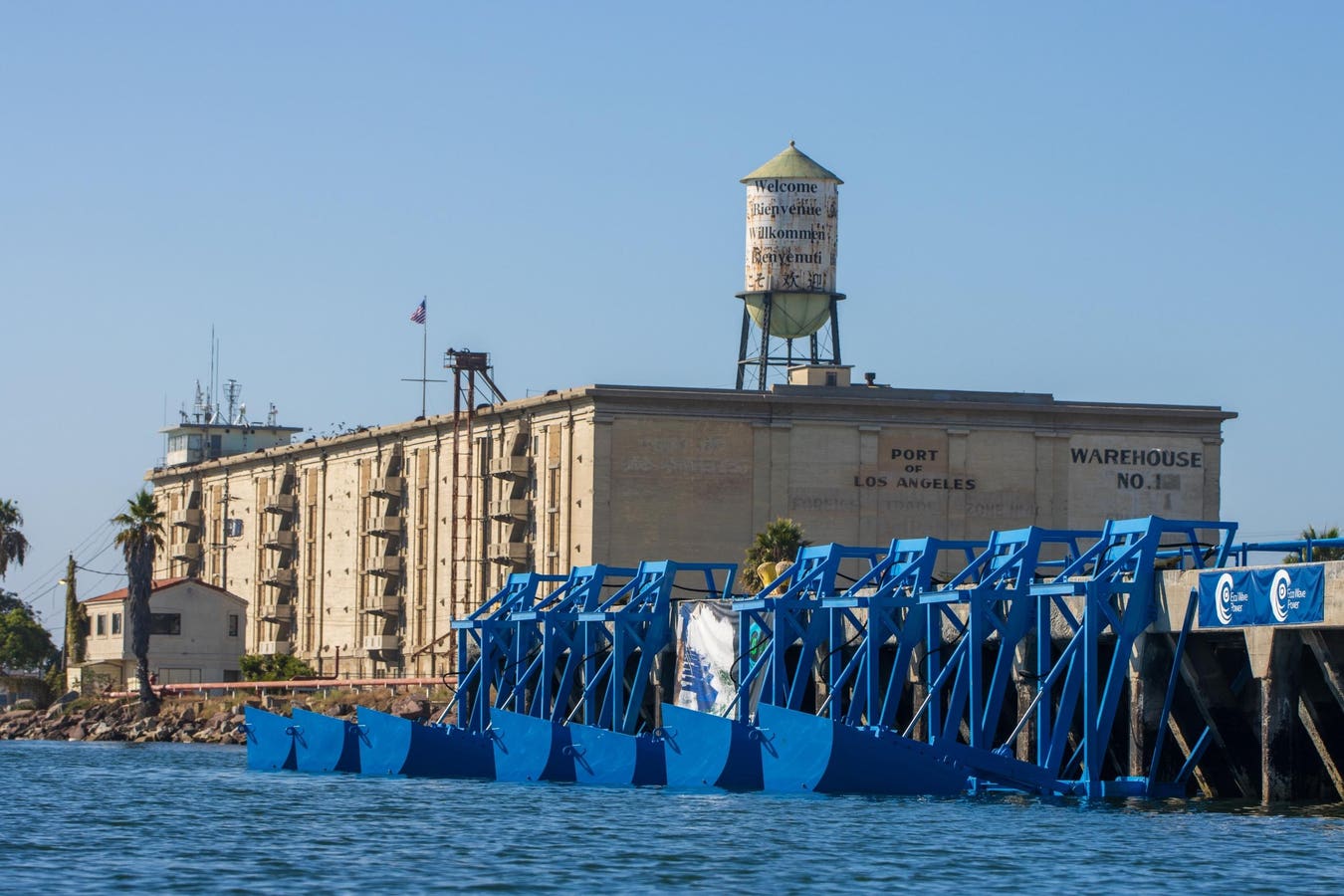
The global energy landscape is undergoing a profound transformation, with renewable sources rapidly expanding their footprint. While solar, wind, hydro, and geothermal have largely dominated this expansion, a new contender has emerged: ocean wave energy. The recent operational launch of Eco Wave’s pilot project at the Port of Los Angeles marks a significant milestone, introducing a novel method for electricity generation that promises stability and consistency, potentially distinguishing it from its intermittent renewable counterparts. For oil and gas investors, understanding the long-term implications of such advancements is critical, even as short-term market dynamics continue to dictate immediate portfolio decisions. This analysis delves into the potential of ocean power, the hurdles it faces, and how its nascent rise fits into the broader energy investment thesis currently shaped by traditional market drivers and investor sentiment.
Ocean Wave Energy: A New Horizon for Stable Renewable Power
The debut of Eco Wave’s innovative wave-based power system in the U.S. signals a tangible step forward for a technology long confined to theoretical discussions. This initial demonstration project, featuring seven steel floaters converting wave motion into electricity, lays the groundwork for a more ambitious 60-megawatt commercial-scale installation. Should this materialize along an 8-mile breakwater, it could power approximately 60,000 homes, representing a meaningful contribution to local grids. What truly differentiates wave energy, and specifically the Eco Wave approach, is its inherent stability. Unlike solar, which is beholden to daylight and cloud cover, or wind, which requires consistent breezes, wave energy offers a remarkably steady power output. Proponents highlight its potential for 24/7 generation in suitable locations, providing a crucial stabilizing element for grids increasingly reliant on intermittent sources. The theoretical annual energy potential from U.S. coastal waves is staggering, estimated by the Energy Information Administration at 2.64 trillion kilowatt-hours. To put that into perspective, this figure alone is equivalent to about 63% of total U.S. utility-scale electricity generation in 2023. While the pathway from theoretical potential to widespread commercial deployment is long, the unique characteristics of wave power present a compelling argument for its inclusion in the future energy mix, gradually chipping away at the demand for traditional fossil fuels over the coming decades.
Navigating Regulatory Tides: The Primary Challenge to Scaling Ocean Power
Despite the promising technological advancements and the vast energy potential, the journey for ocean wave power from pilot projects to commercial scale is fraught with challenges, primarily regulatory in nature. Eco Wave’s CEO openly identifies the absence of a clear regulatory framework in the United States, and indeed globally, as the most significant hurdle. This lack of established guidelines creates uncertainty regarding permitting processes, environmental impact assessments, and integration into existing grid infrastructure. Investors considering early-stage investments in this sector must factor in the extended timelines and potential for delays inherent in developing new regulatory pathways. While pilot projects are underway in Taiwan and Portugal, with India also exploring the technology and New Jersey slated as the next U.S. site for Eco Wave, the global newness means that the industry as a whole is still in its infancy regarding legal and policy support. Until clear and streamlined processes are in place, the deployment curve for significant ocean power capacity will likely remain gradual, meaning its impact on the established oil and gas market will be a slow, long-term shift rather than an immediate disruption.
Oil Market Realities vs. Renewable Aspirations: An Investment Perspective
While the long-term energy transition narrative is compelling, the immediate investment landscape for oil and gas remains firmly anchored in traditional market fundamentals. As of today, April 17th, Brent crude trades at $98.17 per barrel, reflecting a daily decline of 1.23%, with its range confined between $97.92 and $98.67. Similarly, WTI crude is priced at $89.74, down 1.57% today, trading within a range of $89.57 to $90.26. This continued softening is part of a broader trend, with Brent having shed approximately $14, or 12.4%, from its recent high of $112.57 just two weeks ago. Our proprietary reader intent data reveals a consistent focus on “What is the current Brent crude price?” and “What is the current WTI crude price?” indicating that investors are keenly tracking daily fluctuations driven by geopolitical events, supply-demand balances, and macroeconomic indicators. This short-term volatility, influenced by factors like global economic growth forecasts and OPEC+ production decisions, stands in stark contrast to the multi-year, even multi-decade, timeline required for nascent technologies like ocean wave energy to achieve meaningful scale. For now, capital allocation in the energy sector is heavily weighted towards entities that can navigate these immediate market realities, rather than solely betting on the distant promise of new renewable frontiers.
Upcoming Catalysts and the Broader Energy Investment Landscape
The immediate horizon for oil and gas investors is dominated by traditional supply-side catalysts and inventory data, which will continue to drive price action and market sentiment. Our proprietary event calendar highlights several key events in the next 14 days that demand investor attention. The Baker Hughes Rig Count reports on April 17th and 24th will offer insights into domestic production trends. More critically, the OPEC+ Joint Ministerial Monitoring Committee (JMMC) meets on April 18th, followed by the Full Ministerial OPEC+ Meeting on April 20th. These gatherings are pivotal, as investor questions like “What are OPEC+ current production quotas?” underscore the market’s sensitivity to potential supply adjustments. Any shifts in output policy could significantly impact crude prices in the short to medium term. Furthermore, the API Weekly Crude Inventory reports on April 21st and 28th, alongside the EIA Weekly Petroleum Status Reports on April 22nd and 29th, will provide crucial insights into U.S. supply and demand dynamics, influencing sentiment around gasoline prices, which currently stand at $3.08. These near-term market drivers demonstrate that while new renewable technologies like ocean power are intriguing long-term growth vectors, they do not yet register as immediate concerns for oil and gas investors whose portfolios are more directly exposed to the ebb and flow of conventional energy markets. The strategic imperative for investors remains a balanced approach: capitalizing on current market opportunities while maintaining an informed perspective on the evolving energy transition that will shape the sector for decades to come.