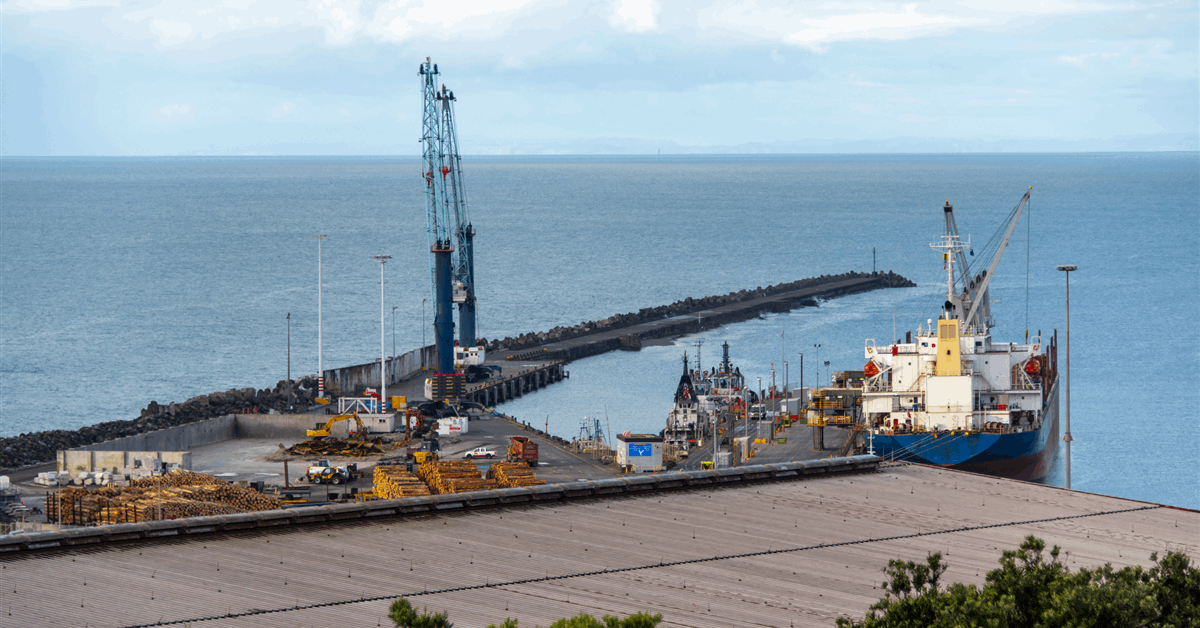
New Zealand’s Energy Crossroads: The High Cost of LNG Imports
New Zealand finds itself at a pivotal juncture in its energy policy, with a recent industry-backed assessment confirming the technical feasibility of importing liquefied natural gas (LNG). However, the path to energy security through overseas gas supplies appears significantly more complex and capital-intensive than initially anticipated, a key takeaway for investors monitoring the Asia-Pacific energy landscape.
This comprehensive study, initiated in response to a precipitous decline in domestic gas reserves and a subsequent re-evaluation of climate policies, delved into both conventional large-scale LNG import infrastructure and smaller, agile solutions. Conducted over approximately ten weeks starting mid-September 2024 by the UK-based Gas Strategies Group Ltd., with local expertise from New Zealand’s Wood Beca Ltd., the “New Zealand LNG Import Feasibility Assessment” offers crucial insights into the nation’s future energy blueprint.
The Investment Horizon: Capital Deployment for Gas Security
For investors eyeing infrastructure plays, the capital expenditure estimates present a wide, yet substantial, range. Establishing the necessary infrastructure for conventional-sized LNG vessels could demand anywhere from NZD 189 million ($113.75 million USD) to a staggering NZD 1 billion. This significant variance hinges on several critical factors: the extent of port modifications required at specific locations, necessary upgrades to existing pipeline networks, and the installation of onshore regasification facilities.
Clarus, a key player in the New Zealand energy sector and one of the commissioning entities, articulated the core challenge: “This represents a substantial investment given the inherent uncertainty surrounding the frequency with which LNG imports would be required.” This sentiment underscores a fundamental risk for potential investors: deploying significant capital into infrastructure that may not see continuous, high-volume utilization, impacting return on investment projections. The global LNG trade has largely standardized around behemoth vessels, typically carrying 170,000-180,000 cubic meters of LNG (equivalent to approximately 4.5 Petajoules of gas), with floating storage and regasification units (FSRUs) becoming a common, flexible solution.
Logistical Hurdles and Site Selection Challenges
The assessment identified six potential sites across New Zealand’s North Island, yet none possess the ideal combination of deep water, favorable metocean conditions, and sufficient existing gas pipeline capacity to meet projected demand scenarios. This critical finding implies that every prospective location will necessitate further financial outlay to rectify one or more of these infrastructural deficiencies, adding layers of complexity and cost to any development.
The study’s initial findings report highlighted this collective shortcoming, emphasizing that no single site offers a ready-made solution. This means that a multi-faceted investment strategy will be essential, addressing specific localized challenges rather than a uniform deployment across the chosen site.
Timeline and Regulatory Impact on Project Delivery
From a project execution standpoint, the timeline for bringing LNG imports online is another critical consideration for investors. The assessment indicates that achieving operational status in under four years is improbable, unless the existing permitting and consenting processes can be dramatically accelerated. Alternatively, developers could assume early financial risk by committing to long-lead items well in advance of a final investment decision (FID).
Such proactive measures, while increasing upfront risk, could potentially shave up to a year off the overall project timeline. This accelerated pathway would require robust government support and a streamlined regulatory environment, factors that will heavily influence investor appetite and project viability.
Pricing Dynamics and Market Exposure
Understanding the cost of imported gas is paramount for investors evaluating the profitability and market impact of such a venture. The assessment projects the landed price of LNG in New Zealand to closely track the Japan Korea Marker (JKM) price, Asia’s benchmark spot price, or potentially carry a modest premium of up to US$0.25/MMBtu (million British thermal units), depending on prevailing market conditions when a cargo is sourced.
Based on a forward exchange rate of 1.67 New Zealand Dollars per US Dollar, this translates to an estimated landed LNG price range of approximately US$10.12 to US$10.37/MMBtu, or roughly NZ$17.83 to NZ$18.27/GJ (gigajoule). It is crucial for investors to note that this “Delivered Ex Ship” (DES) price represents the cost at the import terminal’s entry point. It does not encompass subsequent terminal charges, domestic gas transportation costs, or any system losses incurred during distribution, all of which will add to the final cost for consumers and industrial users.
Strategic Implications for Energy Investors
New Zealand’s journey towards LNG imports presents a compelling, albeit challenging, opportunity for energy investors. The technical viability is established, but the significant capital requirements, complex logistical hurdles, extended timelines, and exposure to volatile global gas prices demand careful scrutiny. For those looking at infrastructure development, gas distribution, or even utility plays in the region, understanding these intricacies is key.
The need for substantial investment in port and pipeline infrastructure, coupled with the potential for FSRU deployment, opens avenues for specialized engineering firms, global energy infrastructure funds, and shipping companies. Furthermore, the interplay between domestic supply decline, climate policy adjustments, and the strategic imperative of energy security positions New Zealand as a dynamic market for long-term energy investment, provided the financial and regulatory frameworks can support such ambitious undertakings.


