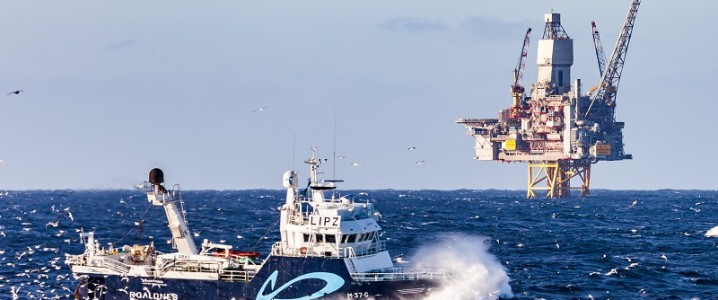
As Europe’s primary natural gas supplier, Norway plays an outsized role in the continent’s energy security. Each year, the industry undertakes critical maintenance on its vast network of gas fields, processing plants, and pipelines. While these planned outages are essential for long-term operational integrity, they inevitably lead to significant, albeit temporary, reductions in supply. This year’s annual maintenance cycle, commencing this week and extending through mid-September, is no exception. However, despite a projected one-third reduction in Norwegian gas flows during the first half of September, the market’s reaction has been surprisingly subdued. For energy investors, understanding the nuances of this situation — from immediate price implications to the broader market context and future risks — is crucial for navigating the evolving European gas landscape.
Norway’s Supply Squeeze: The Details and Market’s Measured Response
Norway has initiated its annual maintenance program, impacting key infrastructure responsible for a substantial portion of Europe’s gas supply. Planned works have already commenced at facilities like the Nyhamna processing plant. This weekend will see further activity, including maintenance at the giant Troll gas field, Europe’s largest gas-producing field, and the Kollsnes onshore processing plant. These coordinated efforts are expected to significantly reduce Norway’s gas supply by approximately one-third throughout the first half of September, with most work slated for completion by September 18.
Intuitively, such a substantial cut might be expected to trigger a sharp rise in European benchmark natural gas prices. Yet, Dutch TTF Natural Gas Futures, the continent’s primary trading benchmark, have shown resilience, even declining in recent weeks. The TTF price, for instance, settled 3% lower on Thursday, despite Norwegian gas flows dipping to their lowest levels since mid-July due to these ongoing works. This muted reaction suggests that the market has largely priced in these anticipated disruptions. Analysts generally agree that any significant price spikes are unlikely unless maintenance extends beyond the scheduled timeframe, underscoring investor confidence in Europe’s current gas supply resilience.
Broader Energy Dynamics: Why Gas Prices Remain Stable Amidst Disruptions
The current composure in the European gas market, despite Norway’s supply cuts, stems from a confluence of broader energy dynamics and robust inventory building efforts. Europe has been diligently accumulating gas inventories for the upcoming winter, with storage levels now nearing 77% full. While this remains slightly below the seasonal five-year average of 84%, the pace of replenishment has been effective, mitigating immediate supply fears.
A significant contributing factor to this stability has been the lackluster spot LNG demand in Asia this summer. European buyers have benefited from reduced competition for LNG cargoes, avoiding the high premiums often seen when Asian demand surges. Notably, China is on track to record its tenth consecutive month of year-over-year falling LNG imports in August, a trend that has provided welcome relief for Europe’s inventory-filling endeavors. This ample LNG supply has exerted downward pressure on prices, even as a major supplier temporarily scales back.
However, investors are not solely focused on gas. Our proprietary reader intent data reveals a consistent interest in the broader crude market, with frequent queries about the current Brent crude price and its underlying models, as well as the intricate details of OPEC+ production quotas. As of today, the broader energy complex shows Brent Crude trading at $98.38, marking a 1.02% daily decline, while WTI Crude stands at $89.89, down 1.4%. This recent softening in crude prices follows a more significant trend; Brent has seen a 12.4% drop over the past 14 days, falling from $108.01 to $94.58. This broader crude market weakness, driven by macroeconomic concerns and supply dynamics, underscores a global energy market grappling with multiple inputs, where the stability in European gas stands out as a localized, albeit temporary, anomaly.
Navigating Future Risks: Upcoming Events and Forward-Looking Analysis
While the market has effectively digested the current Norwegian maintenance, forward-looking investors must consider potential shifts that could reintroduce volatility. The primary immediate risk lies in any extension of the scheduled maintenance beyond the September 18 deadline. Unexpected technical issues or delays could quickly erode the market’s current complacency, particularly as Europe approaches the critical winter heating season with storage levels still below historical averages.
Beyond the direct impact of Norwegian operations, several key upcoming energy events bear watching, as they will shape the broader supply-demand narrative and investor sentiment. This Friday, April 17, brings the Baker Hughes Rig Count, offering insights into North American production trends. More critically, the OPEC+ Joint Ministerial Monitoring Committee (JMMC) convenes on Saturday, April 18, followed by the Full Ministerial OPEC+ Meeting on Monday, April 20. Our reader data indicates strong investor interest in OPEC+ production quotas, highlighting the market’s sensitivity to any potential supply adjustments from this influential cartel. While these meetings directly target crude oil, their outcomes can send ripple effects across the entire energy complex, influencing risk appetite and potentially tightening the overall energy supply narrative.
Further insights into global supply-demand balances will come from the API Weekly Crude Inventory reports on April 21 and 28, and the EIA Weekly Petroleum Status Reports on April 22 and 29. Unexpected inventory builds or drawdowns could signal shifts in global demand or production, impacting investor perceptions of energy market tightness. For energy investors, monitoring these diverse data points in conjunction with the ongoing Norwegian maintenance provides a holistic view, allowing for a proactive assessment of potential supply risks and price movements as the year progresses.
Investment Implications: Vigilance Beyond the Immediate Outlook
For investors, the current Norwegian gas maintenance serves as a prime example of how specific supply disruptions can be mitigated by broader market conditions. The market’s ability to absorb a one-third cut in Norway’s gas supply without significant price spikes is a testament to Europe’s successful inventory build-up and the prevailing ample LNG supply, primarily due to subdued Asian demand. This immediate outlook suggests that short-term speculative plays on gas price increases due to this maintenance are likely to be unrewarding, barring unforeseen extensions.
However, this stability should not breed complacency. The underlying vulnerability of European gas supply, particularly as winter approaches, remains a critical factor. Investors should maintain vigilance on several fronts: the timely completion of Norwegian maintenance, any signs of resurgent LNG demand from Asia, and the ongoing trajectory of European storage levels. Furthermore, the outcomes of upcoming OPEC+ meetings and global inventory reports will provide crucial signals for the broader energy market, which, while currently decoupled from European gas, could still influence overall sentiment and investment flows into the sector. The current calm in European gas is a delicate balance, sustained by specific market dynamics that could shift rapidly, demanding continuous analysis and adaptive investment strategies.


