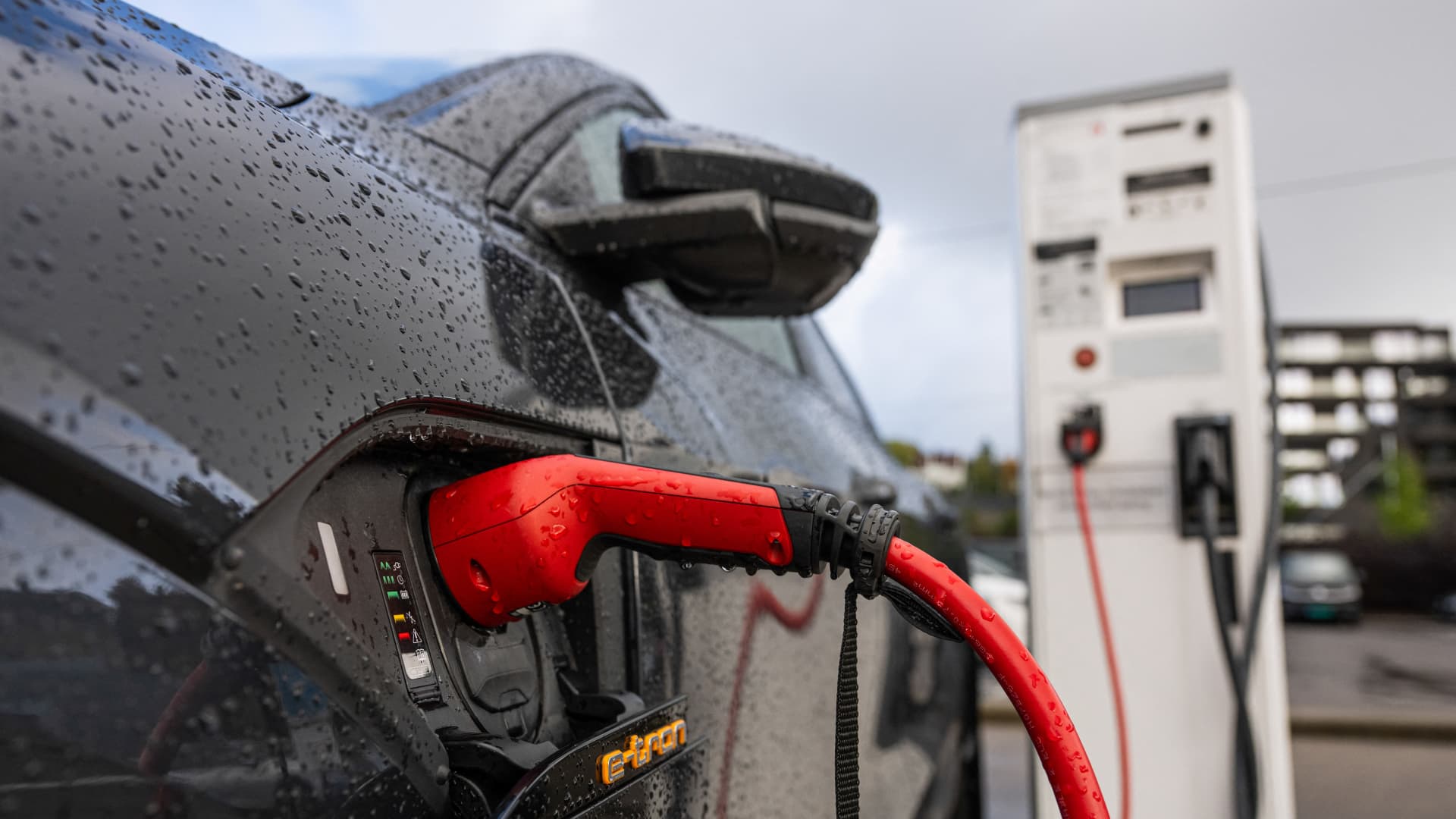
Norway, a significant global oil and gas producer, has again demonstrated its unparalleled leadership in electric vehicle (EV) adoption, with a staggering 95.9% of all new passenger cars registered in 2025 being electric. This figure, a sharp increase from 88.9% in 2024, is not merely a Scandinavian anomaly; it serves as a potent long-term signal for the future of global oil demand. For investors in the energy sector, this dramatic shift in a mature, affluent market presents a critical case study, forcing a re-evaluation of demand projections and the structural resilience of crude consumption in developed economies. While the immediate market is swayed by geopolitics and supply-side maneuvers, Norway’s rapid transition offers a stark glimpse into a potential future where internal combustion engine (ICE) vehicles become a niche, rather than a norm.
The Norwegian EV Surge: A Blueprint for Demand Erosion
The numbers from Norway are unequivocal: 2025 marked a record year for new car registrations, totaling 179,549 vehicles, representing a 40% year-on-year jump. Critically, nearly all of these new vehicles were electric. This near-total market saturation for EVs within new sales, culminating in a striking 98% EV share in December 2025, underscores the effectiveness of consistent, targeted policy. Norwegian officials credit “long-term and targeted electric car policy” and “specific tax decisions” – including a VAT change effective January 1, 2026, which spurred a late-year buying frenzy – as pivotal drivers. Tesla, in particular, capitalized on this environment, securing its fifth consecutive year as the top-selling brand, with 34,285 new registrations and almost 20% of the market share. The Model Y alone accounted for 27,621 registrations. This demonstrates that with the right policy framework and compelling product offerings, rapid and comprehensive market transformation is achievable. For oil investors, Norway illustrates not just an isolated market shift, but a replicable policy success that could accelerate demand destruction in other developed nations, posing a significant structural headwind to long-term crude consumption.
Navigating Current Market Volatility Amidst Long-Term Threats
While Norway’s EV success paints a clear picture of future demand erosion, the immediate crude market remains a complex interplay of supply, geopolitics, and inventory data. As of today, Brent crude trades at $90.24, experiencing a slight dip of 0.21% within a day range of $93.87-$95.69. WTI crude similarly saw a decline of 0.85%, settling at $86.68, oscillating between $85.50 and $87.49. This current pricing dynamic follows a notable period of volatility, with Brent crude shedding nearly 20% of its value over the past 14 days, falling from $118.35 on March 31st to $94.86 on April 20th. These short-term movements are largely disconnected from the structural shifts exemplified by Norway. Instead, they reflect immediate supply concerns, inventory builds or draws, and the ongoing dialogue among major producers. For gasoline, prices remain relatively stable at $3.04, with negligible daily movement, indicating a balanced short-term retail demand despite crude price fluctuations. Investors must recognize this dichotomy: short-term trading signals are vital for tactical positioning, but the long-term threat to demand, highlighted by advanced EV markets, mandates a strategic re-evaluation of portfolio allocations.
Investor Focus: Peering Beyond the Horizon of Crude Prices
Our proprietary intent data reveals that investors are actively grappling with the future trajectory of crude prices, with questions like “what do you predict the price of oil per barrel will be by end of 2026?” frequently surfacing. This pervasive uncertainty underscores a deeper concern than just daily price movements; it speaks to the fundamental questions around peak oil demand and the viability of long-term investments in traditional upstream assets. The Norwegian example directly feeds into this anxiety. While the volume of oil demand eliminated by Norway’s EV transition is relatively small on a global scale, the *rate* and *completeness* of the shift are what capture investor attention. If a major oil-producing nation can so effectively transition its domestic transport fleet, what does this imply for demand in other economically developed, environmentally conscious regions? Investors are rightly asking if markets like Norway are simply outliers or the leading edge of a global trend that will fundamentally cap, and eventually shrink, global oil demand. The focus on future prices reflects a search for clarity in an increasingly bifurcated energy market, where short-term supply constraints clash with long-term technological and policy-driven demand destruction.
Upcoming Catalysts and the Evolving Energy Landscape
In the near term, investors will closely monitor a series of critical events that will shape price action and provide fresh insights into the supply-demand balance. The OPEC+ JMMC Meeting today, April 21st, is paramount, as any pronouncements or hints regarding production quotas or existing cuts will immediately impact sentiment. Following this, the EIA Weekly Petroleum Status Reports on April 22nd and April 29th will offer crucial data on crude and product inventories, refinery utilization, and demand indicators within the United States, a key consumption market. The Baker Hughes Rig Count, scheduled for April 24th and May 1st, will provide an essential barometer of North American drilling activity and future supply potential. Perhaps most significant for longer-term outlooks, the EIA Short-Term Energy Outlook on May 2nd will offer updated projections for supply, demand, and prices, potentially incorporating more explicit assumptions about EV penetration and its impact on gasoline and diesel consumption. While these events dictate the immediate trading environment, the structural lesson from Norway remains: even as market participants react to weekly inventory changes or OPEC+ rhetoric, the underlying shift towards electrification in transportation is a persistent force that will increasingly factor into long-term demand models and investment strategies.
In conclusion, Norway’s remarkable achievement of nearly 96% EV penetration in new car sales for 2025 is more than just an impressive environmental feat; it is a critical data point for global oil and gas investors. It serves as a compelling, real-world case study for how sustained policy and consumer adoption can rapidly and decisively erode oil demand in the transportation sector. While the immediate oil market remains subject to geopolitical events, inventory reports, and OPEC+ decisions – factors currently evidenced by Brent crude trading at $90.24 today – the long-term implications of such successful transitions cannot be ignored. Investors asking about end-of-year oil price predictions must increasingly integrate such structural demand shifts into their models, balancing the tactical trading opportunities presented by upcoming events like EIA reports and OPEC+ meetings with the strategic necessity of adapting to a world where a significant portion of transportation demand may simply vanish. The Norwegian bellwether signals a future that, while not yet fully global, is rapidly approaching for developed economies, necessitating a robust and forward-looking investment strategy in the dynamic energy landscape.