Nord Stream 2 Debt Restructuring: A Symptom, Not a Solution, for European Energy
The recent announcement from a Swiss court confirming Nord Stream 2’s debt restructuring agreement with its creditors, narrowly averting bankruptcy, might seem like a minor procedural detail for a pipeline that has never delivered gas. However, for astute oil and gas investors, this development is far from trivial. It underscores the enduring geopolitical complexities, the significant financial stakes, and the persistent speculative undercurrents surrounding European energy security. This isn’t just about an $11 billion infrastructure project; it’s a window into the ongoing tug-of-war between energy diversification, economic pragmatism, and geopolitical leverage, all set against a backdrop of volatile global energy markets.
The Ghost Pipeline’s Enduring Geopolitical Shadow
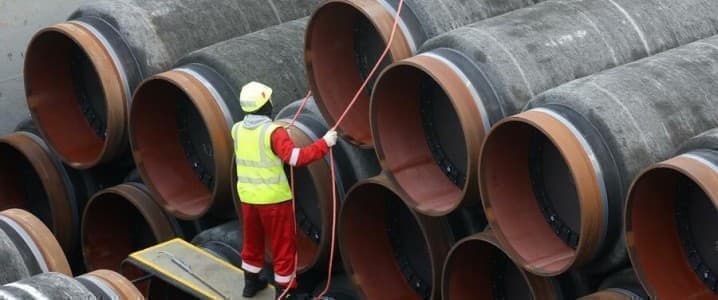
Nord Stream 2, a project designed to double Russian gas flows to Germany via the Baltic Sea, remains a potent symbol of Europe’s entangled energy past. Built in the late 2010s, its operational future was abruptly halted in early 2022 when Germany froze its certification process following the Russian invasion of Ukraine. This effectively stranded a massive infrastructure investment, mirroring the fate of Nord Stream 1, which Russia itself shut down indefinitely in September 2022. Despite gas leaks later that month rendering both pipelines likely unusable without extensive repairs, the debate around their potential revival persists. German officials, including former Economy and Energy Minister Robert Habeck, have dismissed such ideas as heading in the “wrong direction.” Yet, persistent whispers suggest that these pipelines could re-emerge as bargaining chips in any future peace settlement for Ukraine. For energy investors, this creates a profound layer of uncertainty: a significant physical asset exists, but its operational viability is entirely subject to an unpredictable geopolitical calculus, making it a high-risk, high-reward proposition with very long odds.
European Energy Crossroads and Investor Scrutiny
The EU’s recent roadmap, unveiled this week, to phase out all Russian oil, gas, and nuclear energy imports by 2027, paints a clear picture of the bloc’s long-term strategic intent. This ambitious goal highlights a commitment to energy independence, even as member states like Slovakia and Hungary voice strong criticisms, labeling it “economic suicide” that could inflict more damage on the EU than on Russia. This divergence in opinion within the EU is critical for investors, creating fault lines in a seemingly unified policy. Our internal data indicates that OilMarketCap.com readers are intensely focused on the future of European gas supply, with frequent inquiries about “Asian LNG spot prices this week” and “base-case Brent price forecasts for next quarter.” This reflects a deep concern about where Europe will source its energy, how it will impact global LNG competition, and the knock-on effects for broader crude markets. The Nord Stream 2 situation, while specific to Russian pipeline gas, is intrinsically linked to these wider questions of supply diversification and pricing stability. The path to 2027 will be fraught with challenges, and the EU’s ability to maintain cohesion and secure alternative supplies will be paramount for mitigating price volatility and ensuring regional energy security.
Broader Market Dynamics: Volatility and Upcoming Catalysts
While the Nord Stream 2 story unfolds in the gas sector, its underlying geopolitical currents resonate across the entire energy complex. As of today, Brent crude trades at $95.27 per barrel, showing a modest intraday gain, yet this follows a significant downturn of nearly 9% over the past two weeks, dropping from $102.22 on March 25th to $93.22 on April 14th. WTI crude also reflects this volatility, currently at $91.19. This broader market sensitivity to supply-demand narratives and geopolitical events means that any significant development in European gas policy or the Ukraine conflict has the potential to ripple through oil prices. Looking ahead, the energy market is bracing for several key events that will further shape this landscape. The OPEC+ Joint Ministerial Monitoring Committee (JMMC) meeting on April 18th, followed by the Full Ministerial Meeting on April 20th, will be crucial in determining near-term crude supply policies. Additionally, the regular weekly API and EIA crude inventory reports, scheduled for April 21st/22nd and April 28th/29th, will provide critical insights into supply and demand fundamentals. These upcoming events, coupled with ongoing geopolitical tensions, underscore an environment where investors must remain agile and responsive to both direct market signals and the broader strategic shifts impacting global energy flows.
Investment Outlook: Navigating Uncertainty in European Gas Infrastructure
For investors contemplating exposure to the European energy sector, the Nord Stream 2 saga serves as a stark reminder of the inherent risks and the profound influence of non-market factors. The debt restructuring, while preventing an immediate bankruptcy, does not alter the pipeline’s core problem: its political non-viability. Companies with existing infrastructure exposure in politically sensitive regions, or those betting on future normalization of energy relations with Russia, face substantial headwinds. Conversely, firms specializing in LNG infrastructure, renewables, or alternative pipeline routes bypassing Russia are likely to benefit from the EU’s aggressive diversification strategy. OilMarketCap.com’s reader intent data, with its emphasis on “consensus 2026 Brent forecast,” highlights that investors are seeking clarity amidst this fog. Our analysis suggests that while the Nord Stream 2 project itself remains a stranded asset, the restructuring temporarily removes a distraction, allowing focus to shift back to the more pressing issues of European energy transition, security of supply, and the global competition for non-Russian gas. Investors should prioritize companies demonstrating resilience and strategic alignment with the EU’s long-term energy independence goals, rather than holding out hope for the resurrection of politically moribund projects.


