The Gulf of Mexico: A Strategic Platform Amidst Market Volatility
The National Ocean Industries Association (NOIA) recently unveiled its “Gulf of America Forward” initiative, a comprehensive report and digital platform asserting the U.S. Gulf of Mexico’s indispensable role in global energy production, innovation, and national security. For investors navigating today’s turbulent energy markets, this report offers a timely reminder of a domestic asset with deep reserves, advanced technological capabilities, and a skilled workforce. While the immediate focus might be on short-term price fluctuations, NOIA’s analysis underscores a long-term strategic imperative for the region, positioning it not as a legacy asset but as a critical future energy hub spanning hydrocarbons, carbon capture, offshore wind, and hydrogen. Understanding this strategic vision is essential for identifying durable investment opportunities.
Offshore Hydrocarbons: A Stabilizing Force in a Volatile Market
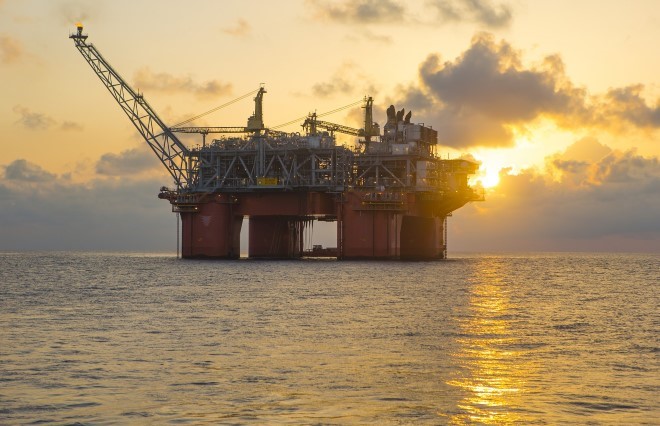
The Gulf of Mexico remains a cornerstone of U.S. energy supply, contributing over 15% of the nation’s oil production. This substantial output underpins significant economic activity, supporting more than 400,000 jobs and injecting an estimated $36 billion annually into the U.S. GDP. Furthermore, the report highlights that the Gulf’s oil production boasts some of the world’s lowest carbon intensity, a direct result of decades of technological innovation and stringent environmental standards. This “lower-emission barrel” proposition is increasingly attractive to investors focused on ESG metrics and the long-term sustainability of energy portfolios.
The strategic value of this domestic production is particularly salient today. As of this morning, Brent Crude trades at $90.38 per barrel, a significant decline of 9.07% within the day, with WTI Crude experiencing a similar drop to $82.59, down 9.41%. This sharp intraday correction comes on the heels of a broader downturn, with Brent having shed nearly 20% from its March 30th high of $112.78. Such volatility underscores the need for stable, reliable, and domestically sourced energy supply. The Gulf of Mexico, with its established infrastructure and operational resilience, offers a crucial hedge against geopolitical risks and supply disruptions that often exacerbate price swings. Investors should view the GoM’s conventional energy output as a foundational asset, providing stability and funding for federal and state programs like the Land and Water Conservation Fund, even as the broader market experiences significant price discovery.
The Gulf’s Green Horizon: Beyond Traditional Hydrocarbons
While its hydrocarbon prowess is undeniable, the “Gulf of America Forward” initiative also illuminates the region’s burgeoning role in the energy transition. NOIA’s vision extends beyond oil and gas to encompass cutting-edge solutions in carbon capture and storage (CCS), offshore wind, and hydrogen development. The GoM’s unique geological characteristics, existing pipeline infrastructure, and skilled offshore workforce make it an ideal candidate for large-scale CCS projects, offering a pathway to decarbonize industrial emissions from the extensive Gulf Coast refining and petrochemical complex. Similarly, its vast offshore acreage and proximity to energy demand centers present significant opportunities for offshore wind development, providing clean power generation. The potential for green and blue hydrogen production, leveraging both renewable energy and natural gas with CCS, further diversifies the region’s energy future.
For forward-thinking investors, these emerging sectors represent new avenues for capital deployment within a familiar operating environment. Companies with established offshore expertise are uniquely positioned to leverage their existing assets and human capital to pivot into these new energy frontiers, creating a compelling narrative for long-term growth and diversification. This strategic shift transforms the Gulf from purely an extraction basin to a multi-faceted energy innovation hub.
Policy Pathways and Upcoming Catalysts for Investment Certainty
Critical to unlocking the Gulf’s full potential, as highlighted by NOIA, are consistent lease sales, streamlined permitting processes, and forward-looking regulatory frameworks. The call for policy stability directly addresses a major concern for investors: regulatory uncertainty can delay projects, inflate costs, and ultimately deter capital. Long-cycle offshore projects require predictable policy environments to justify the substantial upfront investments.
The coming weeks present several key events that could influence the broader energy landscape and, by extension, the strategic importance of U.S. offshore policy. Investors will be closely watching the OPEC+ Joint Ministerial Monitoring Committee (JMMC) meeting on April 19th, followed by the full OPEC+ Ministerial Meeting on April 20th. Any decisions regarding production quotas will have immediate ramifications for global supply and pricing. In the U.S., the weekly API and EIA crude inventory reports on April 21st/22nd and April 28th/29th will provide vital insights into domestic supply and demand dynamics, while the Baker Hughes Rig Count on April 24th and May 1st will indicate drilling activity trends. Policy decisions around Gulf of Mexico leasing and permitting directly impact the long-term domestic supply outlook, offering a counter-balance to international supply management decisions. A robust, consistent U.S. offshore strategy could enhance energy security and provide a more stable supply foundation, regardless of OPEC+ actions.
Addressing Investor Outlook: Price Predictions and Supply Dynamics
Our proprietary reader intent data reveals a significant investor focus on future oil prices, with many asking, “what do you predict the price of oil per barrel will be by end of 2026?” and “What are OPEC+ current production quotas?” These questions underscore the inherent uncertainty in long-term oil price forecasting, which is heavily influenced by both supply-side policies and evolving demand dynamics. While precise predictions are challenging, the “Gulf of America Forward” strategy offers a crucial piece of the puzzle.
Should the U.S. adopt the consistent policy framework advocated by NOIA, a growing and diversified Gulf of Mexico could significantly impact global supply balances. Increased GoM production, especially if it maintains its lower-carbon intensity profile, could provide a more reliable, non-OPEC supply source, potentially tempering extreme price volatility driven by geopolitical events or aggressive OPEC+ cuts. Understanding OPEC+’s current quotas and their future adjustments is paramount, as their collective output significantly impacts market fundamentals. However, a strategically robust U.S. offshore sector, backed by stable policy, offers an important counterweight, enhancing global energy security and potentially providing a ceiling to long-term price spikes. For investors, integrating the GoM’s long-term growth potential into their models, alongside international supply decisions, is crucial for developing a nuanced and resilient investment thesis for the coming years.