

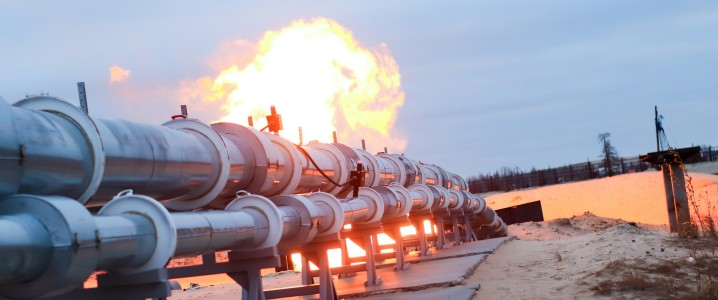
Three weeks after a section of the critical Nigerian pipeline Escravos–Lagos was damaged by an explosion, Nigeria’s state oil and gas company NNPC Limited said that service had been restored after a damaged pipe had been repaired.
In early December, an explosion occurred at the key onshore natural gas Escravos–Lagos Pipeline System in Warri, Delta State. The explosion disrupted operations at the link shipping gas to industrial users and gas-fired power plants, NNPC said at the time.
The Escravos–Lagos gas pipeline is a major conduit of gas to industrial users and power plants in southwestern Nigeria.
Following the explosion on December 10, 2025, NNPC “immediately activated our emergency response, deployed coordinated containment measures, and worked tirelessly with multidisciplinary teams to ensure the damaged section was repaired, pressure-tested, and safely recommissioned,” the state company said on Tuesday.
“Today, the pipeline is fully operational, reaffirming our resilience and commitment to energy security.”
The incident took place days after NNPC and local producer Heirs Energies signed a deal to capture and use the gas flared at their onshore OML 17 joint venture near Port Harcourt in a bid to monetize the resource and reduce flaring.
Under the deal, the companies agreed to capture the natural gas flared across OML 17 and deploy it for use in power generation, industrial applications, liquefied petroleum gas (LPG), and compressed natural gas (CNG). The move is aligned with Nigeria’s gas development priorities and energy transition goals.
Gas flaring has been a major issue at Nigeria’s oilfields—it is wasted instead of used for many industrial purposes, and holds back the country’s targets to reduce emissions.
Nigeria saw flaring volumes jump by 12% in 2024, which was the second largest increase globally behind Iran, the World Bank said in a report earlier this year.
By Tsvetana Paraskova for Oilprice.com
More Top Reads From Oilprice.com
