Nigeria’s Oil Landscape Undergoing Profound Indigenous Transformation
Nigeria, Africa’s largest oil producer, is experiencing an unprecedented shift in the ownership and operational control of its vast hydrocarbon wealth. A new cohort of ambitious domestic energy firms is strategically acquiring significant upstream assets from international majors, signaling a pivotal moment for the nation’s energy future and presenting fresh dynamics for global oil and gas investors. This ongoing divestment cycle, the most substantial in Nigeria’s history, is fundamentally reshaping the industry’s power structure, with local players now poised to command a majority of the country’s crude output.
For decades, Nigeria’s onshore oil sector was synonymous with global energy giants, whose extensive infrastructure permeated regions like those where Osayande Igiehon, CEO of Heirs Energies, grew up. However, the operational landscape has become increasingly challenging for these traditional operators. Dwindling financial returns, persistent concerns over environmental liabilities, rampant oil theft, and strained community relations have prompted a strategic retreat by many international oil companies (IOCs) from Nigeria’s onshore and shallow water blocks. This vacuum is now being aggressively filled by well-capitalized Nigerian entities, like Heirs Energies, which argue their deep local understanding provides a distinct competitive edge.
The Strategic Edge: Community Engagement and Operational Agility
Indigenous Nigerian companies are not merely acquiring assets; they are fundamentally redefining the operational paradigm within the country. As Igiehon of Heirs Energies articulates, the “social license to operate” has become paramount. He emphasizes that the strained relationships between some major international firms and local populations often hindered operations. In contrast, domestic operators, leveraging their intimate knowledge of the local context and cultivating robust community ties, can navigate the intricate social fabric more effectively. This enhanced community relationship fosters an environment where local companies can operate with fewer impediments, a crucial factor for maintaining consistent production and mitigating operational risks.
Ufoma Immanuel, Managing Director of Chappal Energies, reinforces this sentiment, highlighting the transformative scale of the current divestment wave. He notes that while previous divestment cycles saw some asset transfers, none have matched the current magnitude in terms of shifting the bulk of Nigeria’s production into local hands. This transition marks a significant maturation of Nigeria’s indigenous energy sector, moving these companies beyond ancillary service provision to becoming primary operators and asset owners, thereby capturing greater value across the upstream chain.
High-Value Transactions Signal Investor Confidence in Local Operators
The past year has witnessed a flurry of high-profile transactions underscoring this dramatic shift and the financial muscle of Nigerian firms. Notably, London and Lagos-listed Seplat Energy successfully acquired ExxonMobil’s extensive Nigerian assets, a landmark deal that significantly boosted Seplat’s production profile and reserves. Chappal Energies, another burgeoning domestic champion, made a strategic move by purchasing the Nigerian operations of Norway’s state-owned Equinor for a substantial $1.2 billion. This acquisition notably included Equinor’s stake in one of Nigeria’s largest deepwater fields, signifying local players’ increasing foray into more complex and capital-intensive offshore projects.
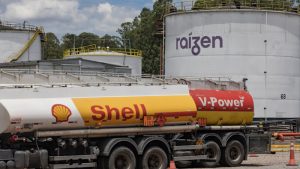
Further solidifying the trend, Italy’s Eni divested its Nigerian arm to Oando, a company dual-listed in Lagos and Johannesburg, in a deal valued at $783 million. Perhaps the most symbolic transaction involved Shell, a company almost synonymous with Nigerian oil history, having drilled the nation’s first successful well in 1956. Shell completed the sale of its onshore business for $1.3 billion. While Shell is not exiting Nigeria entirely, this divestment marks a strategic pivot towards its deepwater assets in the Gulf of Guinea, areas promising potentially higher returns and fewer security challenges compared to its historical onshore operations.
Investment Implications and Future Outlook for Nigeria’s Energy Sector
For investors tracking the global energy markets, this reorientation in Nigeria presents a compelling narrative. The emergence of a strong, domestically controlled upstream sector could lead to more stable production, as local operators are arguably better positioned to manage community relations and security challenges. This localized approach may unlock previously stifled production potential and enhance the long-term viability of these assets.
However, investors must also weigh the inherent risks. While indigenous companies bring unique advantages, they also face significant capital expenditure requirements for asset maintenance, development, and adherence to evolving environmental standards. The capacity to sustain substantial investment in exploration and production, particularly in deepwater fields, will be critical for long-term growth. Furthermore, the persistent challenges of oil theft and pipeline vandalism, though potentially mitigated by improved community relations, remain a complex issue requiring sustained effort.
The strategic retreat of major international players from Nigeria’s onshore sector is not merely an exit; it’s an invitation for a new generation of energy leaders. These Nigerian firms are demonstrating their capacity to acquire, operate, and develop critical oil and gas assets, backed by substantial capital commitments. This transformation is poised to redefine Nigeria’s role in the global energy landscape, making its indigenous companies increasingly attractive focal points for investors seeking exposure to a dynamic and evolving African energy market.