The intensifying climate crisis is manifesting in increasingly tangible and costly ways, and for investors in the UK energy sector, a looming threat demands immediate attention: escalating flood risk. While historically viewed as a localized environmental concern, new data reveals a systemic vulnerability across England, Scotland, and Wales, with profound implications for energy infrastructure, operational continuity, and ultimately, shareholder value. This isn’t just an environmentalist’s warning; it’s a stark alarm being sounded by the insurance industry itself, indicating a shift from abstract climate models to concrete financial liabilities. For astute oil and gas investors, understanding and pricing this risk into their portfolios is no longer optional.
The Escalating Cost of Climate Risk for UK Energy Infrastructure
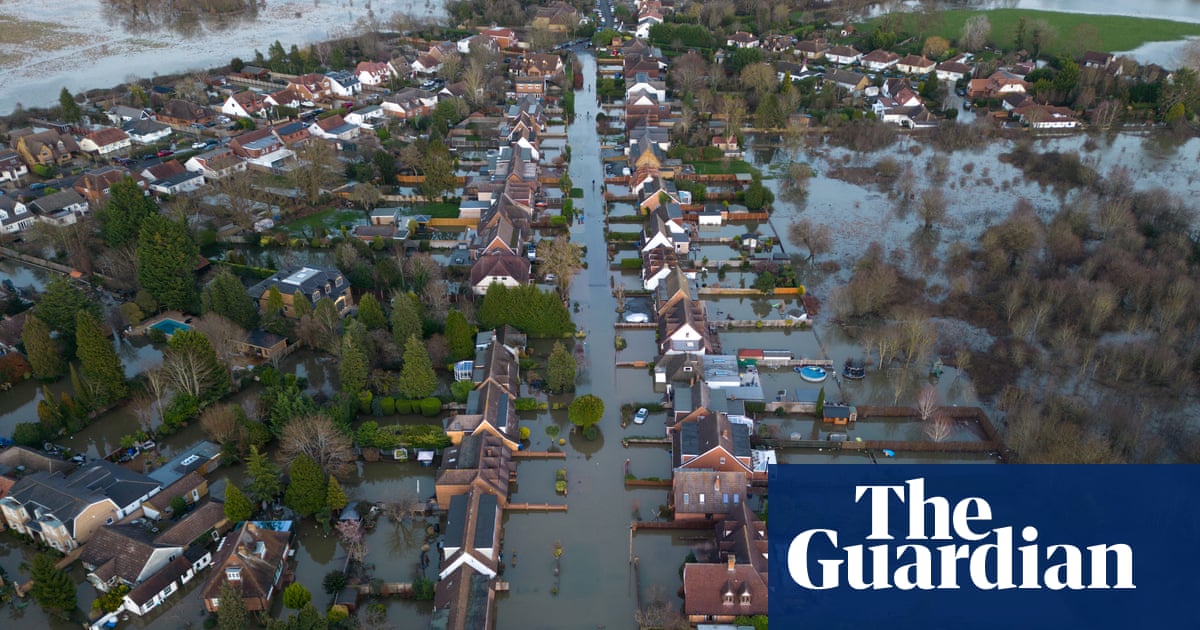
Recent investigations paint a sobering picture for the United Kingdom. The number of properties exposed to devastating flooding in England alone is projected to surge by over a quarter, from 6.3 million to 8 million. Even more concerning for critical infrastructure is the forecast for high-risk areas susceptible to flash flooding, where frequency could escalate by as much as 66% by 2050. This isn’t merely about residential property; large swathes of commercial property in densely populated regions, often home to vital energy distribution hubs, substations, and even parts of the national grid, are now identified as among the most vulnerable. Every constituency across Great Britain is expected to face increased flood risk, meaning the challenge is geographically pervasive.
For energy companies, this translates directly into higher operational costs, potential asset write-downs, and increased capital expenditure for resilience measures. Power generation facilities, gas processing plants, and the intricate network of pipelines and transmission lines are all exposed. Flooding can lead to direct damage, prolonged outages, supply chain disruptions for repairs, and significant safety hazards. The fact that insurance industry leaders are now at the forefront of these warnings underscores a critical shift: climate risk is becoming uninsurable or prohibitively expensive in certain areas, forcing energy companies to internalize these costs or face existential threats to their assets. Investors must scrutinize the climate adaptation strategies of their UK-exposed holdings.
Market Volatility and Investor Sentiment: A Current Snapshot
Amidst these long-term climate warnings, the immediate energy markets are experiencing their own turbulence, creating both noise and opportunity for discerning investors. As of today, Brent Crude trades at $90.38, reflecting a significant 9.07% downturn within its daily range of $86.08-$98.97. Similarly, WTI Crude has seen a 9.41% drop, settling at $82.59, with a daily range between $78.97 and $90.34. This recent price action, particularly the 14-day Brent trend which shows a nearly 20% decline from $112.78 on March 30th to today’s $90.38, highlights the market’s sensitivity to global supply-demand dynamics and geopolitical shifts. While these immediate price movements capture headlines, they can also distract from the insidious, accumulating risks like those posed by UK flooding.
The current market softness in crude prices, alongside a 5.18% drop in gasoline to $2.93, might suggest a focus on demand concerns or robust supply. However, for investors holding stakes in energy companies with significant UK assets, these macro trends must be viewed through the lens of localized, escalating operational risks. A company’s ability to maintain production and distribution in the face of increasingly frequent and severe weather events will directly impact its bottom line, irrespective of the prevailing oil price. Investors should ask whether current valuations adequately price in the future costs of climate resilience and potential flood-related disruptions, especially for assets located in newly identified high-risk zones.
Upcoming Events and Strategic Positioning for Resilience
The coming weeks are packed with critical energy market catalysts that will shape global supply and pricing, demanding strategic positioning from investors. On April 19th and 20th, the OPEC+ Joint Ministerial Monitoring Committee (JMMC) and the full Ministerial Meeting are scheduled, respectively. These gatherings will provide crucial insights into production quotas, which directly influence global crude supply and, by extension, the revenue streams of oil and gas producers worldwide. Following these, the API Weekly Crude Inventory reports on April 21st and 28th, and the EIA Weekly Petroleum Status Reports on April 22nd and 29th, will offer granular data on U.S. inventory levels, refinery activity, and demand, impacting short-term price movements.
For investors focused on the UK’s energy landscape, these macro events, while globally significant, must be considered in tandem with local vulnerabilities. For instance, while the Baker Hughes Rig Count on April 24th and May 1st provides a pulse on drilling activity, the underlying infrastructure that processes and transports that energy in the UK faces growing flood-related threats. Companies that can demonstrate robust flood mitigation strategies and a diversified asset base will be better positioned to weather both market volatility and localized climate impacts. Forward-looking analysis suggests that companies actively investing in hardening their UK infrastructure against 2050 flood projections will emerge as more resilient, lower-risk investments, even as global supply decisions are being made in Vienna.
Addressing Investor Concerns: Long-Term Value and Climate Preparedness
Our proprietary reader intent data reveals a consistent focus among investors on long-term value and future market conditions. For example, many are asking about the predicted price of oil per barrel by the end of 2026 and the performance outlook for specific entities like Repsol. These questions underscore a desire for foresight and a comprehensive understanding of factors influencing future returns. When considering the long-term trajectory of UK-exposed energy investments, flood risk is not merely an environmental footnote; it’s a material financial factor that directly impacts asset longevity, operational reliability, and insurance costs.
Companies operating significant energy infrastructure in the UK must move beyond reactive measures to proactive, strategic investments in climate resilience. This includes upgrading substations, reinforcing flood defenses around key facilities, and developing contingency plans for supply chain disruptions. Investors are increasingly scrutinizing Environmental, Social, and Governance (ESG) factors, and a company’s preparedness for climate-related physical risks, such as flooding, falls squarely into this assessment. Those that integrate detailed climate modeling into their capital expenditure planning and openly communicate their resilience strategies will be favored. Conversely, companies perceived as underprepared for the accelerating flood risk could see their valuations discounted, as the market begins to price in higher future operating costs and potential asset impairments. The demand for robust data sources, reflected in reader questions about what APIs and feeds power our market data, highlights the investment community’s need for comprehensive, forward-looking risk intelligence.