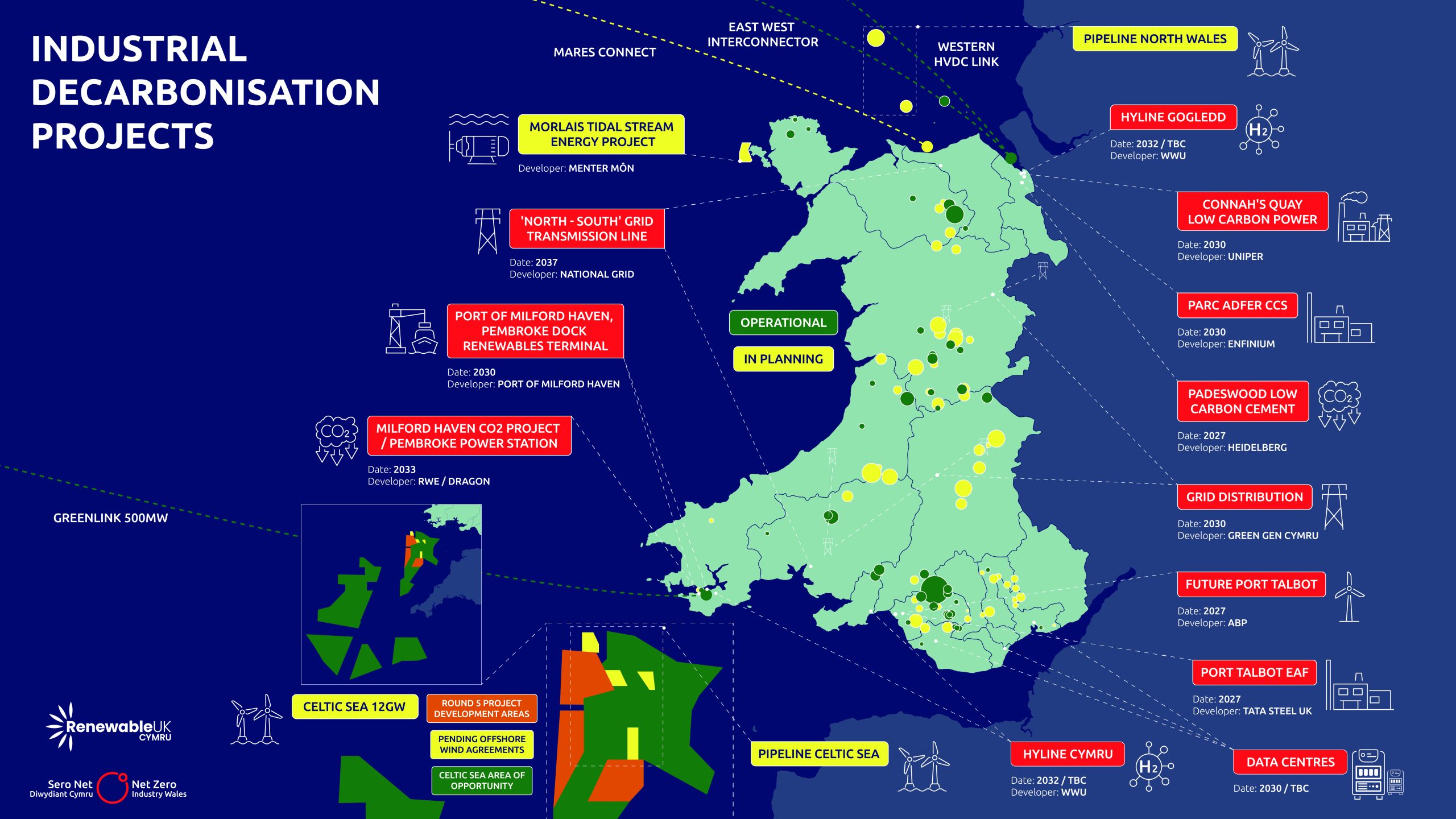
The global energy landscape is in constant flux, a reality keenly felt by investors navigating both the enduring demand for traditional hydrocarbons and the accelerating transition towards cleaner alternatives. Against a backdrop of recent market volatility, a compelling new initiative from Wales offers a strategic lens for investors seeking diversification and long-term growth in the energy sector. A newly unveiled clean energy map is designed to empower stakeholders, from policymakers to private capital, by clearly outlining Wales’ ambitious clean energy pipeline and industrial decarbonization strategy, presenting a tangible blueprint for significant economic expansion and value preservation.
Wales Unveils a Multi-Billion-Pound Clean Energy Investment Map
At its core, this strategic mapping initiative provides granular detail on Wales’ pathway to becoming a leading clean energy transition hub. It doesn’t merely present a vision; it quantifies the opportunity. The map identifies projects and initiatives capable of adding a substantial £6.9 billion to the Welsh economy over the next decade. This isn’t just about new value creation; it also spotlights £2.1 billion in potential savings by actively avoiding further deindustrialization through targeted investment in low-carbon technologies and critical infrastructure. For energy investors, this represents a unique, nationally coordinated investment portfolio, moving beyond individual projects to a cohesive, strategically aligned industrial transition. This forward-thinking approach aims to safeguard the existing industrial base while simultaneously cultivating new, sustainable economic engines.
Navigating Current Market Turbulence and Diversifying Portfolios
The timing of such an initiative is particularly salient given the current dynamics in the traditional oil and gas markets. As of today, Brent crude trades at $90.38 per barrel, reflecting a sharp 9.07% decline within the day, with its range spanning $86.08 to $98.97. Similarly, WTI crude has fallen to $82.59, down 9.41%. This significant daily drop follows a broader trend, with Brent having shed approximately 18.5% over the past 14 days, from $112.78 on March 30th to $91.87 just yesterday. Such pronounced volatility naturally prompts investors to re-evaluate their portfolios. Indeed, many of our readers, acutely aware of these fluctuations, are asking: “What do you predict the price of oil per barrel will be by the end of 2026?” While short-term predictions remain challenging amidst geopolitical shifts and supply-demand imbalances, the strategic move by Wales underscores the increasing imperative for long-term diversification into more stable, transition-aligned assets. The stated aim of building a strong, diverse, nationally significant clean energy and low-carbon industry investment portfolio in Wales offers a compelling counter-narrative to the unpredictable nature of hydrocarbon markets, presenting a pathway for capital deployment into a sector with strong growth tailwinds and policy support.
Strategic Infrastructure and Political De-Risking for Investment
A critical component of this Welsh clean energy roadmap is the detailed outline of essential infrastructure upgrades. Investors understand that even the most promising projects are constrained without robust supporting infrastructure. The map specifically highlights crucial grid reinforcements designed to boost connectivity, particularly in Mid Wales, and the establishment of a vital North-South transmission spine. Furthermore, it details current and planned interconnectors with Ireland and Scotland, ensuring that clean power can flow efficiently across, into, and out of Wales. These infrastructure commitments are not merely technical details; they are fundamental de-risking factors for major capital investments, promising reliable energy transmission and broader market access. Beyond the physical infrastructure, the initiative strategically overlays the 16 new ‘super constituencies’ contested in the 2026 Senedd election. This integration of political geography allows decision-makers and candidates to identify and champion priority clean energy projects within their prospective constituencies, signaling strong, constituency-level political backing that can further stabilize the investment environment and ensure project continuity.
Forward Outlook: Clean Energy’s Role Amidst Macro Events
Looking ahead, the energy calendar is packed with events that will undoubtedly influence short-term market dynamics, from the upcoming OPEC+ Joint Ministerial Monitoring Committee (JMMC) and full Ministerial meetings on April 18th and 19th, respectively, to the regular API and EIA weekly inventory reports on April 21st/22nd and April 28th/29th, and the Baker Hughes Rig Count on April 24th and May 1st. These events are crucial for investors tracking supply, demand, and production trends in the traditional oil and gas sector. However, while these announcements will dictate immediate market movements, initiatives like the Welsh clean energy map offer a different kind of forward-looking analysis. They represent the long-term strategic plays, demonstrating a commitment to creating a sustainable energy future irrespective of short-term commodity price swings. For investors seeking to insulate their portfolios from the inherent volatility of fossil fuels, the detailed, geographically specific opportunities presented by Wales’ clean energy blueprint provide a compelling alternative. It’s a clear signal that while the world still relies on traditional energy, the investment frontier is rapidly shifting towards robust, policy-backed, and economically quantified clean energy transition projects.