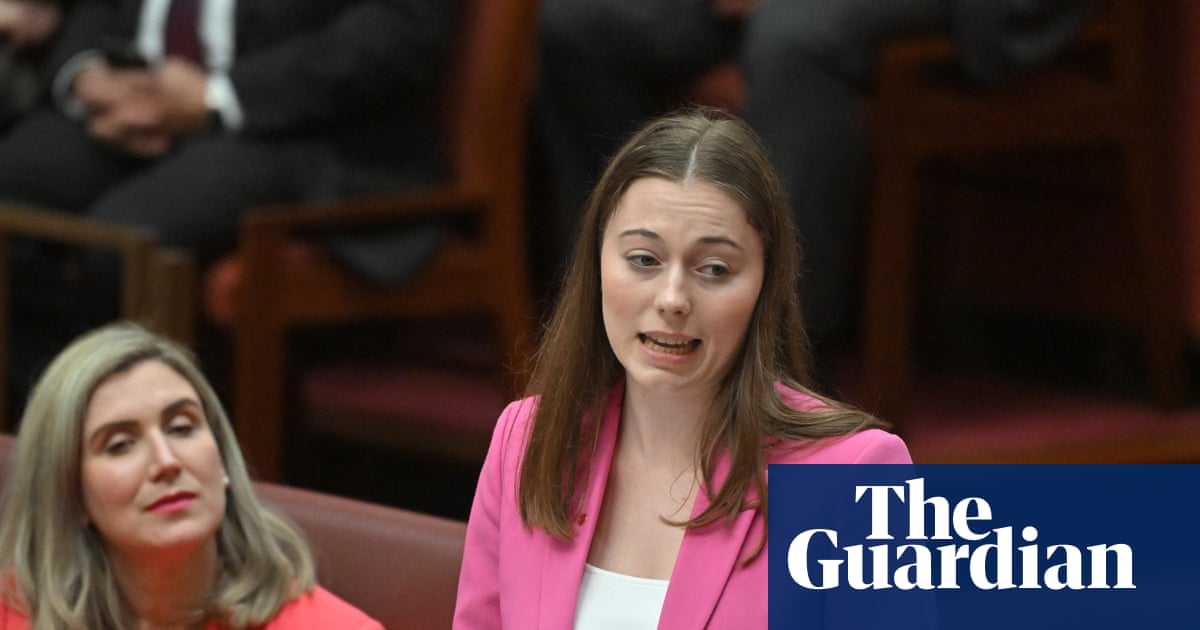
The recent parliamentary debut of Australia’s youngest senator, Charlotte Walker, has introduced a new, vocal dynamic into the nation’s political discourse, with potentially significant implications for the energy sector. While her inaugural speech touched on deeply personal battles with mental health and societal issues like generational inequity and domestic violence, her emphatic stance on climate change and the urgent demand for an “inhabitable planet” by 2050 warrants close attention from oil and gas investors. At just 21, Senator Walker represents a generation increasingly vocal about environmental concerns, signaling a potential intensification of pressure on Australia’s substantial gas export industry and its commitment to net-zero targets. This analysis will delve into how her emergence could reshape the investment landscape, set against current market volatility and upcoming key energy events.
A New Voice Amplifies Climate Pressure on Australian Gas
Senator Charlotte Walker’s parliamentary address underscored a resolute commitment to climate action, directly challenging those who “want to abandon net zero.” This strong rhetoric from a rising political figure is not merely symbolic; it reflects a broader societal shift that could translate into tangible policy changes affecting Australia’s energy future. As a major global exporter of liquefied natural gas (LNG), Australia’s economic prosperity is significantly tied to its gas resources. However, increased political will for aggressive climate policies, championed by voices like Senator Walker’s, could introduce greater scrutiny, regulatory hurdles, or even moratoriums on new gas exploration and production projects. Investors must recognize that while current government policy may support gas as a transition fuel, the long-term political trajectory, influenced by younger, environmentally conscious politicians, may lean towards accelerated decarbonization, potentially impacting project timelines, costs, and ultimate viability for gas assets.
Market Headwinds and Investor Outlook Amidst Policy Uncertainty
The global energy market currently presents a complex picture for investors. As of today, Brent Crude trades at $90.38, reflecting a significant daily downturn of 9.07%, with a day range between $86.08 and $98.97. Similarly, WTI Crude has seen a sharp decline, trading at $82.59, down 9.41% within a range of $78.97 to $90.34. Gasoline prices have also dipped to $2.93, a 5.18% decrease. This recent volatility is part of a broader trend; Brent Crude has fallen from $112.78 on March 30 to $91.87 on April 17, representing a substantial $20.91 or 18.5% drop in just over two weeks. Such price swings naturally lead to investor apprehension, as evidenced by frequent inquiries from our readers, who are keenly watching price movements and asking what the predicted price of oil per barrel will be by the end of 2026. This market uncertainty, coupled with the emerging political pressure from figures like Senator Walker, creates a challenging environment for long-term capital allocation in fossil fuel projects. Companies exposed to Australian gas exports must navigate not only commodity price fluctuations but also an evolving domestic policy landscape that could increasingly prioritize climate objectives over hydrocarbon development.
Australia’s Gas Export Strategy Under the Microscope
Australia holds a prominent position as a global LNG supplier, with significant investments in export terminals and upstream gas fields. The long-term contracts underpinning these exports typically span decades, requiring substantial upfront capital and regulatory stability. Senator Walker’s generation’s “demand an inhabitable planet” rhetoric, if translated into concrete legislative action, could directly impact the social license and regulatory approval process for new gas projects. While existing projects likely remain secure in the short term, the prospect of stricter environmental impact assessments, carbon pricing mechanisms, or even export restrictions on future gas developments looms larger. Investors in Australian energy companies, particularly those with significant exposure to LNG, should be evaluating their portfolios for resilience against potential policy shifts, considering diversification into lower-carbon alternatives or enhanced carbon capture and storage capabilities to de-risk their positions.
Upcoming Events and Strategic Considerations for Investors
The next two weeks are packed with critical events that will shape global energy markets, and while seemingly distant from Australian domestic politics, their ripple effects are undeniable. The OPEC+ Joint Ministerial Monitoring Committee (JMMC) meeting on April 18, followed by the Full Ministerial meeting on April 19, will dictate global crude supply levels. Should OPEC+ maintain or deepen production cuts, global oil and gas prices could find support, potentially creating tension between economic incentives for Australian gas exports and domestic climate ambitions. Subsequent API and EIA weekly inventory reports on April 21 and 22, and again on April 28 and 29, will provide crucial insights into short-term supply-demand dynamics in the U.S., influencing global sentiment. Furthermore, the Baker Hughes Rig Count on April 24 and May 1 offers a glimpse into upstream activity, which could be an early indicator of industry response to both market signals and evolving regulatory environments. Investors must recognize that these global supply-side decisions and demand indicators will frame the economic viability of Australian gas projects, which will simultaneously be facing increasing political pressure from voices like Senator Walker. Our readers’ interest in OPEC+ current production quotas highlights the direct link between these global mechanisms and the investment decisions they face. A comprehensive strategy requires monitoring these global macro events while closely tracking the nuanced, yet impactful, shifts in domestic political will that could redefine Australia’s role in the global energy transition.


