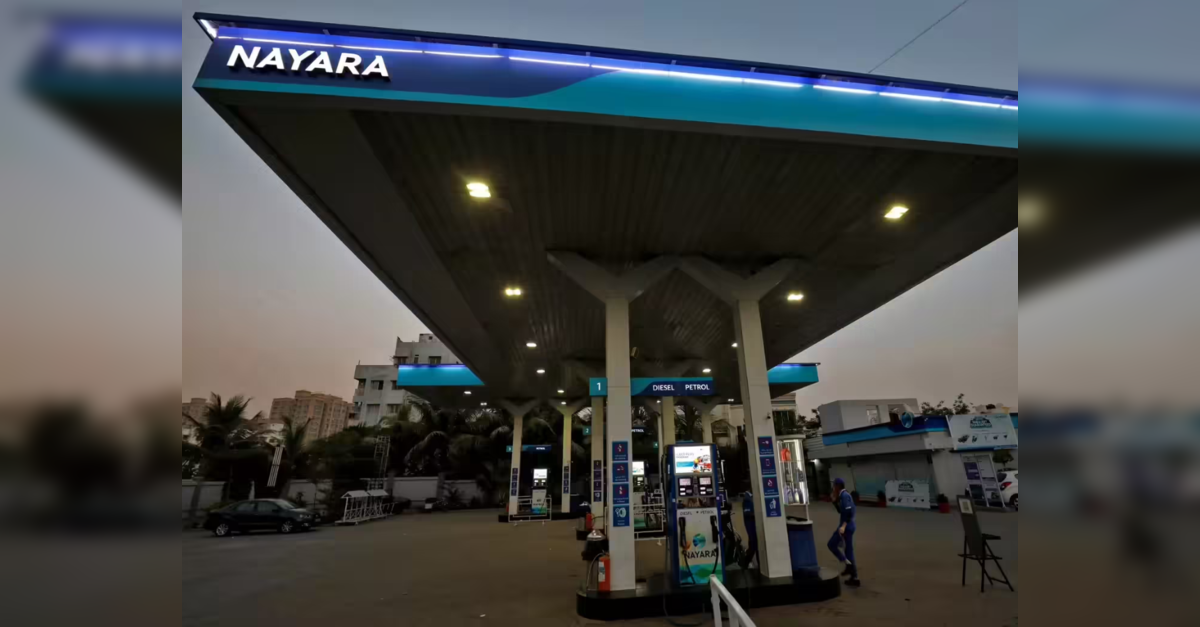
A significant leadership reshuffle has rocked Nayara Energy, a major Indian oil refiner partially owned by Russian energy giant Rosneft, following the imposition of European Union sanctions. The abrupt departure of key European directors and senior executives underscores the escalating challenges faced by companies with ties to sanctioned entities, sending ripples of concern through the global oil and gas investment community.
Executive Exodus Raises Red Flags for Investors
In a series of high-profile resignations, Nayara Energy has seen three of its board directors and two senior executives step down. Victoria Cunningham, Avril Mary Anne Conroy, and Jorg Tumat, all serving on Nayara’s board, tendered their resignations earlier this month. Simultaneously, Barbara (Hofbauer) Oberhauser, who held the crucial position of Senior Vice President and Head of Health, Safety, and Environment (HSE), also departed. Oberhauser, an Austrian national, had overseen HSE at Nayara from November 2022 and was scheduled to serve until July 2025.
These departures closely follow the resignation of Chief Executive Officer Alessandro Des Dorides, who exited the company shortly after the European Union’s latest sanctions package against Russia came into effect. Industry sources indicate that the nationality of these departing executives – primarily European – made their continued association with an EU-sanctioned company untenable. Furthermore, another official, understood to be effectively the second-in-command for refinery operations, also resigned, reportedly for the same reasons. This widespread exit of experienced leadership, particularly from strategic operational and governance roles, presents an immediate operational and reputational challenge for Nayara Energy and its stakeholders.
EU Sanctions and Geopolitical Pressure on India’s Energy Sector
The catalyst for this leadership crisis is the European Union’s 18th package of sanctions against Russia, approved earlier this month. These measures target Russia’s revenue streams in response to its ongoing conflict in Ukraine, and Nayara Energy found itself on the list due to its significant Russian ownership. Rosneft holds a 49.13 percent stake in Nayara Energy Ltd., formerly known as Essar Oil Ltd. This direct ownership link made Nayara a target in the broader geopolitical strategy to weaken Russia’s economic capacity.
Nayara Energy, for its part, has vehemently denounced the latest EU sanctions, characterizing them as unjust and detrimental to India’s national interests. The company has publicly stated its intention to explore all available legal options to challenge the measures. Rosneft echoed these sentiments, condemning the sanctions as unjustified, illegal, and a direct threat to India’s energy security. This strong rhetoric from both Nayara and its Russian parent highlights the perceived intrusion into sovereign economic affairs and the potential for wider geopolitical fallout affecting energy trade flows.
Nayara’s Strategic Assets and Complex Ownership Structure
Nayara Energy is a significant player in India’s energy landscape. It owns and operates a formidable 20-million tonnes per year oil refinery situated in Vadinar, Gujarat, a critical asset for India’s refining capacity. Beyond refining, the company boasts an extensive retail network of over 6,750 petrol pumps across the country, providing essential fuel distribution services. The stability and efficient operation of these assets are crucial for India’s domestic energy supply.
Beyond Rosneft’s substantial stake, an investment consortium known as Kesani Enterprises Company SPV holds another 49.13 percent interest in Nayara. Kesani is itself owned by Russia’s United Capital Partners (UCP) and Hara Capital Sarl, which is a wholly-owned subsidiary of Mareterra Group Holding (formerly Genera Group Holding S.p.A.). The intricate ownership structure, particularly the involvement of UCP, is relevant, as Victoria Cunningham, one of the recently departed directors, served as co-managing partner of UCP and had been on Nayara’s board since January 2020. Jorg Tumat, another departing director, joined the board on July 21, 2023, and is from Germany, while Avril Mary Anne Conroy had been on the board since May 23, 2020. This web of ownership and international board representation underscores the complexity of Nayara’s governance and the challenges in navigating a highly sanctioned environment.
New Leadership Takes the Helm Amidst Turmoil
To address the leadership vacuum, Nayara Energy has appointed Sergey Denisov as its new Chief Executive Officer, succeeding Alessandro Des Dorides. Denisov is a familiar face within Nayara, having been with the company since 2017 and previously serving as its Chief Development Officer. His internal appointment suggests a move towards continuity and stability during a period of significant external pressure.
The previous CEO, Alessandro Des Dorides, had only joined Nayara Energy in April 2024, making his tenure remarkably brief. His background includes a stint as head of oil trading at Eni, where he was reportedly terminated for withholding information related to illegal Iranian oil trade. This past controversy, coupled with the swift succession, adds another layer of scrutiny to Nayara’s executive leadership at a critical juncture.
Investment Implications and Outlook
For investors monitoring the oil and gas sector, Nayara Energy’s situation presents a complex risk-reward profile. The leadership exodus signals the tangible impact of international sanctions on corporate governance and operational stability. While Nayara’s assets remain strategically vital for India, the political and financial implications of its Russian ties cannot be understated. The company’s ability to maintain its operational efficiency, secure necessary international financing, and ensure smooth supply chains could be tested.
India’s stance on continuing to purchase Russian oil, despite Western pressure, complicates the narrative. Nayara’s operations are integral to India’s energy security strategy, suggesting a strong domestic imperative to keep the refinery functioning optimally. However, the departure of European executives could impact the company’s ability to engage with Western partners, access advanced technologies, or attract diverse talent in the future. Sergey Denisov’s leadership will be crucial in navigating these treacherous waters, balancing the demands of stakeholders, the geopolitical realities of sanctions, and the imperative of maintaining profitable operations. Investors will be closely watching for signs of stability, strategic adaptations, and any progress in Nayara’s legal challenge against the EU sanctions, which could set a precedent for other similarly situated companies.


