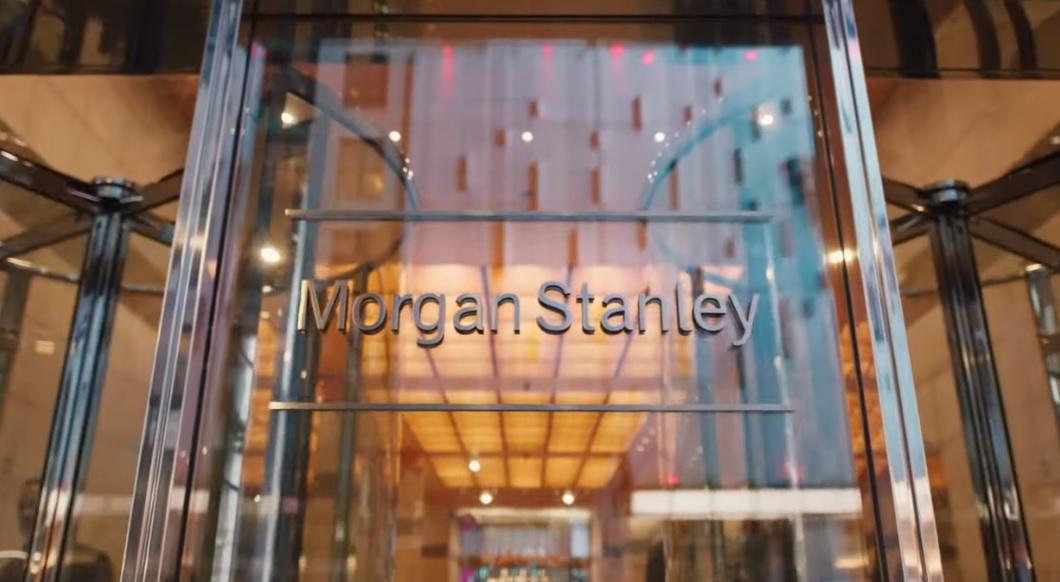
The energy sector is in constant flux, but recent capital allocation decisions provide clear signals about where smart money is flowing. A significant development drawing investor attention is Morgan Stanley Investment Management’s (MSIM) strategic investment of $30 million in Insight M, a leading provider of methane management solutions for the oil and gas industry. This funding, channeled through MSIM’s climate-focused private equity strategy, 1GT, underscores a critical shift: environmental stewardship is no longer merely a cost center but a potent driver of operational efficiency and long-term value.
Methane Abatement: A Dual Mandate for Profit and Planet
The investment in Insight M highlights the growing recognition of methane’s profound impact, both environmentally and financially. Methane is an exceptionally potent greenhouse gas, with a warming potential up to 80 times that of CO2 over a 20-year period, and oil and gas facilities rank among the largest industrial emitters. Addressing fugitive methane emissions is therefore a high-leverage action in the global effort to limit warming to 1.5°C.
Insight M’s approach provides a compelling solution for operators navigating this challenge. The company leverages proprietary sensors mounted on aircraft to gather high-resolution data on methane leaks. This precise data empowers energy operators across the U.S. and globally to accurately identify, quantify, and promptly repair emitting infrastructure. The financial implications are substantial: Insight M reports that its solutions have saved customers over $500 million in recoverable gas value, while simultaneously mitigating more than 110 million metric tons of methane from entering the atmosphere. This demonstrates how effective methane management directly translates into enhanced profitability and reduced environmental footprint, aligning perfectly with MSIM’s 1GT strategy, which targets the elimination of one gigaton of CO2 emissions by 2050.
Navigating Volatility: Price Signals and Operational Imperatives
The current market environment further accentuates the need for operational efficiency and waste reduction. As of today, Brent crude trades at $95.01, posting a modest daily gain of 0.23% within a trading range of $91 to $96.89. This relative stability comes after a noticeable correction; Brent shed nearly 9% from its recent peak of $102.22 on March 25th to $93.22 just yesterday. WTI crude similarly stands at $91.56, up 0.31%, while gasoline prices are at $2.99, gaining 0.67%.
This backdrop of fluctuating, though currently firm, crude prices underscores the strategic importance of investments like MSIM’s. When benchmark crude prices experience a nearly 9% drop in less than three weeks, every dollar saved through operational optimization becomes more critical to maintaining margins. Methane abatement, therefore, is not just an environmental initiative but a direct contributor to an operator’s bottom line, preserving valuable gas that would otherwise be lost to the atmosphere. This makes the $500 million in gas value saved by Insight M’s clients a powerful testament to the economic rationale behind such technological adoption, safeguarding revenue streams irrespective of broader market volatility.
Proactive Compliance and Future Market Dynamics
Looking ahead, the regulatory landscape for methane emissions is poised for further tightening globally. Operators who proactively adopt advanced detection and repair technologies like Insight M’s position themselves favorably to meet evolving compliance standards, mitigating future risks and potential penalties. This foresight is crucial in an industry constantly under scrutiny.
Several upcoming energy events on our calendar will provide further insights into the operational and market environment influencing these strategic decisions. The Baker Hughes Rig Count, scheduled for April 17th and again on April 24th, offers a barometer of drilling activity. Increased rig counts imply more potential emission sources, expanding the addressable market for methane management solutions. Furthermore, the upcoming OPEC+ Joint Ministerial Monitoring Committee (JMMC) meeting on April 18th, followed by the Full Ministerial meeting on April 20th, will shape global supply decisions and, consequently, crude price stability. A stable or upward-trending price environment can free up capital for long-term strategic investments, including those in environmental technologies. Finally, the API and EIA Weekly Crude Inventory reports on April 21st, 22nd, 28th, and 29th will provide a real-time pulse on supply-demand balances, reinforcing the imperative for operational efficiency as market dynamics shift.
Beyond the Barrel: Addressing Core Investor Concerns
Our proprietary reader intent data reveals that investors are keenly focused on core market metrics, frequently asking for base-case Brent price forecasts for the next quarter and year, and detailed analyses of regional demand drivers like Chinese tea-pot refinery runs or Asian LNG spot prices. These questions reflect a natural and essential focus on immediate market fundamentals and commodity price direction.
However, the significant capital deployed into Insight M signals that savvy institutional investors are increasingly looking beyond just the barrel price when assessing long-term value in the oil and gas sector. While commodity prices remain critical, a company’s ability to manage its environmental footprint, enhance operational efficiency, and demonstrate strong governance is becoming an undeniable component of its investment thesis. Reducing methane emissions not only captures lost product but also strengthens an operator’s environmental, social, and governance (ESG) profile. This can lead to a lower cost of capital, improved access to diverse funding sources – precisely like MSIM’s climate-focused fund – and enhanced public trust. In an era where capital allocation is increasingly influenced by sustainability metrics, investments in solutions like Insight M offer a strategic hedge, future-proofing portfolios by aligning with both economic and environmental imperatives. Operators embracing such technologies are not just mitigating risk; they are actively creating new avenues for value creation and sustained profitability in a rapidly evolving energy landscape.


