

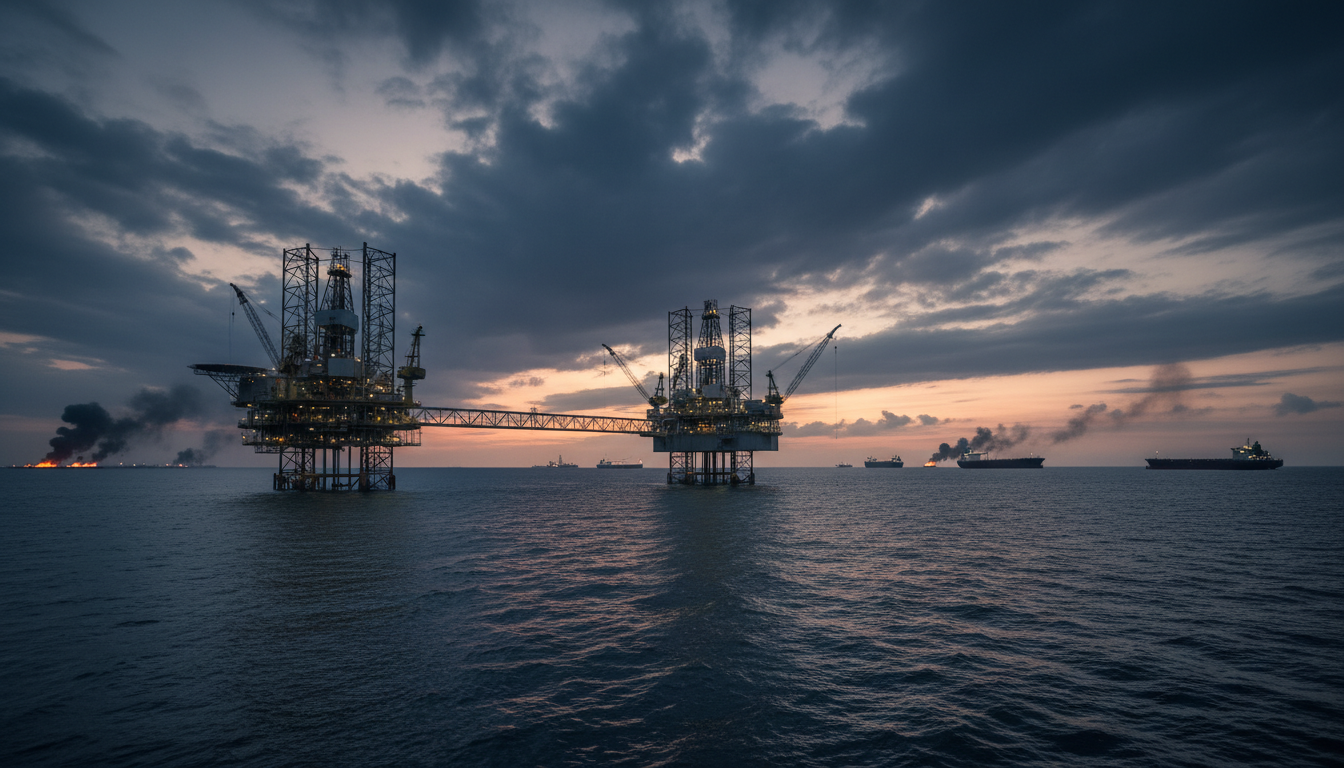
Geopolitical Tensions Threaten Asia’s Economic Stability and Oil Markets
The intensifying conflict in the Gulf region presents a significant and growing credit risk for India and several other key Asia-Pacific economies, according to a recent assessment from Moody’s Ratings. Released on Friday, the report highlights how a sustained escalation of hostilities could trigger a cascade of negative impacts, primarily through elevated energy prices and widespread supply chain disruptions, reverberating across global markets and challenging investor sentiment.
For nations heavily reliant on energy imports, the outlook suggests a tightening availability of crucial resources, including fuel, food staples, and vital industrial components. A particularly concerning aspect highlighted is the potential for disruptions to global fertilizer supply chains. Such interruptions could severely impede agricultural output, leading to reduced crop yields and, consequently, upward pressure on food prices. This scenario introduces increased affordability risks for consumers and businesses alike, complicating economic management and potentially fueling inflationary pressures.
Asia’s Vulnerability to Middle East Oil Disruptions
The degree of exposure varies across the region, but key economic powerhouses demonstrate a substantial dependence on Middle Eastern energy supplies. In 2024, India sourced a considerable 43 percent of its crude oil and refined petroleum products from countries within the Gulf Cooperation Council (GCC), Iraq, and Iran. This figure underscores a significant, though not overwhelming, reliance. However, other major Asian economies exhibit even deeper entanglements: Japan imported a staggering 84 percent of its petroleum from this volatile region, Korea 67 percent, and China 42 percent.
This concentrated reliance translates into direct vulnerability for downstream energy producers and industrial giants. Moody’s Ratings specifically pointed out that entities with substantial operational assets in Japan, Korea, India, and China face the highest exposure. This is due not only to their heavy aggregate demand for Middle Eastern crude but also to the critical role of naphtha, an oil-derived product, as the primary feedstock for Asia’s extensive network of steam crackers. Any interruption to naphtha supply or a sharp increase in its cost directly impacts the petrochemical industry, a cornerstone of manufacturing across these economies.
Projected Oil Prices and Market Implications
A prolonged and intensified conflict scenario could dramatically reshape the global oil price landscape. The Moody’s analysis projects Brent crude prices could surge to approximately $135 per barrel in the second quarter, remaining above the $100 mark for an extended period of several months before gradually moderating towards $90 per barrel by the close of 2026. Such a sustained period of high crude prices would have profound implications for investors across the energy spectrum.
Upstream exploration and production (E&P) companies, particularly those with low operating costs, could see significant boosts in revenue and profitability. However, refiners would face increased feedstock costs, potentially squeezing margins unless they can fully pass these costs onto consumers. For energy consumers, both industrial and household, higher prices would translate into increased operational expenses and reduced discretionary spending, acting as a drag on broader economic growth. Investors in sectors reliant on affordable energy, such as transportation, manufacturing, and chemicals, must carefully model these price sensitivities into their valuations.
Three Channels of Global Credit Risk
Moody’s identified three principal channels through which the Gulf conflict could transmit global credit risk, each carrying distinct implications for investors:
1. Energy Markets and Supply Chains
Direct disruptions to crude oil production or transit routes in the Middle East would immediately impact global energy supplies. Beyond crude, the interconnectedness of modern supply chains means that any bottlenecks, delays, or increased shipping costs—driven by higher insurance premiums or rerouting efforts—would ripple through numerous industries. This includes the availability and pricing of refined products like naphtha, diesel, and aviation fuel, impacting petrochemicals, logistics, and airlines. Companies with geographically concentrated supply chains or limited inventory buffers would be most susceptible to operational disruptions and cost escalations.
2. Tighter Macro-Financial Conditions
Sustained higher energy prices inherently contribute to inflationary pressures globally. Central banks, in response, are likely to maintain or even tighten monetary policies, leading to higher interest rates and a more constrained credit environment. For companies in the energy sector, this translates into increased borrowing costs for new projects, refinancing existing debt, and managing working capital. Projects with high capital expenditure and long development cycles, common in oil and gas, would face greater financial scrutiny. Emerging markets in Asia, already contending with external debt and currency fluctuations, could find their financial stability further challenged, impacting their ability to attract foreign investment for energy infrastructure.
3. Broader Geopolitical Disruptions
Beyond the immediate economic impacts, an escalating conflict carries the risk of wider geopolitical instability. This can manifest as increased regional tensions, cybersecurity threats to critical energy infrastructure, or even humanitarian crises. Such broader disruptions can erode investor confidence, divert capital from productive investments, and introduce an element of unpredictable systemic risk into financial markets. Geopolitical risk premiums would become a more prominent factor in asset pricing, potentially leading to increased volatility and a flight to safety, impacting valuations across all sectors, including energy companies.
Navigating the Investor Landscape
The Moody’s report serves as a critical warning for investors in the oil and gas sector and beyond. The intricate web of energy dependencies in Asia-Pacific economies, particularly India, Japan, Korea, and China, means that geopolitical events in the Middle East can quickly translate into significant market volatility and credit stress. With projections of Brent crude potentially soaring to $135 per barrel in a prolonged conflict scenario, and remaining elevated for months, market participants must factor in these risks. Careful consideration of supply chain resilience, hedging strategies against price volatility, and exposure to countries with high energy import dependence will be paramount for mitigating potential portfolio impacts and capitalizing on shifts in the global energy market.
