

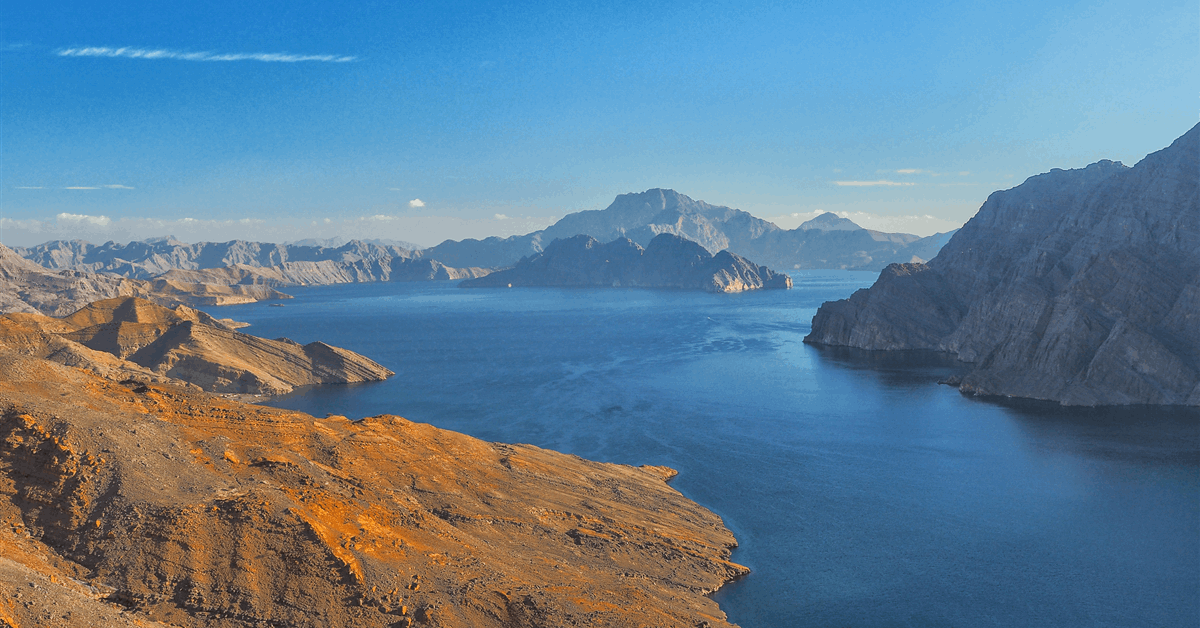
Mining the Strait of Hormuz would effectively render the narrow sea corridor impassable for escorts and tankers from any nation — including Iran’s own — while removing the explosives can’t be done so long as Iran can attack the mine-sweeping ships.
Iran has vowed to keep the strait closed, but whether it’s actually mining the area is contested. On Thursday, UK Defense Secretary John Healey said it was becoming “clearer and clearer” that Iran was laying explosives there, while US Defense Secretary Pete Hegseth said on Friday that there was “no clear evidence” of that happening.
The strait, which is just 25 miles (40 kilometers) wide at its narrowest point, squeezes ships into a narrow lane that can be easily chocked by sea mines that float beneath the surface or sit on the seabed. The mines can be detonated by contact or by a magnetic fuze triggered by the nearby passage of a steel hull.
The US Defense Intelligence Agency estimated in 2019 that Iran had thousands of the weapons, and can place them via ship, midget submarine or even dhows, traditional Gulf ships often used for commercial traffic. US Central Command has posted videos of mine-laying ships being destroyed, but it is not clear how much of this arsenal remains.
Naval mine clearance is a peacetime activity, said Caitlin Talmadge at the Massachusetts Institute of Technology, because its painstaking nature means it is almost impossible to do while under fire.
“The ships would very likely be vulnerable to Iranian shore-based fires” including anti-ship missiles and drones, Talmadge said.
Iran is known to have at least six types of such missiles, according to the International Institute of Strategic Studies. The size of the arsenal isn’t publicly known, though most are based on older Chinese designs and have maximum ranges of about 75 miles.
That doesn’t allow them to hit US Navy ships, which operate in the Gulf far from Iran’s shores. But it does provide thorough coverage of the strait and other areas close to the coast.
About 20% of the world’s oil passes through the strait. Several tankers and commercial ships have already been struck by projectiles around the Persian Gulf, including one vessel in Iraqi waters.
Since the war began, oil prices have been on a wild ride, shooting up, dipping on positive remarks from US President Donald Trump or news of International Energy Agency reserve releases. They climbed above $100 on Friday as the war heads toward a third week.
Trump has warned Iran against laying mines in the strait and threatened to blow up any ship attempting to do so. Conversely, he said in a post on March 10, removing them would be “a giant step in the right direction!” for Iran.
The US is phasing out its Avenger-class minesweeper ships and none are available to help in the Persian Gulf, Talmadge said. Instead, the navy would task its Littoral Combat Ships with using drones and helicopters to find and destroy the mines.
But the LCS vessels would still need to operate close enough to the mined area that they would be vulnerable to Iran’s anti-ship missiles, she added.
Generated by readers, the comments included herein do not reflect the views and opinions of Rigzone. All comments are subject to editorial review. Off-topic, inappropriate or insulting comments will be removed.
element
var scriptTag = document.createElement(‘script’);
scriptTag.src = url;
scriptTag.async = true;
scriptTag.onload = implementationCode;
scriptTag.onreadystatechange = implementationCode;
location.appendChild(scriptTag);
};
var div = document.getElementById(‘rigzonelogo’);
div.innerHTML += ” +
‘ ‘ +
‘ +
”;
var initJobSearch = function () {
////console.log(“call back”);
}
var addMetaPixel = function () {
if (-1 > -1 || -1 > -1) {
/*Meta Pixel Code*/
!function(f,b,e,v,n,t,s)
{if(f.fbq)return;n=f.fbq=function(){n.callMethod?
n.callMethod.apply(n,arguments):n.queue.push(arguments)};
if(!f._fbq)f._fbq=n;n.push=n;n.loaded=!0;n.version=’2.0′;
n.queue=[];t=b.createElement(e);t.async=!0;
t.src=v;s=b.getElementsByTagName(e)[0];
s.parentNode.insertBefore(t,s)}(window, document,’script’,
‘https://connect.facebook.net/en_US/fbevents.js’);
fbq(‘init’, ‘1517407191885185’);
fbq(‘track’, ‘PageView’);
/*End Meta Pixel Code*/
} else if (0 > -1 && 78 > -1)
{
/*Meta Pixel Code*/
!function(f,b,e,v,n,t,s)
{if(f.fbq)return;n=f.fbq=function(){n.callMethod?
n.callMethod.apply(n,arguments):n.queue.push(arguments)};
if(!f._fbq)f._fbq=n;n.push=n;n.loaded=!0;n.version=’2.0′;
n.queue=[];t=b.createElement(e);t.async=!0;
t.src=v;s=b.getElementsByTagName(e)[0];
s.parentNode.insertBefore(t,s)}(window, document,’script’,
‘https://connect.facebook.net/en_US/fbevents.js’);
fbq(‘init’, ‘1517407191885185’);
fbq(‘track’, ‘PageView’);
/*End Meta Pixel Code*/
}
}
// function gtmFunctionForLayout()
// {
//loadJS(“https://www.googletagmanager.com/gtag/js?id=G-K6ZDLWV6VX”, initJobSearch, document.body);
//}
// window.onload = (e => {
// setTimeout(
// function () {
// document.addEventListener(“DOMContentLoaded”, function () {
// // Select all anchor elements with class ‘ui-tabs-anchor’
// const anchors = document.querySelectorAll(‘a .ui-tabs-anchor’);
// // Loop through each anchor and remove the role attribute if it is set to “presentation”
// anchors.forEach(anchor => {
// if (anchor.getAttribute(‘role’) === ‘presentation’) {
// anchor.removeAttribute(‘role’);
// }
// });
// });
// }
// , 200);
//});
