The Middle East has long been the gravitational center of global energy markets, but in recent years, it has aggressively sought to diversify its economic future by emerging as a burgeoning hub for cutting-edge technology infrastructure. Billions of dollars have poured into AI data centers, driven by abundant, cheap energy, vast land availability, and strong governmental backing. However, the escalating conflict involving Iran and the potential for it to engulf neighboring nations is now casting a long shadow over these ambitious digital aspirations. While the region’s role as a critical oil and gas supplier remains undisputed, this new security paradigm introduces a complex layer of risk that oil and gas investors must carefully consider, as it impacts not only future tech investment but also the broader geopolitical stability underpinning energy supply chains.
Geopolitical Tensions Reshape AI Investment Horizons
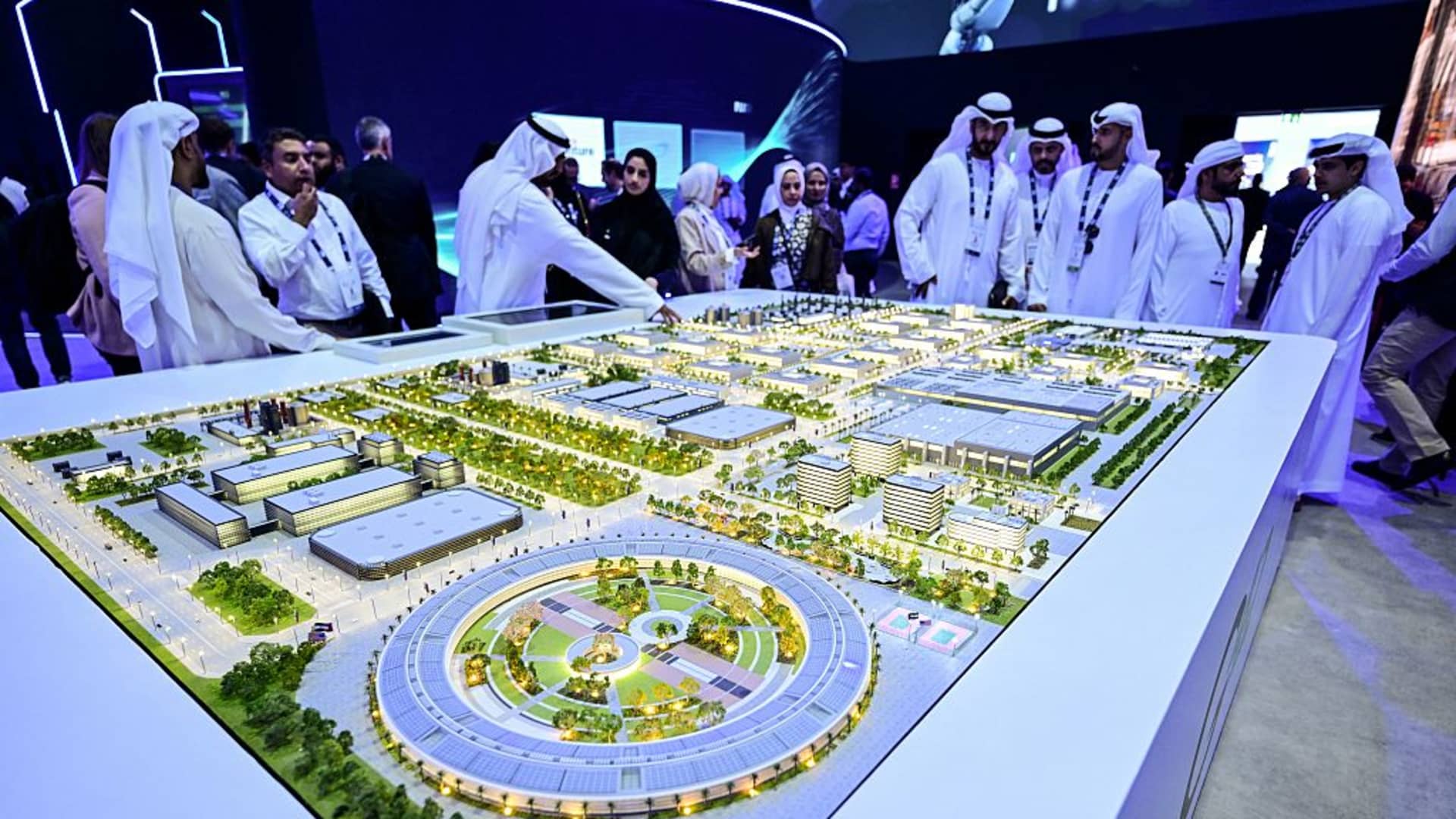
The allure of the Middle East for hyperscalers and tech giants like Oracle, Nvidia, and Microsoft has been undeniable. Commitments like OpenAI’s Stargate campus in the UAE, a 5-gigawatt capacity venture spanning 10 square miles, and Microsoft’s planned $15 billion investment by 2029, underscore the scale of ambition. This push is not merely for economic diversification; it’s also a strategic pivot to attract international capital and align with key global partners. Yet, recent events have starkly highlighted the vulnerability of these digital assets. Attacks that targeted AWS facilities in the UAE and Bahrain, causing widespread service outages, have sent a chilling message: data centers are now perceived as legitimate targets in modern conflicts. This fundamentally alters the risk calculus for investors and tech firms alike.
Our proprietary intent data reveals that investors are closely monitoring the impact of such regional instability, with questions ranging from the immediate direction of WTI to predictions for oil prices by the end of 2026. This reflects a pervasive uncertainty that extends beyond crude benchmarks to the broader investment landscape. While existing AI infrastructure projects are unlikely to be abandoned, the heightened geopolitical risk could significantly impact where the “next wave” of capacity is built. Companies are now actively evaluating alternatives in regions like Northern Europe, India, or Southeast Asia, where power supply, regulatory frameworks, and security conditions offer greater predictability. This potential shift directly impacts long-term energy demand profiles, as the substantial power requirements for AI infrastructure would follow suit.
Market Response Amidst Regional Instability
The direct targeting of digital infrastructure introduces a new dimension to Middle Eastern conflict, yet the immediate reaction in crude markets suggests a nuanced interpretation of the broader energy supply risk. As of today, Brent Crude trades at $92.86, reflecting a marginal daily decline of 0.41%, with WTI Crude similarly at $89.29, down 0.42%. These figures show a market that is not in a panic, despite the unsettling developments. Looking at the 14-day trend, Brent has actually seen a more significant retraction, falling from $101.16 on April 1st to $94.09 on April 21st, a decrease of approximately 7%. This suggests that while regional tensions are high, the market may be pricing in a contained conflict or perhaps a broader reassessment of global demand and supply balances that overrides localized geopolitical spikes.
For oil and gas investors, this divergence is critical. While the physical threat to oil infrastructure has not materialized on a widespread scale, the perception of increased risk in a region central to global energy supply is undeniable. The market’s relatively muted response to the direct targeting of digital assets, contrasted with the recent downward trend in crude prices, indicates that investors are balancing geopolitical concerns with other fundamental factors like global economic outlook and inventory levels. However, any expansion of the conflict that directly imperils oil production or transit routes would undoubtedly trigger a far more volatile reaction, quickly reversing the recent price declines and potentially pushing crude well into triple-digit territory once again.
Forward Outlook: Energy Demand Shifts and Operational Hardening
The strategic shift of future AI infrastructure investments away from the Middle East, towards more stable regions, carries significant implications for long-term energy demand. Data centers are enormous power consumers, and a migration of these projects means a corresponding shift in electricity demand. This could lead to increased investment in power generation and grid infrastructure in the alternative regions, potentially boosting demand for natural gas or renewables, depending on local energy policies. Conversely, the Middle East, while remaining a dominant energy producer, might see a tempering of its internal electricity demand growth from the tech sector, potentially freeing up more natural resources for export or other domestic uses.
Companies with existing assets in the Middle East are likely to implement contingency plans, focusing on hardening their facilities with advanced missile defense and counter-drone technology. This operational hardening translates to increased capital expenditure and potentially higher operational costs, factors that energy providers to these facilities may need to account for in their pricing and service agreements. The coming weeks will provide critical data points for investors assessing these dynamics. The EIA Weekly Petroleum Status Reports on April 22nd, April 29th, and May 6th, alongside the Baker Hughes Rig Counts on April 24th and May 1st, will offer fresh insights into US supply-side responses. Crucially, the EIA Short-Term Energy Outlook on May 2nd will provide a broader global forecast, which may begin to reflect the long-term energy implications of these shifting AI investment patterns and the evolving geopolitical landscape. Investors should scrutinate these reports for any signals of altered energy consumption trends or supply chain adjustments.
Investment Implications for Oil & Gas Stakeholders
For oil and gas investors, the evolving situation presents a complex risk-reward profile. While the immediate impact on crude supply has been limited, the heightened geopolitical risk premium for operating in the Middle East is now a persistent factor. This could translate into increased insurance costs for energy companies with regional assets, higher security expenditures, and a greater potential for supply chain disruptions. Furthermore, any perception of a prolonged conflict could deter general foreign direct investment into the region, affecting broader economic growth and, consequently, local energy demand for sectors beyond just AI.
Conversely, if the shift of AI infrastructure to other regions accelerates, it could create new opportunities for energy companies operating in those areas. For example, increased demand for stable, reliable power in Northern Europe or Southeast Asia could drive investment in natural gas infrastructure or advanced grid solutions. Oil and gas firms must therefore diversify their risk assessments, moving beyond traditional supply disruption models to consider the indirect effects of regional conflicts on emerging energy-intensive sectors. Staying agile, monitoring geopolitical shifts, and interpreting the nuanced signals from both crude markets and future energy demand forecasts will be paramount for navigating this increasingly complex investment environment.