Microsoft’s Validation: A Catalyst for Industrial Mineralization in the Energy Transition
The recent announcement of a decade-long agreement between Microsoft and industrial mineralization firm Arca marks a significant milestone, validating a novel pathway for permanent carbon removal. This deal, committing to sequester nearly 300,000 tonnes of CO2 from the atmosphere using mining waste, underscores the increasing corporate demand for scalable and durable decarbonization solutions. For oil and gas investors, this isn’t merely an environmental headline; it represents a tangible shift in the energy landscape, signaling new opportunities, evolving risk profiles, and the imperative for traditional energy players to strategically engage with emerging carbon capture and removal technologies. As the global economy marches towards net-zero targets, understanding the mechanics and market implications of solutions like industrial mineralization becomes crucial for navigating future investment horizons.
Industrial Mineralization: Turning Waste into a Climate Asset
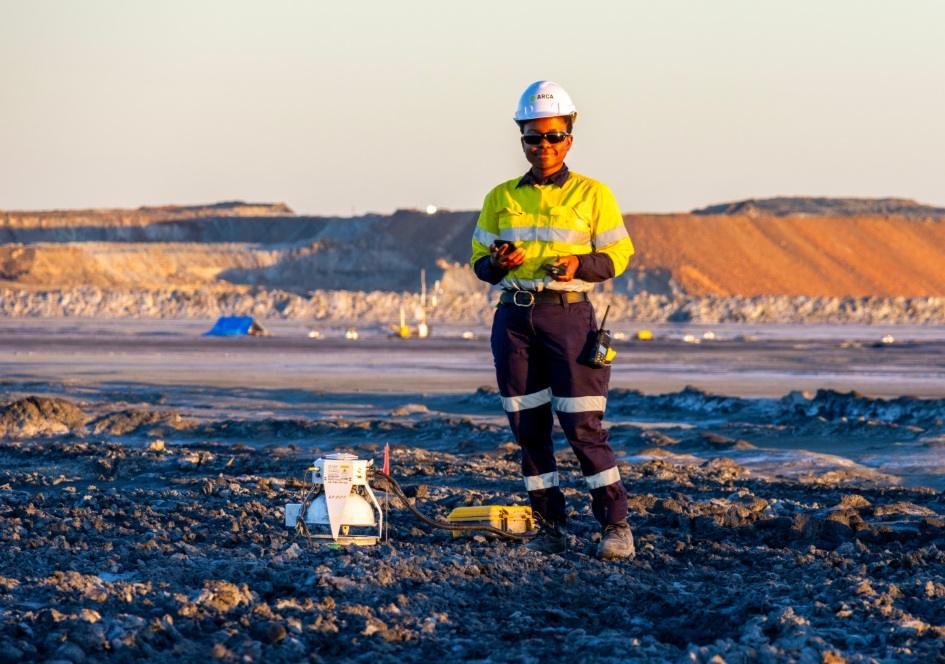
Arca’s technology, developed since 2021, directly addresses the challenge of atmospheric CO2 by accelerating a natural geological process. By using high-intensity energy bursts to enhance the reactivity of mine tailings – a pervasive industrial waste product – Arca facilitates the transformation of CO2 into stable rock formations. Remote-controlled and autonomous rovers are deployed to continuously expose fresh feedstock and monitor the sequestration process, ensuring robust verification. The benefits are manifold: an abundant, geographically dispersed feedstock that repurposes existing industrial liabilities, minimal requirements for land, energy, and water, and a robust monitoring, reporting, and verification (MRV) framework. Microsoft’s commitment, as the world’s largest corporate buyer of carbon removal credits with purchases approaching 31 million tonnes, provides a powerful endorsement. This agreement not only validates industrial mineralization as a viable, scalable, and permanent carbon removal solution but also highlights how innovative technologies are transforming traditional industrial waste streams into valuable climate assets, creating new economic paradigms that O&G investors cannot afford to overlook.
Crude Volatility and the Strategic Imperative for Decarbonization Investments
The backdrop for this significant carbon removal agreement is a dynamic and often volatile commodity market. As of today, Brent crude trades at $90.38, marking a significant 9.07% daily decline, while WTI crude stands at $82.59, down 9.41%. Gasoline prices have also seen a notable drop to $2.93, representing a 5.18% decrease. This sharp daily movement follows a considerable trend: Brent crude has seen a substantial 19.9% reduction over the past two weeks, plummeting from $112.78 on March 30th to today’s levels. This persistent volatility in the core oil and gas markets underscores the strategic imperative for integrated energy companies to diversify their portfolios and invest in less cyclical, long-term value streams. The Arca-Microsoft deal exemplifies such a strategy, demonstrating how long-term, fixed-price contracts in the carbon removal market can offer a degree of revenue predictability and climate compliance that traditional hydrocarbon extraction often lacks. For investors, understanding the interplay between fluctuating crude prices and the rising value of decarbonization efforts is key to assessing the future resilience and growth potential of energy sector holdings.
Navigating Upcoming Events: Market Signals and Strategic Shifts
The energy market remains highly sensitive to geopolitical developments and supply-side decisions, with several critical events on the horizon that could further influence crude prices and broader investment strategies. Investors are keenly watching the upcoming OPEC+ Joint Ministerial Monitoring Committee (JMMC) Meeting on April 19th, followed by the full Ministerial Meeting on April 20th. Given the recent significant decline in crude prices, these meetings will be pivotal in determining whether the cartel maintains current production quotas or signals any adjustments to stabilize the market. Further insights into supply-demand dynamics will come from the API Weekly Crude Inventory reports on April 21st and 28th, and the EIA Weekly Petroleum Status Reports on April 22nd and 29th. The Baker Hughes Rig Count on April 24th and May 1st will offer an indication of North American production activity. For oil and gas investors, these events are more than just price triggers; they are signals for strategic recalibration. Against a backdrop of potential market oversupply or under-demand, the stability offered by long-term carbon removal contracts, such as the one between Arca and Microsoft, becomes an increasingly attractive component of a diversified energy portfolio, mitigating the risks associated with commodity price fluctuations and aligning with growing ESG mandates.
Investor Intent: Long-Term Vision Beyond Short-Term Volatility
Our proprietary reader intent data reveals a clear focus among investors on long-term market trajectories rather than just immediate price swings. Questions such as “what do you predict the price of oil per barrel will be by end of 2026?” highlight a desire for foresight and strategic positioning. Similarly, inquiries like “How well do you think Repsol will end in April 2026?” indicate a deep interest in how individual companies are navigating the evolving energy landscape. The Arca-Microsoft agreement directly speaks to this long-term vision. A 10-year off-take agreement for carbon removal provides a clear signal that durable decarbonization solutions are moving from experimental concepts to commercially viable, long-term assets. This shift is critical for O&G investors, as it suggests that companies successfully integrating such technologies into their operations, or those investing in the carbon removal sector directly, could unlock new revenue streams and enhance their valuations by demonstrating a tangible commitment to climate goals. The industrial mineralization pathway, with its scalable feedstock and permanent sequestration method, could become a significant area of investment for forward-thinking energy companies looking to future-proof their business models against the backdrop of an increasingly carbon-constrained world.


