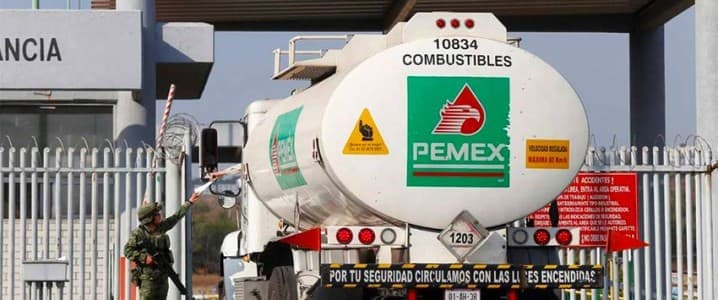
Mexico’s $3 Billion Cuba Fuel Aid: A Deep Dive into Pemex’s Looming Burden
The recent revelations concerning Mexico’s alleged multi-billion dollar subsidized fuel shipments to Cuba, channeled through Pemex subsidiary Gasolinas Bienestar, present a formidable challenge for investors assessing the state oil giant’s financial health and the broader Mexican energy sector. Between May and August 2025, an estimated $3 billion worth of fuel — encompassing gasoline, diesel, and crude — reportedly departed Mexican ports, primarily Coatzacoalcos, Veracruz, and Tampico, Tamaulipas, bound for Cuba. This figure, more than triple the volume of the previous administration’s final two years, raises serious questions about Pemex’s operational strategy, financial transparency, and the potential for increased sovereign risk. For astute investors, understanding the implications of these opaque transactions is paramount for accurately valuing Pemex and anticipating shifts in Mexico’s energy policy.
The Financial Drain on Pemex’s Already Strained Balance Sheet
The scale of the alleged $3 billion fuel aid, equivalent to approximately 60 billion Mexican pesos, casts a long shadow over Pemex’s already precarious financial position. This sum matches the entire 2026 federal budget allocated for Mexico’s Ministry of Security and Citizen Protection and far surpasses the combined budgets for the Attorney General’s Office and national education infrastructure funds. Gasolinas Bienestar, the conduit for these shipments, reported substantial losses and debt totaling 5.8 billion pesos in its inaugural year, directly reflecting the cost of supplying fuel to Cuba at subsidized or free rates. Such expenditures exacerbate Pemex’s chronic debt burden and operational inefficiencies, making it increasingly difficult for the company to invest in critical infrastructure or meet its financial obligations. While some experts, like Jorge Piñón, question the accuracy of the reported volumes due to Cuba’s perceived storage limitations, the very allegation itself, supported by detailed maritime tracking of at least 58 shipments to companies like Coreydan S.A. and the Camilo Cienfuegos refinery, introduces significant uncertainty and risk into Pemex’s valuation.
Geopolitical Crosscurrents and Market Volatility
The geopolitical dimension of these shipments cannot be overlooked, particularly given the involvement of vessels like the Sandino, previously sanctioned by the U.S. Treasury’s Office of Foreign Assets Control (OFAC) for transporting Venezuelan oil to Cuba. The Sandino’s alleged departure from Laguna de Pajaritos and subsequent arrival in Cuba underscores the risks associated with operating in a complex international environment. This adds a layer of scrutiny and potential compliance risk for any entity dealing with Pemex or the broader Mexican energy complex. Against this backdrop of international tension and opaque transactions, global oil markets continue to exhibit significant volatility. As of today, Brent crude trades at $90.38 per barrel, marking a substantial 9.07% decline within the day’s range of $86.08 to $98.97. Similarly, WTI crude stands at $82.59, down 9.41% today, fluctuating between $78.97 and $90.34. This recent dip is part of a broader trend, with Brent having shed $22.40, a nearly 20% decrease, from $112.78 on March 30th to its current level. Such market swings directly impact Pemex’s revenue generation capacity, making the burden of subsidized fuel aid even more pronounced and difficult to absorb without further impacting the company’s financial health.
Investor Focus and Upcoming Market Catalysts
Our proprietary intent data from OilMarketCap.com reveals that investors are intensely focused on understanding the drivers of crude prices and the future outlook for the energy sector. Key questions frequently arise regarding OPEC+ production quotas and predictions for oil prices by the end of 2026. This investor focus highlights the direct relevance of global supply-demand dynamics to Pemex’s financial viability, especially when its resources are reportedly diverted to aid. Against this backdrop, the upcoming OPEC+ Joint Ministerial Monitoring Committee (JMMC) Meeting on April 19th and the subsequent Ministerial Meeting on April 20th are critical events. Any signals regarding output adjustments from these meetings could significantly influence global crude prices, directly impacting Pemex’s potential revenues and the cost of its operations. Furthermore, the API Weekly Crude Inventory reports on April 21st and 28th, alongside the EIA Weekly Petroleum Status Reports on April 22nd and 29th, will offer crucial insights into U.S. supply-demand balances. These reports are especially pertinent given the current gasoline price of $2.93, which is down 5.18% today, as U.S. consumption trends can ripple across global markets and affect the value of refined products Pemex trades.
The Path Ahead: Transparency and Accountability for Pemex
The controversy surrounding Mexico’s alleged fuel aid to Cuba demands immediate and comprehensive transparency from Pemex and the Mexican government. For investors, the lack of clarity around these multi-billion dollar expenditures creates significant uncertainty, impacting Pemex’s creditworthiness and the overall attractiveness of Mexican energy investments. The fact that a sanctioned vessel, the Sandino, was allegedly involved in these shipments, highlights potential regulatory and reputational risks that could further complicate Pemex’s access to international markets and financing. Moving forward, investor confidence will hinge on verifiable data, clear explanations for the financial discrepancies, and a robust commitment to corporate governance. Without these, the burden of such alleged aid will continue to weigh heavily on Pemex’s balance sheet, potentially constraining its ability to develop Mexico’s vast energy resources and achieve its strategic objectives. Ultimately, the future trajectory of Pemex, and indeed Mexico’s energy sector, will be shaped by how transparently and effectively these critical questions are addressed.


