

Mexico’s Oil & Gas Sector: Navigating Growth, Tariffs, and Investment Prospects
Mexico’s Economic Stability Defies Global Headwinds
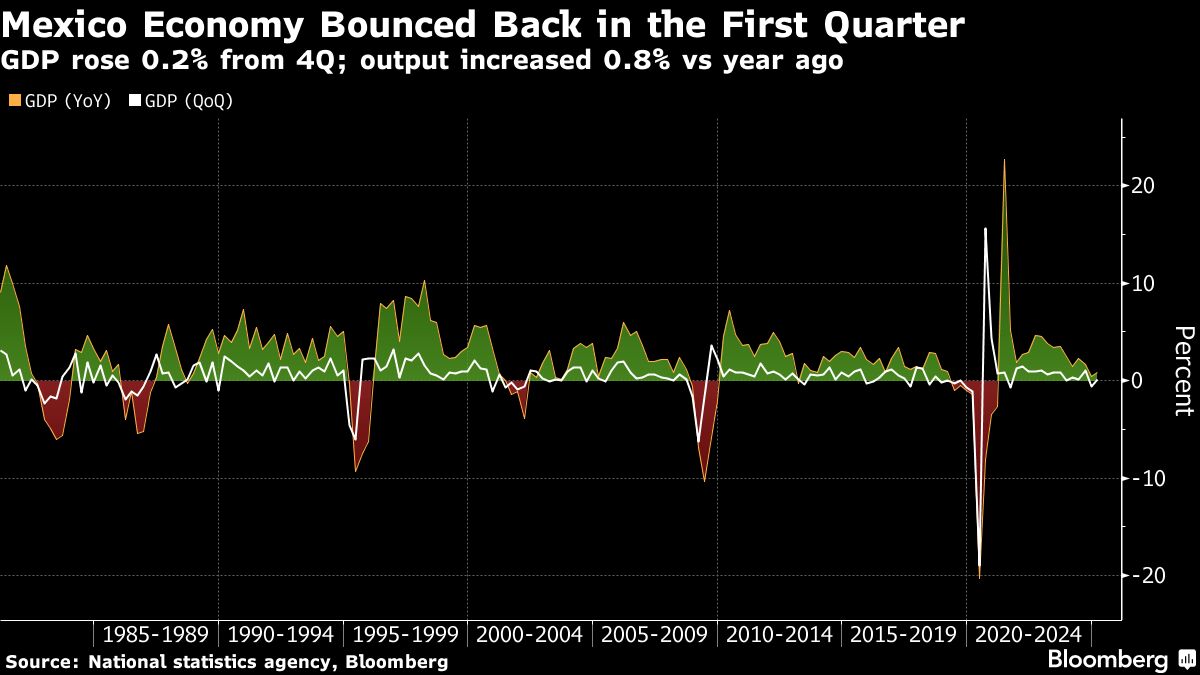
Mexico’s economy has demonstrated a surprising degree of fortitude, skillfully sidestepping a technical recession during the first quarter of the current year. This unexpected resilience offers a critical analytical framework for investors assessing opportunities within the nation’s pivotal oil and gas industry. Gross domestic product expanded by a robust 0.2% in the three months concluding March, exceeding the 0.1% median forecast from leading economists. This positive trajectory marks a significant turnaround, following a 0.6% contraction observed in the preceding quarter. Furthermore, on a year-over-year basis, the economy grew by 0.8%, surpassing the 0.7% median estimate, according to preliminary national statistics. For global energy investors, this macroeconomic backdrop signals a potential haven of stability amidst a turbulent international landscape, yet a deeper dive reveals nuanced complexities that warrant careful consideration for strategic capital allocation in Mexico’s dynamic energy markets.
Unpacking Mexico’s Q1 Growth Drivers: A Mixed Bag for Energy Demand
While the headline economic figures paint an encouraging picture, a closer examination of the underlying sectors reveals a more intricate narrative. The primary catalyst for Mexico’s Q1 expansion was an impressive 8.1% surge within the agricultural sector. This robust performance represents a substantial rebound, effectively recovering from a significant downturn experienced at the close of 2024. In stark contrast, the industrial sector, a key driver of energy consumption, experienced a 0.3% contraction during the same period, while the services sector remained flat. This sectoral divergence presents a crucial insight for energy investors. While agricultural output contributes to overall GDP, its direct energy intensity is typically lower than that of heavy industry. The stagnation in manufacturing and other industrial activities suggests underlying challenges that could temper growth in energy demand from these critical segments, impacting prospects for industrial gas supply, power generation, and refining product consumption. Investors must weigh the broader economic stability against these sector-specific energy demand signals.
Geopolitical Currents and Pre-Tariff Export Surges
A significant, albeit complex, factor influencing Mexico’s Q1 economic performance stems directly from the evolving geopolitical landscape, particularly concerning its intricate trade relationship with the United States. Analysts have broadly anticipated a potential economic slowdown for Mexico in 2025, primarily driven by the specter of “America First” trade protectionism and the looming threat of increased US tariffs. Paradoxically, these very concerns contributed directly to the Q1 uptick in economic activity. Despite observable weaknesses in manufacturing output, Mexican exports experienced a notable surge as US importers strategically accelerated orders. This proactive “front-running” of potential tariffs, aimed at preempting more punitive duties on Mexican goods, offered a temporary but significant boost to the economy. This dynamic vividly underscores the delicate interplay between trade policy uncertainty and immediate economic ramifications, posing both short-term opportunities and long-term risks for energy projects heavily integrated into cross-border supply chains and export-oriented industries.
Persistent Tariff Threats and Their Energy Sector Ramifications
The threat of substantial duties on exports to the United States, which remains by far Mexico’s largest trading partner, continues to represent a tangible and material risk for investors. The prospect of “reciprocal” tariffs on various goods, frequently voiced by former US President Donald Trump, introduces a layer of significant uncertainty into long-term investment planning. Existing levies already impact a range of products not covered by North America’s free trade agreement, alongside specific duties on steel, aluminum, and certain components of finished automobiles not manufactured within the US. For astute oil and gas investors, this pervasive tariff uncertainty introduces an elevated risk profile for capital projects tied to export-oriented manufacturing or cross-border energy infrastructure. The long-term stability of vital trade routes, the predictability of industrial demand from large consumers, and the economic viability of energy infrastructure heavily depend on a stable and predictable tariff environment. This volatility demands a robust risk assessment strategy for any significant energy investment in the region.
Strategic Considerations for Oil & Gas Investors in Mexico
Given Mexico’s unique economic trajectory and the persistent geopolitical headwinds, strategic considerations for oil and gas investors are paramount. The resilience of the broader economy, juxtaposed with the industrial sector’s contraction and the tariff-driven export surge, mandates a nuanced approach. Investors should critically evaluate projects based on their exposure to international trade and their reliance on industrial energy demand. Opportunities may lie in areas less susceptible to tariff fluctuations, such as domestic energy production for internal consumption, infrastructure supporting national energy security, or projects facilitating Mexico’s transition towards cleaner energy sources. For instance, investments in natural gas infrastructure, crucial for power generation and industrial processes within Mexico, could prove more resilient than those tied directly to export-oriented petrochemicals if trade tensions escalate. Furthermore, the potential for nearshoring, where companies relocate supply chains closer to the US to avoid tariffs, could create new pockets of industrial energy demand within Mexico, offering targeted investment prospects for those positioned to capitalize on such shifts. Thorough due diligence on regulatory frameworks, local market dynamics, and a robust understanding of potential trade policy impacts are essential for mitigating risk and maximizing returns in this complex market.
Navigating a Complex Investment Horizon
In conclusion, Mexico presents a compelling, albeit intricate, investment landscape for the global oil and gas sector. The nation’s unexpected economic resilience in Q1 offers a foundational strength, yet this stability is underpinned by specific sectoral growth drivers and a delicate geopolitical balance. The temporary boost from pre-tariff exports highlights the volatility inherent in trade relations, while the looming threat of escalated tariffs casts a long shadow over long-term planning, particularly for energy projects with significant cross-border exposure. Astute investors must transcend headline figures, delving into the specifics of industrial demand, export vulnerability, and the potential for domestic market growth. A strategy focused on diversification, a deep understanding of trade policy implications, and an agile response to evolving geopolitical realities will be key to unlocking sustainable value in Mexico’s dynamic oil and gas sector. The market demands informed decisions, balancing the nation’s inherent potential with the external forces shaping its economic destiny.
