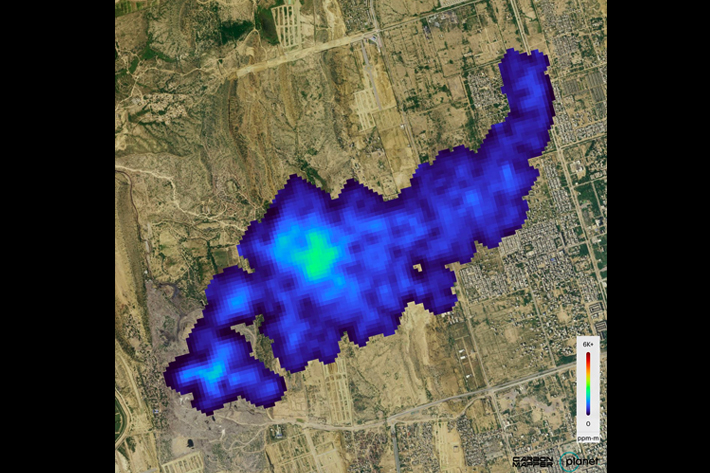
The global oil and gas sector faces an increasingly urgent and unacknowledged environmental challenge: methane emissions. Recent findings from the UN’s International Methane Emissions Observatory reveal a troubling silence from industry and governments, with nearly 90% of satellite-detected methane leaks receiving no acknowledgement. This concerning lack of response, improving only marginally from a mere 1% action rate last year to 12% this year across 3,500 alerts, represents a significant and growing ESG risk for investors. As the world pushes towards decarbonization and climate targets, the industry’s passive stance on these “easy wins” in emissions reduction could lead to heightened regulatory scrutiny, material financial penalties, and a severe impact on investor sentiment and long-term valuations.
The Undeniable Scale of Unaddressed Methane Emissions
The data paints a stark picture: the vast majority of significant methane plumes identified by a network of over 17 satellites are simply being ignored. This isn’t just an environmental issue; it’s a direct challenge to the industry’s social license to operate and its long-term financial viability. Methane, while shorter-lived in the atmosphere than CO2, possesses a far greater heat-trapping capacity, making its reduction the fastest immediate pathway to mitigating climate change. The 2021 Global Methane Pledge, signed by over 150 countries, aims for a 30% cut in global methane emissions this decade. However, the current response rate from the oil and gas sector indicates a profound disconnect between global commitments and on-the-ground action. Investors must recognize that companies failing to proactively address these emissions are accumulating unpriced risk, from potential fines and carbon taxes to reduced access to capital and increased insurance premiums. The UN Environment Programme’s executive director aptly noted that these are “rather easy wins” – suggesting that the cost of inaction will far outweigh the cost of mitigation.
Market Volatility Amidst Mounting ESG Pressure
In a period already marked by considerable market fluctuations, the unaddressed methane issue adds another layer of uncertainty for oil and gas investors. As of today, Brent Crude trades at $90.38, reflecting a significant 9.07% daily decline from its open, with a day range between $86.08 and $98.97. Similarly, WTI Crude stands at $82.59, down 9.41%, having traded between $78.97 and $90.34. This sharp drop comes on the heels of a broader downward trend, with Brent having fallen from $112.78 just two weeks ago on March 30th, representing a nearly 20% decline. While immediate factors like global economic outlook and supply-demand dynamics are primary drivers of this volatility, the underlying current of ESG concerns, particularly around emissions, cannot be ignored. Our proprietary market analysis suggests that persistent negative environmental headlines, such as the UN’s methane report, contribute to a risk-off sentiment that can exacerbate price movements. Companies perceived as laggards in emissions control will increasingly find their equity discounted by investors wary of future liabilities and regulatory crackdowns, especially when broader market sentiment is already fragile.
Investor Demands and Forthcoming Regulatory Scrutiny
Our proprietary reader intent data reveals a keen investor focus on the fundamentals: “What do you predict the price of oil per barrel will be by end of 2026?” and “What are OPEC+ current production quotas?” These questions underscore a desire for clarity on market direction and supply-side management. However, inextricably linked to these are the growing demands for environmental accountability. A powerful coalition of investors, representing over 4.5 trillion euros ($5.3 trillion) in assets, recently urged the EU to uphold stringent methane emissions laws, countering concerns that the bloc might weaken rules to facilitate increased US LNG imports. This pressure highlights how institutional capital is increasingly leveraging its influence to drive environmental performance. Looking ahead, the COP30 climate talks, scheduled for next month in Brazil, will undoubtedly bring methane emissions to the forefront of global climate debate. This event will serve as a critical platform where governments and industry leaders will be pressed to demonstrate concrete progress. For investors, this translates into an expectation of heightened regulatory scrutiny and the potential for new, more demanding emissions standards. Companies that can articulate a clear, verifiable strategy for methane reduction will be better positioned to navigate this evolving regulatory landscape and maintain investor confidence.
Strategic Imperatives: Mitigation as a Competitive Edge
The International Methane Emissions Observatory’s documentation of 25 instances where prompt notification led to the successful remediation of significant emissions events demonstrates that fixes are indeed achievable. This underscores the “easy wins” narrative; many leaks are preventable through improved maintenance, equipment upgrades, and better operational practices, particularly in addressing venting and flaring. Looking forward, the observatory’s plan to expand its detection capabilities beyond oil and gas to include metallurgical coal, waste, and agriculture signals a broader, systemic push towards methane accountability. For the oil and gas sector, this means the imperative to act now is not merely about compliance but about securing a competitive advantage. Proactive investment in leak detection and repair (LDAR) technologies, along with robust reporting mechanisms, will become non-negotiable. As the OPEC+ JMMC Meeting on April 19th and the Ministerial Meeting on April 20th approach, while the primary focus remains on production quotas, the underlying discourse around sustainable energy practices will undoubtedly inform long-term strategic decisions. Companies that transparently integrate methane reduction into their operational and capital expenditure plans will likely see improved ESG ratings, attract a wider pool of environmentally conscious investors, and ultimately achieve more resilient valuations in a rapidly evolving energy market. The weekly API and EIA petroleum status reports (April 21-22, April 28-29) provide short-term market indicators, but the long-term investment thesis in oil and gas will increasingly depend on a verifiable commitment to emissions reduction.