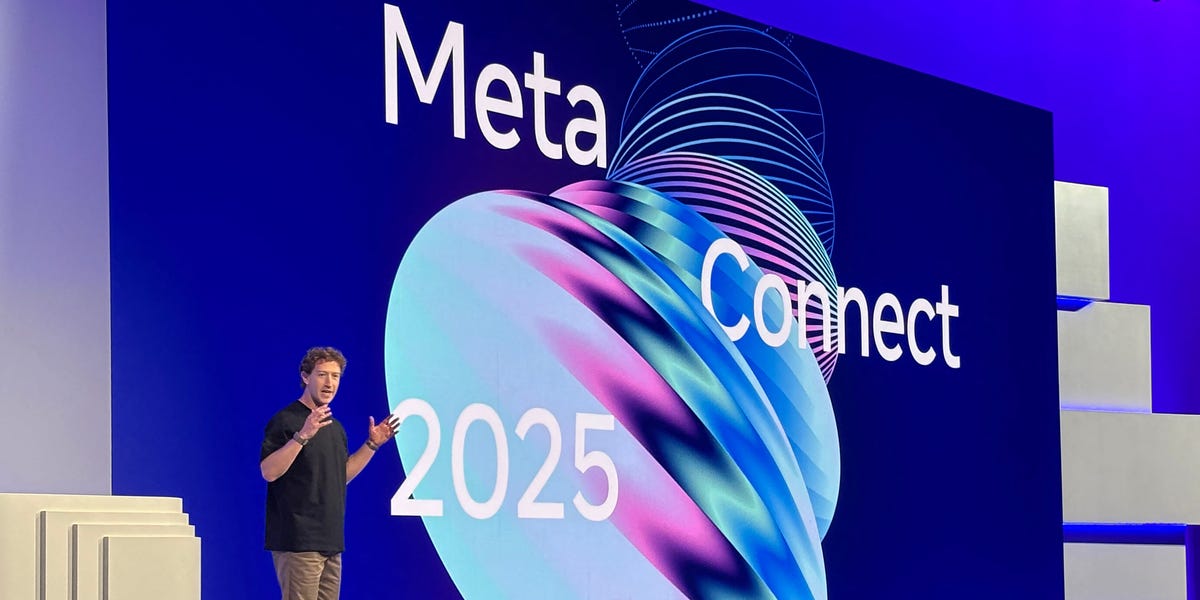
The tech world recently buzzed with Meta’s Connect conference, yet for all the talk of AI, the spotlight largely remained on new hardware like the $800 Ray-Ban smart glasses. Mark Zuckerberg’s ambitious “Superintelligence” division, despite a reported $72 billion investment in AI infrastructure this year alone and a $14 billion acquisition of Scale AI’s Alexandr Wang, seemed to take a backseat, evidenced by somewhat shaky LiveAI demos. While the immediate product payoff might be elusive, the sheer scale of this infrastructural commitment by one of the world’s largest tech giants sends an unmistakable signal to the energy sector: the AI revolution, irrespective of its consumer-facing speed, is poised to become a colossal new driver of power demand. For savvy oil and gas investors, understanding this evolving energy appetite is crucial, even as traditional market forces dominate daily headlines.
The AI Infrastructure Bet: A Silent Power Surge
Meta’s strategic pivot towards AI, highlighted by its “Superintelligence” unit established just last summer, represents a staggering capital allocation. Beyond the $14 billion spent to secure top talent and acquire nearly half of Scale AI, the company projects an astonishing $72 billion expenditure on AI infrastructure in the current year alone. This figure is not merely a line item on an earnings report; it translates directly into massive energy consumption. Building and operating advanced AI models, training vast neural networks, and supporting the underlying data centers demand immense, constant power. Even if the consumer applications like LiveAI or metaverse 3D world generation are still in their nascent stages, the foundational infrastructure is being built out at a breakneck pace. This behind-the-scenes energy draw, fueled by billions in investment, suggests a structural shift in electricity demand that will inevitably ripple through the natural gas and utilities sectors, presenting a significant long-term bullish factor for power generation inputs.
Navigating Current Market Volatility Amidst Emerging Demand Drivers
As of today, Brent crude trades at $98.15, marking a 1.25% decline, with its daily range between $97.92 and $98.67. WTI crude also saw a dip, currently at $89.8, down 1.5% and fluctuating between $89.57 and $90.26. Gasoline prices reflect this broader trend, sitting at $3.08, down 0.65% within a $3.08-$3.1 daily range. This recent softness follows a significant fourteen-day trend where Brent crude has shed $14, or 12.4%, moving from $112.57 on March 27th to $98.57 on April 16th. These immediate market movements are, of course, critical for short-term trading strategies, influenced by geopolitical tensions, economic indicators, and supply expectations. However, for investors with a longer horizon, these daily and bi-weekly fluctuations, while important, must be viewed against the backdrop of emerging structural demand drivers. The colossal investment in AI infrastructure, exemplified by Meta, represents a new, persistent pull on the grid that, while not directly impacting crude oil prices today, will increasingly influence the demand for natural gas as a primary fuel for power generation, creating an indirect but powerful bullish undercurrent for the broader energy complex.
Addressing Investor Questions: Beyond Quotas to Future Power Needs
Our proprietary reader intent data reveals a consistent focus among investors on immediate market dynamics. Questions like “What are OPEC+ current production quotas?” and “What is the current Brent crude price and what model powers this response?” dominate inquiries. This reflects a natural and healthy emphasis on the supply-side policies and real-time pricing that drive much of the short-term market action. Investors are also keenly interested in the robustness of our data, asking “What data sources does EnerGPT use? What APIs or feeds power your market data?”. While these questions pinpoint critical current concerns, the implications of Meta’s massive AI bet suggest a need for investors to broaden their scope. The “data sources” for future energy demand must increasingly incorporate the burgeoning power requirements of AI. Understanding how these tech investments translate into kilowatt-hour demand, and subsequently into natural gas consumption for utilities, will be as vital as tracking OPEC+ decisions in shaping long-term portfolio strategies. Investors need to ask not just about current quotas, but about the future quotas of gigawatts needed to power the digital revolution.
Upcoming Events and Strategic Positioning for AI’s Energy Footprint
The energy calendar over the next two weeks is packed with events that will undoubtedly influence short-term market sentiment. Tomorrow, April 17th, the OPEC+ JMMC meeting will set the stage for the Full Ministerial Meeting on April 18th, where critical production policy decisions are expected. Following this, the API Weekly Crude Inventory report on April 21st and the EIA Weekly Petroleum Status Report on April 22nd will offer crucial insights into U.S. supply-demand balances. The Baker Hughes Rig Count on April 24th will provide a snapshot of drilling activity. These events, recurring into the following week with new API and EIA reports (April 28th and 29th) and another Baker Hughes Rig Count (May 1st), are pivotal for immediate market analysis and trading decisions. However, for investors positioning for the mid to long term, it’s essential to look beyond these traditional indicators. While OPEC+ decisions dictate crude supply, the burgeoning AI power demand, evidenced by Meta’s strategic outlays, represents a structural shift for electricity generation. Savvy investors should be evaluating companies within the natural gas sector, particularly those with robust production and infrastructure, as well as utility providers that stand to benefit from the sustained, escalating demand for grid power. The intersection of traditional energy market events and the accelerating energy needs of the tech sector will define the next decade of oil and gas investing.


