The energy landscape is undergoing a profound transformation, and a recent announcement from Meta, the parent company of Facebook and Instagram, serves as a potent signal for oil and gas investors. While the immediate focus often remains on geopolitical tensions, inventory reports, and OPEC+ decisions, Meta’s strategic pivot towards nuclear power for its burgeoning AI operations underscores a critical long-term shift in global energy demand dynamics. This isn’t merely a corporate sustainability initiative; it’s a multi-billion-dollar commitment that directly challenges the conventional wisdom about how future energy growth, particularly from energy-intensive sectors like artificial intelligence, will be met. For investors navigating the complexities of the oil and gas market, understanding these structural shifts is paramount.
The AI Power Gold Rush: A Nuclear Pivot, Not a Gas Surge
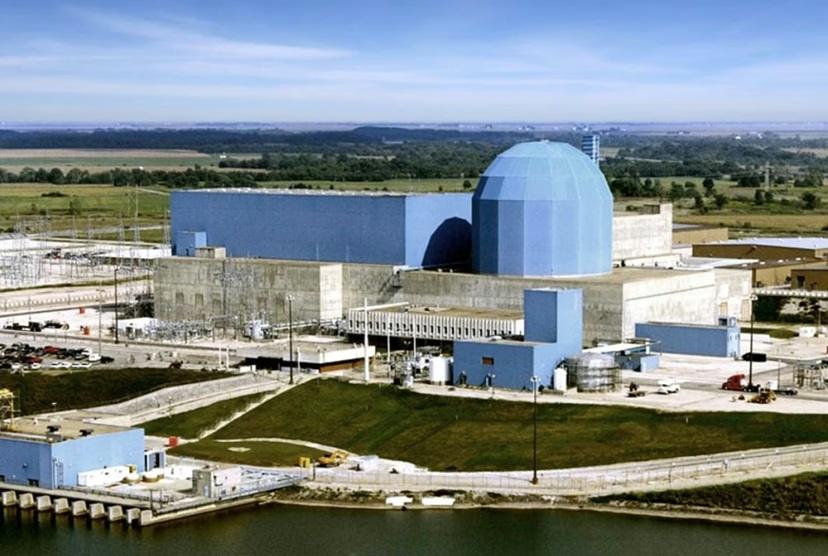
Meta’s ambitious agreement with Constellation Energy to extend the operational life of the Clinton Clean Energy Center, a nuclear facility in Illinois, for an additional 20 years beginning in June 2027, is a watershed moment. This deal secures 1.1 GW of clean, baseload power, replacing existing zero-emission credit (ZEC) support and even adding 30 MW through plant uprates. More importantly, Constellation is now exploring the development of advanced nuclear reactors or Small Modular Reactors (SMRs) at the same site, signalling a deeper commitment to nuclear as a scalable solution. The underlying driver is clear: the insatiable energy demands of AI-driven data centers. Meta explicitly stated that while it has maintained net-zero operations since 2020, achieving its broader 2030 net-zero value chain goal is significantly challenged by the exponential growth in AI energy consumption. This decision to lean into nuclear, rather than rely on new natural gas-fired generation or even solely on intermittent renewables, sends a powerful message about the preferred energy pathway for massive, continuous power loads. For natural gas producers, especially those tied to the electricity generation sector, this represents a significant long-term headwind, as a major new demand vector for electricity is actively being steered away from fossil fuels.
Decoding Market Signals Amidst Volatility
This long-term structural shift by major energy consumers unfolds against a backdrop of persistent volatility in the crude markets. As of today, Brent crude trades at $90.38 per barrel, marking a significant daily downturn of 9.07%. Similarly, WTI crude has fallen to $82.59, down 9.41%, with gasoline prices also experiencing a notable dip to $2.93, a 5.18% decrease. This recent market action extends a broader trend, with Brent having declined by $20.91, or 18.5%, from $112.78 on March 30th to $91.87 just yesterday. These sharp movements are typically driven by immediate supply-demand imbalances, geopolitical headlines, or shifts in macroeconomic sentiment. However, investors must look beyond these short-term fluctuations to discern the deeper currents shaping future energy demand. While the daily price of oil captures headlines, Meta’s nuclear commitment highlights that a substantial portion of future energy growth from high-demand sectors like AI is increasingly being secured through non-fossil pathways. This divergence between immediate market reactions to crude supply and the long-term energy sourcing strategies of major corporations creates a complex investment environment, where traditional demand forecasts for fossil fuels may need significant recalibration.
Investor Horizon: Navigating Upcoming Events and Long-Term Shifts
The immediate calendar for oil and gas investors is packed with critical events that will undoubtedly influence short-term market dynamics. With the OPEC+ Joint Ministerial Monitoring Committee (JMMC) meeting scheduled for tomorrow, April 18th, followed swiftly by the full Ministerial meeting on Sunday, April 19th, the market is poised for potential supply policy adjustments. These will be closely followed by the API Weekly Crude Inventory report on April 21st and the EIA Weekly Petroleum Status Report on April 22nd, providing vital insights into current inventory levels and refinery activity. Further updates on drilling activity will come with the Baker Hughes Rig Count on April 24th. While these events are crucial for understanding near-term price direction and supply-side management, Meta’s nuclear deal compels investors to consider how these immediate drivers intersect with longer-term structural transformations. The question isn’t just about what OPEC+ decides for the next quarter, but how much of the world’s rapidly expanding electricity demand, particularly from sectors like AI, will actually translate into increased natural gas consumption over the next decade. The explicit choice by a tech giant to secure nuclear power for decades rather than rely on new gas generation is a powerful indicator that the demand bridge for fossil fuels, especially natural gas in the power sector, may be shorter or narrower than previously assumed for certain high-growth applications.
Addressing Investor Concerns: The Future of Fossil Fuels in a Decarbonizing World
Our proprietary intent data reveals that a pressing question for investors this week is, ‘What do you predict the price of oil per barrel will be by end of 2026?’ This query reflects a broader anxiety about the long-term trajectory of fossil fuel prices and the role of traditional energy in an accelerating energy transition. Meta’s decision offers a significant data point in answering this. By actively investing in the relicensing and expansion of existing nuclear facilities, rather than building new fossil fuel plants, Meta is setting a precedent for how energy-intensive industries can meet growth targets while adhering to stringent decarbonization goals. This isn’t just about ‘greenwashing’; it’s a strategic infrastructure play that ensures reliable, emissions-free power for critical operations. The fact that Constellation is also evaluating new SMR development at the site further highlights nuclear’s potential as a scalable, long-term solution. For oil and gas investors, this suggests that the ‘total addressable market’ for future fossil fuel demand, particularly for natural gas in electricity generation, might be shrinking in certain key growth sectors. Companies like Repsol, which readers have also asked about this week, operate within a global energy framework increasingly influenced by such large-scale, non-fossil fuel commitments. Investors must factor in not only the immediate supply-demand fundamentals but also the accelerating trend of electrification and the strategic diversion of new power demand towards nuclear and renewables, which will inevitably shape the long-term value proposition of fossil fuel assets.


