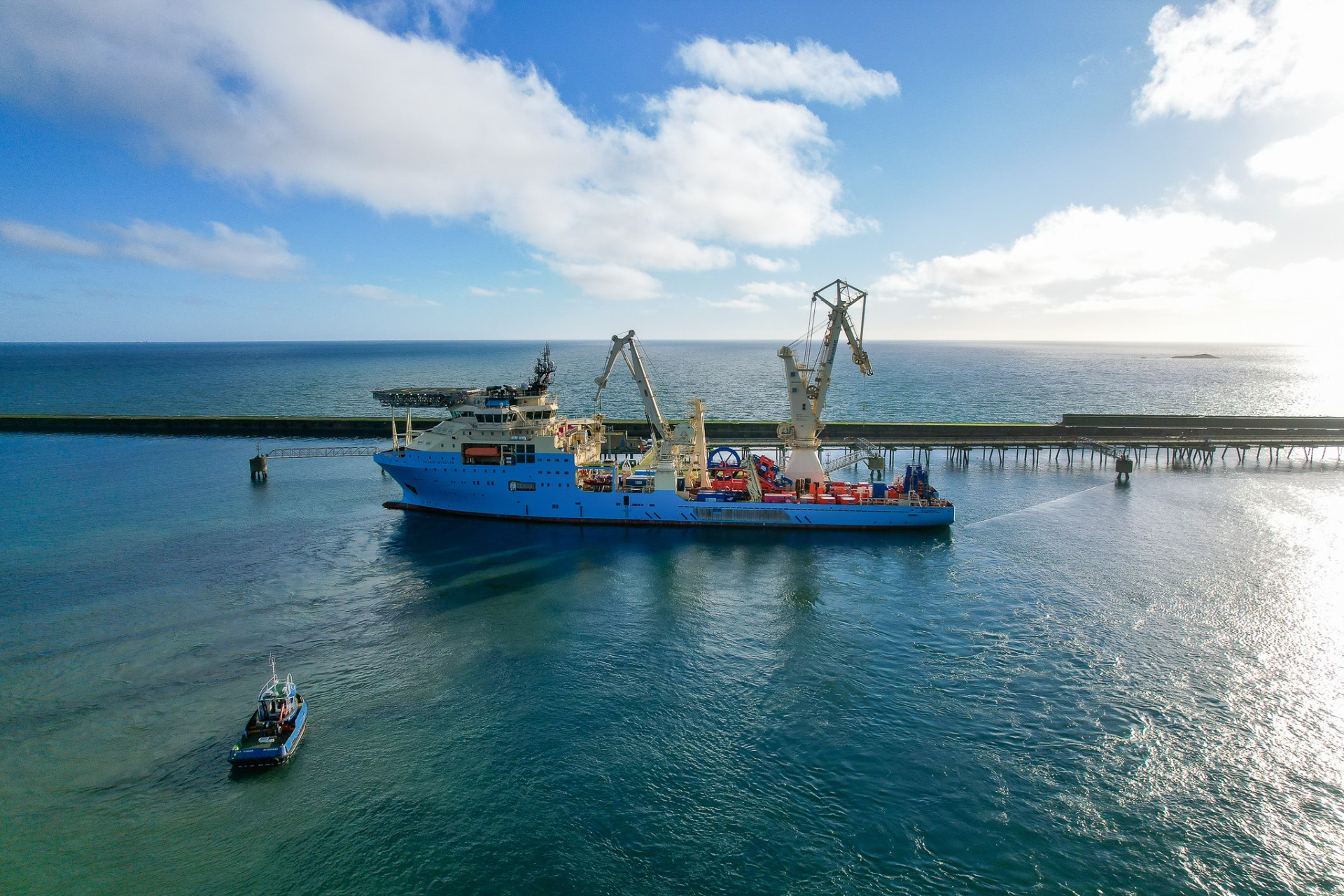
The successful installation of a dynamic riser assembly at Petrobras’ Mero field in Brazil marks a significant milestone for one of the world’s most critical deepwater developments. This complex engineering feat, connecting a permanent reservoir monitoring sensor grid to the subsea infrastructure, underscores the relentless progress in the pre-salt Santos basin. For investors, this signals the continued de-risking and ramp-up of a high-impact asset, promising long-term production growth and substantial returns for its consortium partners. As global energy markets navigate persistent volatility, Mero’s advancements reinforce Brazil’s position as a powerhouse in offshore oil production and offer a tangible indicator of future supply resilience.
Mero Field: A Cornerstone of Brazil’s Production Ambitions
The Mero field, situated in the pre-salt Santos basin, represents a strategic jewel in Brazil’s burgeoning offshore portfolio. Operated by Petrobras, with a 38.6% stake, and supported by a robust international consortium including Shell Brasil (19.3%), TotalEnergies (19.3%), CNPC (9.65%), CNOOC (9.65%), and Pré-Sal Petróleo S.A. (3.5%), Mero is poised to be a cornerstone of the country’s oil production growth for decades. The recent completion of the dynamic riser installation is a testament to the advanced technological capabilities required for such ultra-deepwater projects. The operation involved deploying a bespoke engineering solution to handle multiple components simultaneously, including a dynamic cable riser, data unit transfer assembly (DUTA), pigtails, and backbone cables from 9.2-meter reels. This intricate process, executed at water depths reaching 2,500 meters, showcased a custom deck layout incorporating deflectors, hydraulic winches, and a frictionless wheel mechanism, ensuring product integrity and efficient deployment. Such operational excellence is critical for unlocking the vast reserves of the pre-salt, demonstrating the partners’ commitment to maximizing value from these challenging yet prolific reservoirs.
Navigating Market Volatility: Mero’s Contribution to Future Supply
In a global energy landscape defined by price swings, the steady progress at Mero offers a long-term anchor for supply. As of today, Brent crude trades at $90.38, marking a significant 9.07% decline within the day, with its price range fluctuating between $86.08 and $98.97. This sharp downturn comes after a nearly 20% drop from its $112.78 level just a couple of weeks ago, illustrating the acute volatility facing crude markets. Against this backdrop, the successful completion of critical infrastructure at Mero is a powerful signal. While the field’s full production impact is phased, each completed development stage, such as this riser installation, de-risks future output and contributes to the long-term supply outlook. For the consortium partners, investing in high-margin, long-life assets like Mero provides a strategic hedge against short-term price fluctuations, ensuring a robust production base and sustained cash flow generation regardless of daily market noise. This focus on future supply is paramount as the industry grapples with balancing current market demands against the capital intensity of deepwater projects.
Investor Outlook: Pre-Salt Growth Amidst Shifting Supply Dynamics
Our proprietary reader intent data reveals a consistent investor focus on the trajectory of crude prices through 2026, and crucially, on OPEC+ production quotas. This indicates a demand for clarity on the interplay between new supply and strategic curtailments. The progress at Mero directly addresses these concerns by showcasing tangible steps towards increasing non-OPEC+ supply from a high-quality, low-cost basin. Investors are keenly asking about the long-term price of oil per barrel and the performance of key E&P players, making projects like Mero central to their investment theses. For companies like Shell Brasil and TotalEnergies, their participation in Mero strengthens their deepwater portfolios, offering diversified production streams that are less susceptible to geopolitical risks affecting other regions. The advanced engineering, as highlighted by MDL’s Senior Project Manager Euan Crichton, ensures a robust and efficient execution, which translates into more predictable project timelines and capital expenditure, a critical factor for investor confidence. MDL’s Brazil Country Manager, Yuri Martins, further emphasized their growing footprint in Brazil, aligning with Petrobras’ broader pre-salt development ambitions. This demonstrates the wider ecosystem of robust support services enabling this deepwater growth, a key consideration for overall project efficiency and profitability.
Upcoming Catalysts: Gauging the Impact of Mero’s Progress
While Mero’s full production ramp-up is a multi-year endeavor, its ongoing progress provides crucial context for upcoming market catalysts. With the OPEC+ JMMC and Ministerial Meetings scheduled for April 19th and 20th respectively, and the subsequent weekly API and EIA inventory reports on April 21st/22nd and April 28th/29th, investors will be keenly watching for signals that could either exacerbate or mitigate the recent price declines. The successful riser completion at Mero, though not immediately impacting global inventories, reinforces the long-term supply potential that will eventually filter into these reports. Furthermore, the Baker Hughes Rig Count, released on April 24th and May 1st, will offer insights into global drilling activity, including Brazil, reflecting sustained investment in projects like Mero. The continued commitment to deepwater developments, as evidenced by Mero’s latest milestone, suggests that major players are positioning for sustained demand, irrespective of short-term market volatility. These upcoming events, coupled with the tangible progress in Brazil’s pre-salt, provide investors with a comprehensive picture of the evolving global oil supply and demand dynamics.