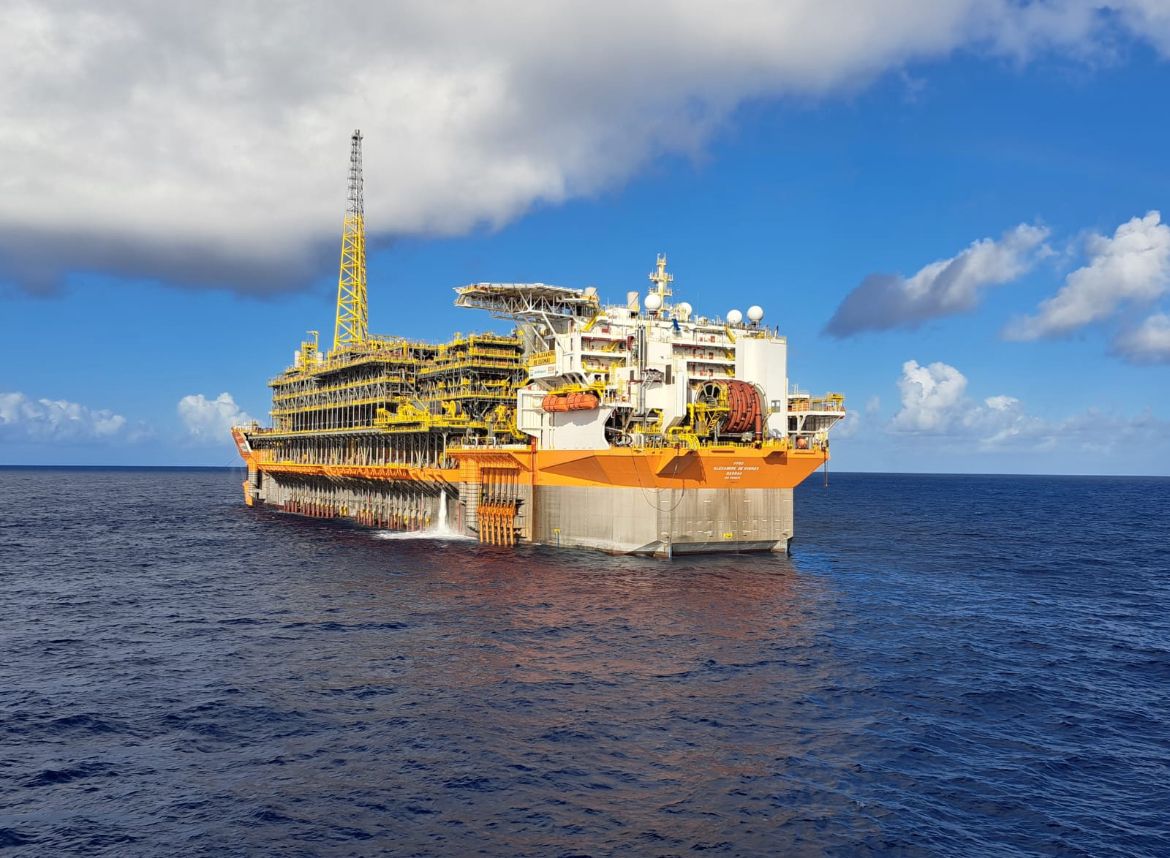
A significant new chapter has commenced in Brazil’s prolific pre-salt region, as the Mero field, situated off the coast of Rio de Janeiro in the Santos basin, celebrates the initiation of oil production from its fourth development phase, designated Mero-4. This strategic achievement marks a pivotal moment for the consortium partners, signaling robust future cash flow generation and reinforcing Brazil’s position as a global deepwater energy powerhouse.
The Mero-4 development, which began its journey in August 2021, represents a substantial investment in high-yield offshore capabilities. At its core is the advanced Alexandre de Gusmão Floating Production, Storage and Offloading (FPSO) unit, a marvel of modern engineering designed to process hydrocarbons from 12 interconnected wells. This state-of-the-art facility is engineered for an impressive production capacity of 180,000 barrels of oil per day (bpd), a substantial contribution to the global energy supply.
Driving Production Growth and Operational Excellence
With the successful ramp-up of Mero-4, the Mero field’s aggregate production capacity now reaches an impressive 770,000 bpd, distributed across five operational FPSOs. This scale positions Mero as one of the world’s most significant deepwater developments, underscoring the long-term strategic value for its stakeholders. Investors should note that projects of this magnitude, while capital-intensive in their development phases, typically transition into highly efficient, long-life assets capable of generating substantial free cash flow over decades.
The Mero field is operated by Brazil’s national oil company, Petrobras, holding a dominant 38.6% working interest. This leadership role further solidifies Petrobras’s deepwater expertise and its strategic imperative in harnessing Brazil’s immense pre-salt resources. Collaborating in this venture are global energy giants TotalEnergies and Shell Brasil, each possessing a 19.3% working interest. This powerful consortium, known as the Libra consortium, leverages collective technical prowess, financial strength, and operational experience crucial for navigating the complexities of ultra-deepwater exploration and production.
A Testament to Collaborative Success and Sustainable Practices
Nicolas Terraz, President E&P of TotalEnergies, articulated the profound significance of this milestone, stating that the Mero-4 startup “marks the end of the development of this world-class field – with the commissioning of four FPSOs in three years – and the start of a long-term production phase generating robust free cash flow.” He further emphasized its importance as a “great achievement for the Libra consortium and a major milestone for TotalEnergies in Brazil, a key growth country for our company.” Such commentary highlights the strategic vision and successful execution by all partners involved, setting the stage for sustained profitability.
Beyond its impressive production metrics, the Mero-4 project is a notable example of the industry’s evolving commitment to environmental stewardship. The design incorporates advanced solutions aimed at minimizing greenhouse gas emissions, a critical factor for investors increasingly prioritizing Environmental, Social, and Governance (ESG) considerations. Key among these initiatives is the reinjection of all associated gas back into the reservoir, eliminating routine flaring. This approach not only reduces the carbon footprint but also demonstrates an innovative approach to resource management, potentially enhancing reservoir recovery rates over time.
The Strategic Importance of Brazil’s Pre-Salt
The Mero field’s location within the pre-salt area of the Santos basin places it in one of the most exciting and geologically advantaged hydrocarbon provinces globally. Brazil’s pre-salt reservoirs are renowned for their high-quality, light crude oil and exceptional productivity per well, translating into lower lifting costs once infrastructure is in place. These characteristics make pre-salt developments particularly attractive for long-term investment, offering superior returns and resilience across various oil price cycles.
For investors, the Mero-4 startup reinforces the investment thesis for the consortium members. For Petrobras, it underpins its ambitious production targets and its role as a national economic driver. For TotalEnergies, it signifies the maturation of a key growth asset in its global portfolio, contributing directly to its free cash flow objectives. Similarly, for Shell Brasil, this deepwater asset strengthens its position in a crucial region, diversifying its production base and leveraging its extensive deepwater expertise. The consistent commissioning of major production units within a tight timeframe underscores the operational efficiency and strategic alignment of the consortium.
Outlook: Long-Term Value Creation
The successful completion of the Mero field’s main development phases and the commencement of full-scale production from Mero-4 represent a transition from significant capital expenditure to sustained operational revenue. This shift is crucial for enhancing shareholder value through consistent earnings and potential dividend distributions. The long-term production profile of the Mero field, backed by its world-class reservoir quality and robust infrastructure, promises decades of reliable output.
As the global energy landscape continues to evolve, high-efficiency, lower-emission projects like Mero-4 are increasingly vital. They not only meet the ongoing demand for hydrocarbons but do so with an eye towards environmental responsibility, aligning with contemporary investment mandates. The Mero field stands as a testament to the power of international collaboration, technological innovation, and strategic foresight in unlocking vast energy resources while addressing crucial sustainability objectives. This latest milestone serves as a strong indicator of the future profitability and resilience embedded within the portfolios of its operating partners.