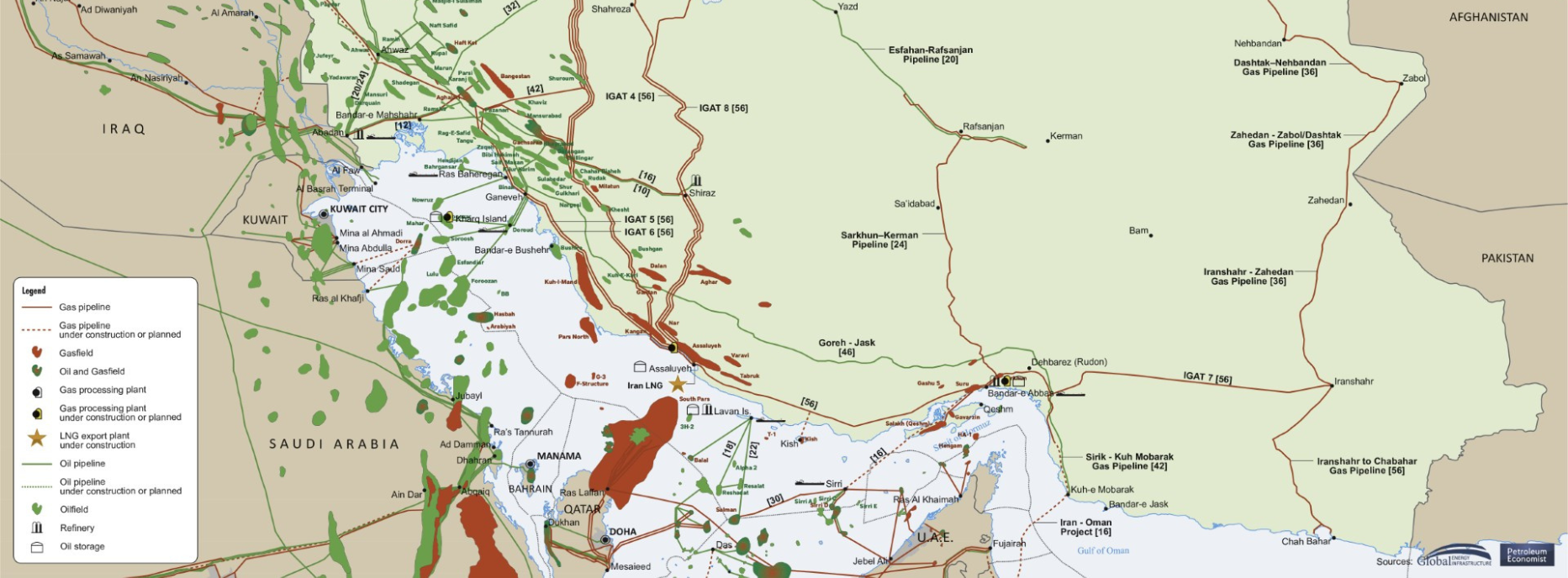
The global oil market is once again navigating treacherous waters as geopolitical tensions in the Middle East threaten to severely disrupt supply. With the Strait of Hormuz, a critical chokepoint for over a fifth of the world’s oil, under effective blockade, Persian Gulf producers are confronting a rapidly escalating storage crisis. This precarious situation, characterized by rapidly filling tanks and the looming specter of forced production cuts, presents a complex challenge for investors. While the immediate threat points to a potential supply squeeze, the market’s recent movements, coupled with upcoming energy events and shifting investor sentiment, paint a nuanced picture demanding careful analysis.
The Persian Gulf’s Mounting Storage Conundrum
The cessation of shipping through the Strait of Hormuz has forced Middle Eastern oil producers to stockpile crude within their own borders, pushing storage capacities to critical levels. Iraq, with its inherently limited storage infrastructure, has already been compelled to initiate significant production cuts to manage the backlog. This initial impact serves as a stark warning for regional giants like Saudi Arabia and the United Arab Emirates, who, according to market strategists, could face similar dilemmas within a matter of weeks if the situation persists. Collectively, Arab producers in the Persian Gulf possess roughly 100 million barrels of theoretical storage capacity remaining, representing about a third of their total. However, our internal analysis, aligning with expert assessments, indicates that the effective operational capacity is considerably lower, rarely exceeding 80% due to inherent system inefficiencies, disconnected facilities, and strategic location requirements relative to fields and loading terminals. For instance, Saudi Arabia’s crucial Ju’aymah terminal was already nearing its limits as of early March, and recent reports highlighted four of six tanks at the Ras Tanura refinery were full following regional attacks. This rapidly shrinking buffer means producers could exhaust their crude storage in as little as three weeks, potentially extending to four if alternative diversion routes can be fully leveraged.
Market Dynamics and Investor Sentiment Amidst Geopolitical Jitters
The initial shock of the Hormuz disruption propelled oil futures to significant highs, yet the market’s response has been far from linear. As of today, Brent Crude trades at $90.38, reflecting a flat movement within a daily range of $86.08 to $98.97. Similarly, WTI Crude stands at $82.59, also stable within its daily range of $78.97 to $90.34. These figures, while elevated compared to pre-crisis levels, reveal a fascinating counter-trend. Our proprietary data indicates that Brent Crude has actually experienced a notable decline of nearly 20% over the past two weeks, dropping from $112.78 on March 30th to its current $90.38 on April 17th. This significant pullback, despite the ongoing supply threat, suggests a complex interplay of factors: initial panic buying followed by a market recalibration, potential de-escalation signals, and perhaps underlying concerns about global demand resilience. Investors are clearly grappling with this volatility, evidenced by frequent questions to our AI assistant such as “is WTI going up or down?” and “what do you predict the price of oil per barrel will be by end of 2026?” This reflects deep uncertainty regarding both short-term directional movements and the longer-term outlook, highlighting the market’s struggle to fully price in both the immediate supply disruption and broader macroeconomic headwinds.
Upcoming Catalysts: OPEC+ and Inventory Watch
The coming weeks are packed with critical energy events that will undoubtedly shape the market’s reaction to the Hormuz crisis and the looming storage crunch. On Monday, April 20th, the OPEC+ Joint Ministerial Monitoring Committee (JMMC) will convene, followed by the full OPEC+ Ministerial Meeting on Saturday, April 25th. These meetings are paramount. With several member states facing an existential threat to their export capacity and the prospect of forced production cuts, the cartel faces immense pressure to either issue reassuring statements, potentially adjust output quotas, or signal a unified strategy to address the crisis. Any indication of OPEC+ solidarity or a plan to mitigate the supply disruption could offer price stability, while inaction or disagreement could exacerbate market fears. Parallel to these policy decisions, investors will be closely scrutinizing weekly inventory data. The API Weekly Crude Inventory reports on April 21st and 28th, alongside the EIA Weekly Petroleum Status Reports on April 22nd and 29th, will provide crucial insights into U.S. crude stockpiles. Significant draws could confirm a tightening global market, while unexpected builds might suggest demand weakness that could temper the impact of Middle East supply fears. Furthermore, the Baker Hughes Rig Count on April 24th and May 1st will offer a glimpse into future North American supply intentions, contributing to the complex supply-demand equation.
Investment Implications and Strategic Outlook
For oil and gas investors, the current environment demands a heightened level of vigilance and strategic flexibility. The immediate risk of forced production cuts in the Persian Gulf, particularly from major exporters like Saudi Arabia and the UAE, represents a potent bullish catalyst that could send crude prices significantly higher, potentially reigniting inflationary pressures globally. However, the market’s recent retracement, despite these severe supply risks, underscores the influence of broader demand considerations and the potential for diplomatic solutions or alternative logistical workarounds, such as U.S. naval escorts and insurance guarantees. While these assurances are viewed as only a partial solution by the shipping industry, they contribute to the complex pricing dynamic. Investors asking about the long-term price of oil by the end of 2026 must consider how this immediate crisis could permanently alter supply chains, accelerate strategic petroleum reserve discussions, and influence OPEC+ cohesion. Companies with diversified asset bases, robust logistical capabilities, or strategic storage solutions outside the immediate conflict zone may demonstrate greater resilience. Conversely, those heavily reliant on Persian Gulf exports or with limited operational flexibility face considerable headwinds. The coming OPEC+ meetings and inventory data releases will provide crucial near-term directional signals, but the overarching theme remains one of elevated geopolitical risk fundamentally reshaping the energy investment landscape.


