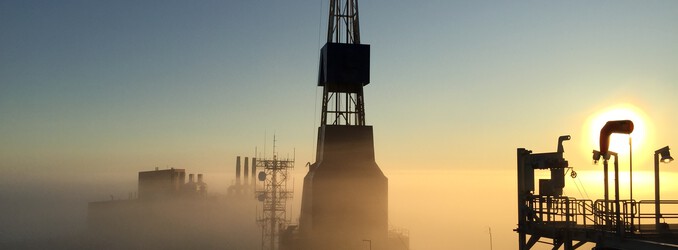
The recent oil discovery by MariEnergies at its Shawal-1 exploration well in Pakistan’s Sindh Province marks a significant milestone for the company and presents an intriguing case study for investors in the volatile upstream sector. Operating with a 100% working interest in the Mari Development and Production Lease (Mari D&PL), this find underscores the continued potential of established basins and MariEnergies’ strategic commitment to bolstering domestic hydrocarbon production. While the global energy landscape remains dynamic, new discoveries like Shawal-1 offer a beacon for long-term value creation, warranting a closer look at their implications for both the company’s trajectory and the broader investment thesis in the region.
The Shawal-1 Discovery: A Strategic Win for MariEnergies
MariEnergies’ announcement of a successful oil strike at Shawal-1 is a testament to its persistent exploration efforts and application of modern geoscience. Spudded on January 27, 2024, the well was drilled to a total depth of 1,136 meters into the Ghazij Formation. Initial well testing yielded a promising flow rate of 1,040 barrels per day (bpd) of 30° API crude, accompanied by 2.5 million standard cubic feet per day (MMscfd) of associated gas, on a 32/64 inch choke with a wellhead pressure of 953 psi. The 12% BS&W (basic sediment and water) is a factor to monitor but not uncommon for initial production.
This discovery is particularly strategic for MariEnergies, which already operates Pakistan’s largest gas reservoir in the Mari D&PL area and holds an estimated 23% market share, positioning it as the nation’s second-largest gas producer. The 100% working interest in Shawal-1 means MariEnergies retains full control over development decisions and captures all economic upside. The company has explicitly stated that this new find supports its overarching strategy to offset domestic production declines and accelerate exploration across its portfolio, a critical objective given the increasing energy demands within Pakistan. This successful delineation of new hydrocarbon-bearing zones reinforces the company’s technical capabilities and de-risks future exploration within its existing operational footprint.
Navigating a Volatile Market: Implications for Upstream Investment
The timing of this discovery coincides with a period of notable volatility in the global crude oil markets, a factor that profoundly influences the valuation and investment appeal of new upstream assets. As of today, Brent Crude is trading at $90.38 per barrel, marking a significant 9.07% decline within the day, with its price oscillating between $86.08 and $98.97. Similarly, WTI Crude stands at $82.59, down 9.41% today. This sharp daily drop is part of a broader trend, with Brent having fallen nearly 20% from $112.78 on March 30 to its current level. Gasoline prices have also seen a downturn, now at $2.93, down 5.18% today.
In such a rapidly shifting price environment, new discoveries like Shawal-1 take on a dual significance. On one hand, the immediate commercial viability and project economics of an oil find are directly tied to prevailing crude prices. A sustained downturn could impact future investment decisions for appraisal and development. On the other hand, domestic discoveries, especially those with associated gas, offer a degree of insulation from global price swings by addressing local energy security needs. For a company like MariEnergies, which primarily serves the Pakistani market, adding indigenous oil supply can be highly valuable, reducing import dependency and providing a more stable revenue stream, even if global benchmarks fluctuate. Investors often look for assets with strong foundational economics and strategic importance that can weather market cycles, making Shawal-1 an interesting prospect despite the current market headwinds.
Looking Ahead: Appraisal, Development, and OPEC+ Influence
The immediate next step for MariEnergies is to appraise the Shawal-1 find thoroughly. This process will involve further drilling and testing to delineate the reservoir extent, confirm commercial potential, and evaluate optimal development options. The success of this appraisal phase will be critical in determining the scale and timeline of future production. However, the broader market context, particularly concerning global supply-demand dynamics, will heavily influence these decisions.
Investors should closely monitor upcoming energy events that could shape the crude price environment. Crucially, the OPEC+ Joint Ministerial Monitoring Committee (JMMC) is scheduled to meet on April 19, followed by the full OPEC+ Ministerial Meeting on April 20. These meetings are pivotal; any decisions regarding production quotas, especially in light of the recent price declines and investor concerns over future oil prices, could significantly impact market sentiment and crude benchmarks. Should OPEC+ decide on deeper production cuts, it could provide a floor for prices, enhancing the attractiveness of new finds. Conversely, maintaining current quotas amidst softening demand could exert further downward pressure. Beyond OPEC+, weekly inventory reports from the API (April 21, April 28) and EIA (April 22, April 29), alongside the Baker Hughes Rig Count (April 24, May 1), will offer ongoing insights into supply and demand balances, providing a clearer picture for MariEnergies’ development planning over the coming months.
Investor Sentiment and the Future of Pakistani E&P
Investor sentiment, as evidenced by common questions circulating this week, strongly indicates a focus on future crude oil prices and the actions of major oil-producing blocs. Many investors are asking about predictions for oil prices by the end of 2026 and seeking clarity on OPEC+ current production quotas. These questions underscore a pervasive uncertainty regarding market direction and a desire to understand the fundamental drivers of supply and demand. In this environment, a domestic oil discovery in a country like Pakistan, which is a net energy importer, holds particular appeal.
For investors evaluating MariEnergies, the Shawal-1 discovery, coupled with its robust gas production base, presents a compelling narrative of diversified energy supply within a strategically important region. While global oil prices dictate overall profitability, the inherent value of reducing import bills and enhancing energy security for Pakistan offers a layer of resilience. This makes MariEnergies a potentially attractive investment for those seeking exposure to the growth of emerging markets, albeit with the caveat of navigating both geological and geopolitical risks inherent to the sector. The company’s ability to successfully appraise and bring Shawal-1 online will not only contribute directly to its bottom line but also reinforce its position as a key player in Pakistan’s energy independence agenda, potentially attracting further investor confidence even amidst broader market volatility.


