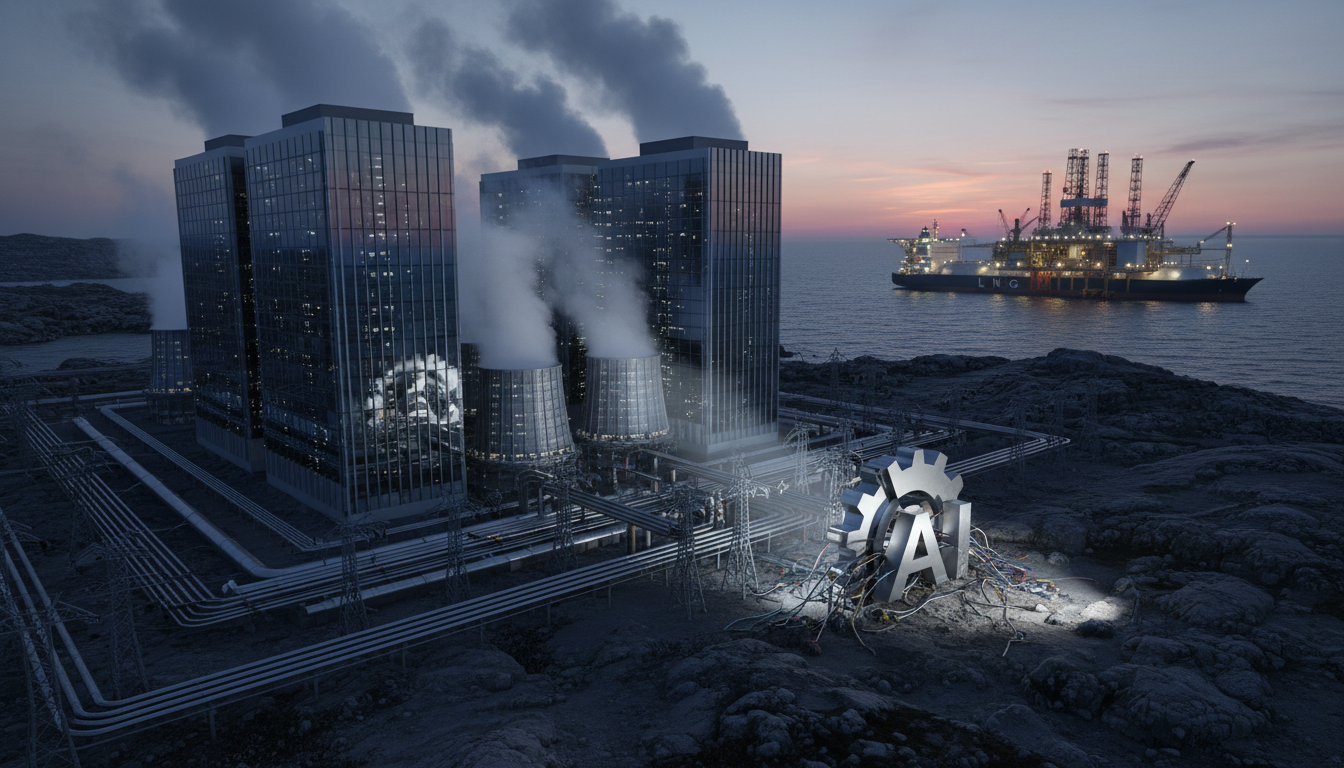
The AI Energy Imperative: A New Demand Driver for Oil & Gas
The global race for Artificial Intelligence dominance is rapidly transforming into an energy race, placing unprecedented demands on power grids and reshaping the investment landscape for the oil and gas sector. The relentless proliferation of massive data centers, essential for training and running AI models, is driving a surge in electricity consumption that has profound implications for natural gas demand, grid stability, and infrastructure investment. For energy investors, understanding this evolving dynamic is paramount, as it introduces a significant long-term demand catalyst, albeit one accompanied by complex regulatory and infrastructure challenges.
Policy Headwinds: State Moratoriums and the Maine Precedent
The rapid expansion of AI data centers, with an estimated 4,000 operational facilities in the U.S. and another 3,000 proposed or under construction, has not gone unnoticed by local communities and policymakers. Concerns ranging from increased utility rates and noise pollution to environmental footprints and grid reliability have sparked localized protests and legislative action. Lawmakers in at least 12 states have introduced legislation aimed at temporarily halting new data center approvals, seeking time to assess their broad impacts.
Maine has emerged as a particularly important case study in this policy debate. Unlike many similar bills that have stalled or been defeated, Maine’s proposed moratorium has successfully advanced through both its House and Senate, setting the stage for a final vote before the legislative session concludes on April 15. Should it pass, the bill would enact a temporary ban on new AI data center construction within the state until November 1, 2027. This proactive stance from a state with a relatively modest existing data center footprint underscores the widespread nature of these energy and infrastructure concerns. For investors tracking energy infrastructure plays and natural gas demand, such legislative developments are critical, as they signal potential bottlenecks or shifts in where future AI development can occur, influencing regional demand patterns for power generation.
Market Volatility and the Geopolitics of Energy Supply
Against the backdrop of burgeoning AI-driven energy demand, crude oil markets continue to exhibit volatility, influenced by both demand expectations and geopolitical supply risks. As of today, our proprietary market data indicates Brent crude is trading at $95.57, marking a robust 5.74% increase within the day’s range of $92.77-$97.81. Similarly, WTI crude stands at $87.45, up 5.88% from its daily low of $85.45. This strong intraday performance follows a more challenging period for crude, with Brent having trended downwards from $112.78 on March 30 to $90.38 just last week, representing a significant decline before today’s rebound.
Analyzing our reader intent signals, a primary concern among investors this week revolves around the near-term trajectory of crude prices and the broader outlook for oil by the end of 2026. While the immediate price movements are influenced by a complex interplay of inventory data, geopolitical events, and short-term speculative flows, the long-term demand floor provided by sectors like AI is increasingly becoming a foundational element in our projections. The substantial energy requirements of data centers, particularly their reliance on reliable baseload power often supplied by natural gas-fired plants, creates a persistent underlying demand for hydrocarbons. Investors keen on understanding where oil prices might settle by year-end must factor in not just traditional supply-side constraints and geopolitical tensions, but also the accelerating pull from electrification and the AI economy, which will sustain pressure on natural gas and, by extension, crude as energy commodities.
Navigating the Future: Upcoming Events and Investment Implications
The interplay of evolving energy demand and global supply dynamics will be closely scrutinized through a series of key upcoming events over the next fortnight. Investors will be keenly watching the OPEC+ Joint Ministerial Monitoring Committee (JMMC) meeting scheduled for April 20, which precedes the full OPEC+ Ministerial Meeting on April 25. Any indications regarding production quotas or supply strategies from these gatherings will directly impact global oil supply, setting the tone for prices amidst the burgeoning demand from sectors like AI.
Furthermore, critical weekly data releases will provide fresh insights into market fundamentals. The API Weekly Crude Inventory reports on April 21 and April 28, followed by the EIA Weekly Petroleum Status Reports on April 22 and April 29, will offer a snapshot of U.S. crude and product inventories. These figures are crucial for assessing the balance of supply and demand, and we anticipate heightened attention to natural gas storage and consumption data as the market grapples with the energy intensity of data center expansion. The Baker Hughes Rig Count, released on April 24 and May 1, will also be vital in gauging North American production trends, providing context to the industry’s capacity to meet both traditional and new sources of energy demand, such as the persistent growth in AI infrastructure. These data points, viewed through the lens of increasing electrification and AI-driven energy needs, will offer crucial signals for investors positioning their portfolios in the dynamic oil and gas sector.
Investment Outlook: Opportunity Amidst Regulatory Scrutiny
The “AI energy race” presents a compelling long-term bullish catalyst for natural gas, which remains a cornerstone for reliable, scalable power generation to fuel data centers. However, investors must also contend with the increasing policy friction and community resistance manifesting in moratoriums like Maine’s. While such legislative actions may create localized delays and shift development patterns, they do not diminish the fundamental demand for energy. Instead, they underscore the need for integrated energy solutions that can address both environmental and grid stability concerns. Companies positioned to offer flexible, efficient, and lower-emission power generation solutions, including advanced natural gas technologies and associated infrastructure, stand to benefit. The investment landscape will favor those who can navigate this complex interplay of surging demand, regulatory scrutiny, and the imperative for sustainable energy infrastructure development.


